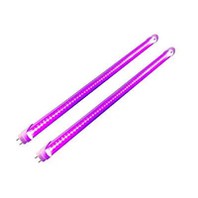
Led fluorescent tube lamp linear power supply and switching power supply are two common power supplies, so what are the differences? What are the advantages and disadvantages?
1. Switching power supply is a high-frequency electric energy conversion device. Its function is to convert a level of voltage into the voltage or current required by the user through different forms of architecture. The input of the switching power supply is mostly AC power or DC power, and the output is mostly equipment that requires DC power. The switching power supply performs voltage and current conversion between the two. It is more complicated. The internal transistors will switch frequently. The switching power supply is in a high-frequency state, but the output ripple is larger than that of a linear power supply. However, due to its simple structure, low cost and high efficiency..
2. Different from linear power supplies, most of the switching transistors used in switching power supplies switch between the saturation region and the cut-off region. Both modes have the characteristics of low dissipation, and the conversion between switching will have higher dissipation. More energy saving. Voltage regulation is achieved by adjusting the time when the transistor is turned on and off. High conversion efficiency is one of its advantages, because the operating frequency is high, and a small-sized, light-weight transformer can be used, which will be smaller than the linear power supply, and the weight will be relatively light.
3. The voltage feedback circuit of the linear power supply is working in the amplifying state, and the switching power supply means that the tube used for voltage adjustment works in the saturation and cut-off region, that is, the switching state. Linear power supplies generally sample the output voltage and send it to a comparison voltage amplifier with a reference voltage. The output of this voltage amplifier is used as the input of a voltage regulator tube to control the regulator tube so that its junction voltage changes with the change of the input, thereby adjusting its output Voltage.
4. The linear power supply technology is very mature, the production cost is low, it can achieve high stability, the ripple is small, its own interference and noise are relatively small, the linear power supply is in the process of generating the output voltage, the transistor works in the amplification area, It also consumes power. But because it works at power frequency (50Hz), the transformer has a relatively large volume and low efficiency, and the working efficiency is only about 80%. And the input voltage range is required to be high;
5. If the high efficiency, volume and weight of the power supply are the key considerations, the switching power supply is better than the linear power supply. The efficiency of switching power supply can reach more than 90%, and it has replaced linear power supply in many occasions, which is the trend of future power supply development.
6. Based on the above principles, both LED fluorescent tube modes are used. To meet the cost requirements of different customers, but in terms of market share, most of them still use switching power supplies, and must ensure that they are constant current power supplies. Lamp beads are safe and reliable.