Method of static cooling of LED lamp beads
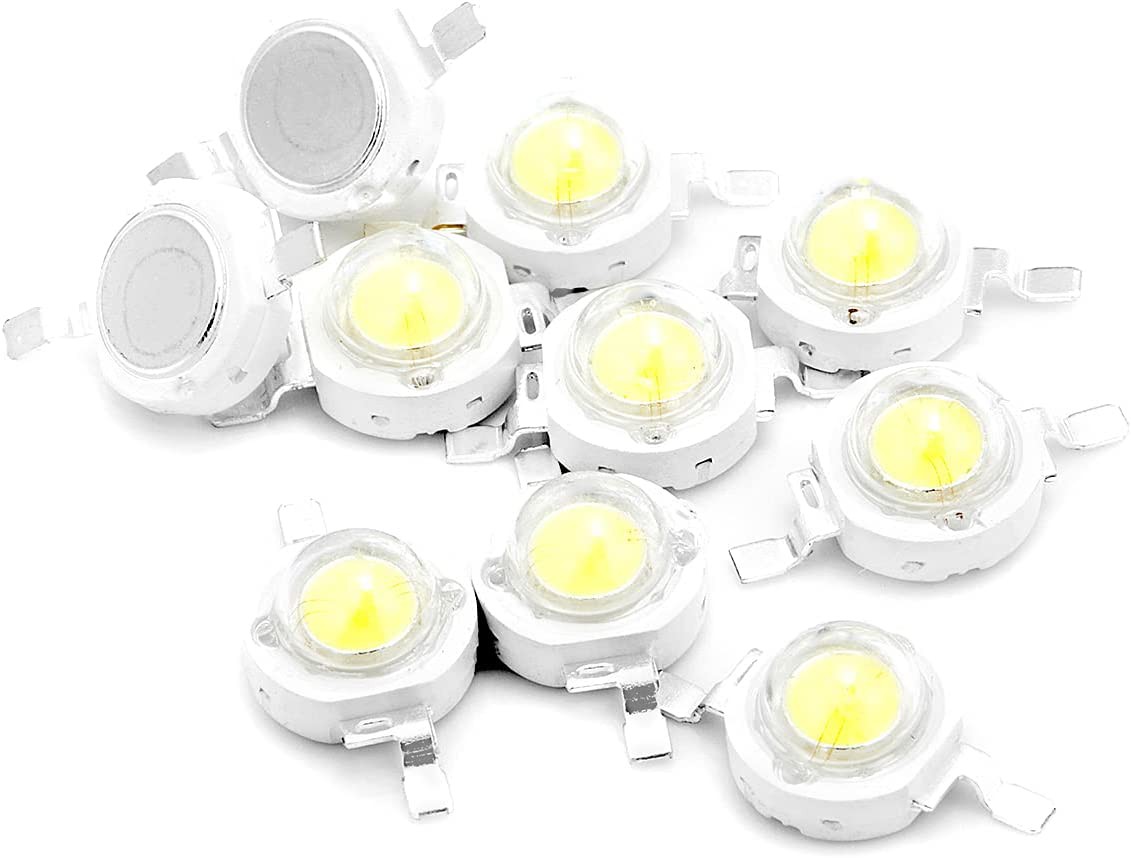
LED lamp beads are mainly used to emit light. Thus, there are further system complexities in optical coatings, beam management devices such as reflectors and lenses, wavelength converting phosphors, and the like. Nonetheless, heat management is critical for reliable solid-state lighting (SSL) products.
Static cooling LED lamp beads:
The conventional way to keep the LED lamp beads cool is to install the LED device on the radiator. The heat from the LED lamp bead is conducted into the heat sink and then dissipated into the air. Assuming that heat is removed by water or other fluids, radiators are sometimes referred to as cold plates, since the associated heat dissipation system is often designed to operate at a fixed temperature lower than the indoor environment.
Whether the heat can be effectively transported from the LED lamp bead to the heat sink depends on the material with high thermal conductivity. We have tested and found that copper is better than aluminum and brass, and it is better than stainless steel.
Although copper is the best thermal conductor among these metals, thermal conductivity is independent of the thickness of the material. The ability to transfer heat through material conduction is mainly related to thermal resistance. The thicker the thickness, the greater the thermal resistance.
Dielectric and Airflow
For example, medium and high power LED lamp bead arrays are generally built on thermally conductive PCBs. On the top surface, there is a copper plate that is electrically connected to the LED lamp beads, and there is a piece of aluminum underneath to conduct heat. There is a dielectric layer between the copper and the aluminum to avoid electrical shorting of the copper plate to the aluminum. Manufacturers have adopted different approaches in selecting dielectric materials, covering the entire spectrum, from organic materials to inorganic compounds. The dielectric material with the smallest thermal resistance in the test was almost an order of magnitude, enabling the use of the thinnest dielectric material while still providing the required insulation barrier.
However, experiments don't tell the whole story. Assuming the device is air-cooled, there will be many interfaces in the thermal path between the LED bead and the heat sink. Some are bridged by solder, some by adhesive, others will be pressed together (eg using screws). These junctions present additional obstacles to heat transfer, which can be large, unpredictable, and change over time.
The series/parallel addition of all thermal resistances and interface resistances in the system is called thermal impedance, and the conduction path is designed to keep the LED lamp beads cool. Accounting is similar to a resistor network. In an experiment, the voltage is essentially the temperature, the current is the heat flux, and the resulting resistance is the thermal resistance.
In development work, you can rely on the equivalent resistance of the heat conduction path. To get a complete model of the thermal impedance system, it is necessary to add thermal interface resistance at each transition between materials.
Benwei Lighting is an LED Tube, LED flood light, LED Panel Light, LED High Bay, LED manufacturer with 12 years of experience. If you want to purchase a high-quality LED flood light or have a more in-depth understanding of the application of LED flood lights, please contact send us inquiry, our web:  https://www.benweilight.com/.