More Than Just a Flat Light: The Hidden Science of High-Performance LED Panels
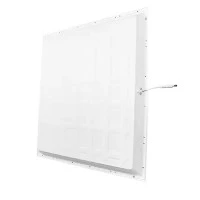
With the rise of low-carbon architecture and smart office concepts, the LED Panel Light has evolved from a simple replacement for traditional fluorescent troffers into a sophisticated lighting system that integrates optical control, visual health, and spatial aesthetics.

1. The Architectural Duel: Side-Lit vs. Back-Lit
In industrial applications, the choice of structure often dictates the project's budget and final visual impact.
Side-Lit (Edge-lit): The Pursuit of Ultra-Thin Uniformity
- Mechanism: LEDs are arranged along the inner frame, and light is redirected downward through a Light Guide Plate (LGP).
- Optical Advantage: Inspired by LCD backlight technology, this structure produces extremely uniform light through multiple internal reflections. Since the LEDs do not face the eye directly, it has an inherent advantage in glare control (UGR).
- Aesthetic Advantage: With a thickness typically between 8mm and 12mm, it is perfect for environments with limited ceiling clearance.
Back-Lit (Direct-lit): The Balance of Performance and Efficiency
- Mechanism: LEDs are evenly distributed across the back of the fixture, shining directly through a diffuser.
- Optical Advantage: By removing the LGP, light transmission loss is reduced, increasing overall efficacy by 10% to 15% compared to side-lit versions.
- Reliability: It eliminates the risk of LGP yellowing. However, to ensure uniformity and avoid "hot spots" or shadows, these fixtures are usually 30mm to 50mm thick.
2. Material Science: The "Industry Secrets" Behind Longevity
Identical-looking panels can vary significantly in price due to the materials used. Knowing these differences is key for professional procurement.
| Core Component | Premium Material | Budget Material | Impact on Performance |
| Light Guide Plate (LGP) | PMMA (Acrylic) | PS (Polystyrene) | PS turns yellow within 1–2 years, dimming and tinting the light. |
| Frame Heat Sink | 6063 Aviation Aluminum | Sheet Metal or Plastic | Aluminum determines the lifespan of the LED chips (L70 rating). |
| LED Chip | High CRI (Ra>90) | High Blue Light / Wide SDCM | Poor CRI leads to eye strain and distorted color perception. |
| Diffuser | Anti-aging PP/PC | Cheap Recycled Plastic | Durability determines if the panel develops dark spots over time. |
3. Visual Health: The Critical Metrics of UGR and Flicker
In high-end educational, medical, and corporate projects, "brightness" is no longer the sole priority-comfort is the new benchmark.
- Anti-Glare Design (UGR < 19): By adding a Micro-prism structure to the panel surface, the beam angle is precisely controlled. A UGR value below 19 is the international standard for long-term desk work to prevent eye-stinging glare.
- Flicker-Free Drivers: Low-end drivers produce a 100Hz fluctuation. While invisible to the naked eye, this causes retinal cells to contract constantly, leading to increased myopia, migraines, and decreased focus. Professional projects must specify "Flicker-Free Isolated Drivers."
4. Versatile Installation and Maintenance
LED panels are favored for their flexibility across various ceiling systems:
- Recessed: Designed for integrated ceilings (600x600mm or 300x1200mm), creating a flush, seamless look.
- Suspended: Uses steel wires to hang the fixture, adding a modern, industrial feel to "loft-style" offices.
- Surface Mounted: Fixed directly to solid concrete ceilings using a mounting frame.
- Spring Clips: Similar to downlight installations, suitable for plasterboard (drywall) ceilings.

5. Future Trends: Human-Centric Lighting (HCL) and Intelligence
Modern panels are shifting from "Static Light" to "Active Light":
- CCT Tunable (Circadian Lighting): Simulates natural sunlight from morning (4000K) to noon (6000K) and evening (3000K), regulating the human biological clock to improve productivity.
- IoT Integration: Built-in DALI-2, Zigbee 3.0, or Matter protocols. Integrated sensors allow for "Constant Illuminance Control," dimming the light as natural sunlight increases to maximize energy savings.