Principle of led light dimmer.
The lighting designer first needs to consider the luminous intensity (measured in candela, cd) or luminous flux, and also consider the illuminance (measured in lux, lx) obtained by the illuminated object or the illuminated plane. If we have a 10W LED desk light, the total luminous flux emitted is 600lm. If all the 600lm is concentrated on the 1m2 desktop, the illumination of the desktop is 600lx.
Different lighting locations and different public places have different lighting demand standards. For example, in store lighting, bright food can stimulate appetite; jewelry, clocks, clothing, etc. have bright illumination to stimulate the desire to buy; color printing, galleries, museums, clinics, etc. must have 1000lx illumination. The lighting of offices, classrooms, factories, production lines, etc. requires 300~800lx. Stations, airports, building halls, corridors and other non-working places can have 100~300lx. In parks, parking lots, and streets, it can be as low as 10~50lx. According to actual needs, use different light sources. Good lighting design not only saves energy and electricity, but also meets environmental protection requirements.
1 The role and significance of dimming
The light is artificial lighting, providing enough illumination for night or occasions where natural light is insufficient. But lights consume electricity, and turning them off when not needed saves energy. However, in some periods and situations, if the light can be adjusted to a darker level (25%~50%), it can also significantly reduce energy consumption (-50%~-75%).
According to incomplete statistics, the national lighting load accounts for about 20% of the total electricity consumption, that is, lighting will consume about 20% of the power of the power generation system. Lighting products with dimmable dimming are more energy-efficient than those without dimming function. The adjustment of illuminance and luminous flux is the function of dimmers. Therefore, in the lighting design, giving full play to the role of dimming can completely achieve the purpose of substantial energy saving.
2 Existing dimming methods
2.1 Resistive dimming
In the past, the most primitive resistive dimming was used, as shown in Figure 1, which was dimming by a variable resistor in the lighting circuit. The application is very simple and will not cause interference, but the principle of voltage division is that the electric energy is not completely used in the lights (appliances), and there is no efficiency at all. When dimming the light, the dimming resistor generates a large amount of heat energy due to excessive partial pressure, resulting in waste of energy and deterioration of the environment. Therefore, it is replaced by the thyristor dimming method.
Resistive Dimming
Figure 1 Resistive dimming
2.2 SCR dimming
The basic principle of thyristor control technology is: use RC phase shift to delay triggering, realize chopping, and change the root mean square value of the voltage (effective value is Vrms). At the same time, the symmetry of the on-voltage of the triac (DIAC) is used to achieve the symmetrical triggering of the thyristor (TRIAC). Therefore, different conduction angles can be obtained by changing the resistance value, and the phase-cut principle is applied to reduce Vrms to reduce the power of common loads (resistive loads).
Different conduction angles can be obtained by changing the resistance value
Figure 2. Different conduction angles can be obtained by changing the resistance value
Therefore, the efficiency is high and the performance is stable.
Why is the early leading edge thyristor dimmer not suitable for dimming of LED lights? Because if the leading edge dimmer is applied to a capacitive load, a surge current will be generated at the moment when the thyristor is turned on, It not only has a bad impact on the power grid, but also generates noise, which may cause safety hazards when a large number of capacitive loads are dimming in a centralized manner. Of course, with the improvement of later technology, the front-end dimmer also avoids the above shortcomings to a certain extent, but compared with the dimming of LED lights, the effect of the trailing-edge dimmer is better. Because the trailing edge thyristor dimmer has a very good adaptability to loads such as LEDs, but for lights with inductive loads, the trailing edge dimmer is not suitable, so generally rely on gas conduction to emit light. lights such as tube lights, high-pressure sodium lights, mercury lights, metal halide lights, etc. cannot use trailing edge dimmers for dimming control.
Therefore, based on the above, for lights with capacitive loads such as LEDs, the trailing edge thyristor dimmer should be selected. If it is an inductive load, a leading edge dimmer should be selected. Of course, if it is a purely resistive load, the front and rear Dimming is possible along the way.
A. Inductive load refers to the load with inductive parameters. To be precise, it should be that the load current lags the load voltage with a phase difference characteristic for inductive loads, such as transformers, motors, etc. The other is that some devices also consume reactive power when consuming active power, and a circuit with coil load is called an inductive load. The general inductive load description is often given the size of the active power, such as tube lights, tube lights marked as 15~40 watts, the power consumption of the ballast is about 8 watts, actually considering the use of a timer, the inductive switch is controlling it , then add these 8 watts;
B. Capacitive load generally refers to the load with capacitive parameters, that is, the load that conforms to the characteristics of voltage hysteresis and current. When the capacitive load is charged and discharged, the voltage cannot change abruptly, the corresponding power factor is negative, and the corresponding inductive load is positive. Purely inductive or purely capacitive loads are only used in compensation circuits. And because most of the loads are inductive loads except resistive, most of them are compensated with capacitors when compensating, so pure capacitive loads are used more than pure inductive loads. Such as motors, transformers, etc., usually inductive loads. Some tube lights are capacitive loads.
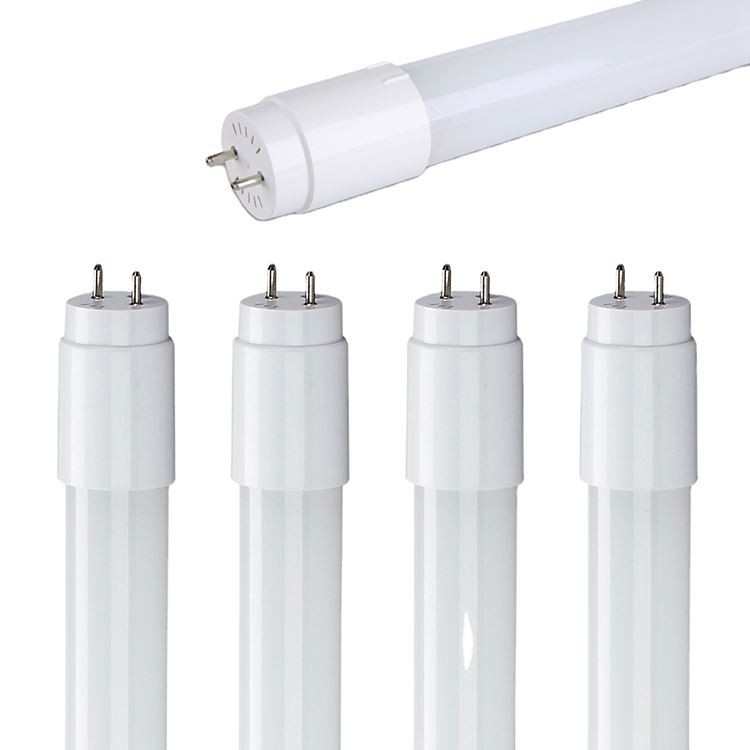
Shenzhen Benwei Lighting Technology Co., Ltd is a professional manufacturer in producing LED lighting products, Our main products T8 T5 LED Tube, LED Grow Light,Poultry LED Light,Tri-proof LED Light,LED Flood Light, LED Panel, LED Stadium Light, LED High Bay, LED Classing Room Light ,If you want to purchase a high-quality LED lighting products or have a more in-depth understanding of the application of LED lighting, please contact send us inquiry.