The "Electro-Optical Guardian" of Sterile Spaces: Why Must Cleanroom Engineering Use LED Purification Lights?
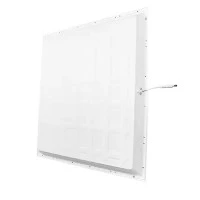
In pharmaceutical workshops, semiconductor cleanrooms, operating theaters, and food processing plants, you will often see lighting fixtures that are perfectly flat and integrated seamlessly into the ceiling. These are not ordinary office panel lights; they are LED Purification Lights (also known as Cleanroom Lights), which adhere to rigorous industrial standards.
Why are standard lights barred from these high-sensitivity environments? How does purification lighting technology safeguard "spatial cleanliness"? This article provides an in-depth breakdown of this specialized industry.
1. The Core Pain Point: Why Can't Standard Lights Be Used in Cleanrooms?
Cleanrooms have strict limits on the number of airborne particles (such as Class 100 or Class 1000 labs). Standard fixtures possess three fatal flaws:
- Dust Accumulation Risk: Ordinary fixtures often have stepped frames or gaps where dust easily accumulates and is difficult to clean thoroughly.
- Airflow Interference: Cleanrooms rely on laminar flow systems for air exchange. Bulky or protruding fixtures interfere with airflow paths, creating turbulence that traps pollutants.
- Material Outgassing: Low-quality coatings may release Volatile Organic Compounds (VOCs) under specific temperature or humidity levels, contaminating precision components or pharmaceuticals.

2. Technical Comparison: LED Purification Lights vs. Standard Panels
Purification lights differ fundamentally from conventional LED panels in their design standards. The following table compares key metrics:
| Performance Metric | Standard LED Panel | Professional LED Purification Light | Industry Significance |
| Surface Treatment | Standard Spray/Anodizing | Anti-static, Corrosion-resistant Nano-coating | Prevents static dust adsorption; withstands disinfectants like $H_2O_2$. |
| Sealing Rating | IP20 - IP40 | IP54 - IP65 | Ensures internal components don't produce dust and external dust can't enter. |
| Frame Structure | Right-angled/Stepped | Beveled / Ultra-slim Smooth Design | Reduces air resistance; ensures laminar airflow is undisturbed. |
| Cleanliness Class | General Office Areas | Class 100 - 100,000 | Complies with international cleanroom standards (e.g., ISO 14644). |
| Blue Light Control | RG1 / RG2 | RG0 (Exempt Group) | Protects the vision of employees working long-term in windowless environments. |
3. Deep Dive: Three Main Types of Purification Lights
Based on installation methods and spatial functions, LED purification lights have evolved into three dominant designs:
-
A. Surface-Mounted (Beveled) Purification Lights
Appearance: The side of the fixture is sloped, resembling an inverted dish.
Principle: The beveled design guides airflow smoothly around the fixture, preventing "dead zones" at the edges.
Application: Ideal for retrofitting old factories or hard ceilings where hole-cutting is impossible.
-
B. Recessed (Flush-Mounted) Purification Lights
Appearance: Perfectly flush with the sandwich panel ceiling, with no protrusions.
Principle: Secured via specialized clips or bolts with auxiliary sealing gaskets, achieving a truly "flat" illumination surface.
Application: The top choice for operating rooms and high-level biosafety labs.
-
C. Teardrop Lights
Appearance: Slim, streamlined fixtures with a teardrop-shaped cross-section.
Principle: Specifically designed for Fan Filter Unit (FFU) environments; the narrow profile minimizes the impact on downward airflow.
Application: Specialized zones in semiconductor plants requiring Class 100 cleanliness or higher.
4. The Future: "Healthy + Intelligent" Purification Lighting
As Industry 4.0 advances, purification lights are extending beyond "illumination" into "space management":
- Yellow Light Spectrum: In environments like photolithography rooms, purification lights must filter out wavelengths below 500nm (Yellow Lights) to prevent chemical reactions in photoresists.
- Human-Centric Lighting (HCL): Cleanrooms are typically enclosed. Systems that simulate natural daylight cycles significantly improve the circadian rhythm and mental well-being of shift workers.
- Integrated Disinfection: High-end models now integrate Far-UVC (222nm) or UV-C sensing modules that automatically switch to sterilization mode once personnel have left the area.
5. Procurement Guide: How to Evaluate Quality?
- Inspect the "Sealant": Open the fixture and check if high-elasticity closed-cell foam or silicone gaskets are present at the driver entry points and frame seams.
- Feel the "Smoothness": Run your hand along the transition between the frame and the light-emitting surface. Any noticeable "steps" or burrs will become dust collection zones in practice.
- Test for "Flicker": Cleanrooms often house high-speed machinery or precision sensors. Flicker not only causes headaches but can create a stroboscopic effect with rotating equipment, leading to accidents. Demand "Flicker-Free" drivers.
Summary
An LED purification light is more than just a lamp; it is a critical component of a cleanroom's environmental control system. When selecting a product, focusing solely on wattage and price is a mistake. Sealing ratings (IP value), aerodynamic design, and material corrosion resistance are the core indicators that determine the operational safety of a cleanroom facility.