
Why Efficiency Is the Real Secret
The One Number That Separates Good Fixtures From Cheap Ones
Ask ten growers how they choose a light and nine will answer with wattage. The number that actually matters is efficacy: how many micromoles of usable photons a fixture delivers for each joule of electricity consumed. Wattage tells you what the fixture costs to run; efficacy tells you what you get for that cost. A 40-watt tube at high efficacy can out-deliver a 60-watt tube of the same length, and it will do so while running cooler and lasting longer, because less of its input is converted into waste heat.
Efficiency Is Not Just Electricity: Heat, Distance, Lifespan
Efficiency compounds in three directions at once. First, the electricity bill: fewer watts for the same dose, multiplied across sixteen hours a day. Second, geometry: a cooler fixture can sit closer to the canopy, which raises intensity without increasing power and shrinks the wasted spill around the tray. Third, longevity: lower junction temperature slows phosphor degradation, so output holds steadier and the replacement interval stretches. A single efficiency gain pays out three times.
What "High-Efficiency" Can and Cannot Mean
The phrase itself is unregulated. It can describe a genuinely efficient fixture, and it can describe a tube with a respectable-looking number printed on a box. What it cannot do is create photons from nothing: every claim must resolve to a measured efficacy figure, a defined test method, and a stated spectrum. When a listing says "high efficiency" and offers no µmol/J value, no spectrum report, and no driver specification, the phrase is decoration rather than information.
The Physics of Photon Efficiency
Watts In, Photons Out: Efficacy in Micromoles per Joule
Efficacy for horticultural lighting is expressed in µmol/J - micromoles of photons within the 400–700 nm PAR band delivered per joule consumed. Quality horticultural LED tubes typically land in the 2.3–3.0 µmol/J range, while older fluorescent and discharge retrofits sit far below that. The practical translation is simple: at equal delivered dose, a high-efficacy tube draws meaningfully less power, and at equal power it delivers meaningfully more photons to the leaf.
Where Losses Happen: Driver, LED, Optics, Heat
Energy disappears at four points. The driver loses a few percent converting mains AC to regulated DC, more if it is a cheap non-isolated design. The LED package loses through electrical resistance and phosphor conversion. The optical cover absorbs and scatters photons that never reach the canopy. And heat, the by-product of all three, raises junction temperature, which further reduces output. Every percent recovered at each stage shows up directly in the µmol/J number - and in how cool the tube runs after six hours.
PAR Efficacy vs. Lumen Efficacy: Why Marketing Numbers Mislead
Lumen figures are weighted to the human eye, which peaks near 555 nm - a region plants use comparatively weakly. A fixture can post an excellent lumen-per-watt number by concentrating output in green and yellow, and still deliver mediocre PAR. This is why horticultural products are specified in PPF and µmol/J rather than lumens. When a listing leads with lumens, treat it as packaging information; the plant does not read it.
Spectrum Efficiency and Why Extra Green Isn't Waste
A narrow red-plus-blue spectrum maximizes the share of photons that fall inside chlorophyll's absorption peaks, which is why it posts strong efficacy numbers. But green photons are not inert: they penetrate deeper into leaves and canopies than red and blue, reaching lower leaves that would otherwise sit in shade. That is why full-spectrum tubes can outperform their raw peak numbers in a dense canopy. Spectrum efficiency is about delivered dose where the leaf actually is, not only about the peak of a curve.
Inside a High-Efficiency Tube
Aluminum Extrusion as a Heat Engine
The housing is the efficiency story's first chapter. A substantial 6063 aluminum extrusion with ribbed walls acts as a passive heat sink, moving heat from the LED board to the surrounding air by convection. More surface area and more mass mean a lower junction temperature at the same wattage, and lower junction temperature means more photons per watt sustained over thousands of hours. Thin profiles and plastic housings save material and surrender exactly the margin efficiency depends on.
LED Chip Grade, Bin and Current Density
Two boards with the same LED count can differ sharply in output. Binned chips sorted within narrow flux and wavelength ranges keep color and output consistent across a production run. Current density matters just as much: driving a chip harder raises lumens per chip but lowers lumens per watt and raises heat, so a well-designed tube runs its LEDs at a moderate current and gets its output from more chips rather than from overdriving fewer ones.
Driver Quality: Power Factor, Ripple, Flicker, Surge
The driver is where a cheap fixture is most tempted to cut. An isolated constant-current driver with a power factor above 0.9 wastes less at conversion, produces low output ripple, and avoids the visible flicker that stresses plants and cameras alike. Surge tolerance protects the tube in buildings with unstable mains, and thermal protection prevents a failed driver from becoming a failed shelf. Driver brand and model are reasonable questions to ask before purchase.
Optical Design: Clear Cover, Wide Beam, Minimal Loss
Optics decide how much of the produced light ever reaches a leaf. A clear polycarbonate cover with a wide beam spreads photons across the shelf with minimal absorption; a heavily frosted diffuser softens hotspots at close range but absorbs more light. Wide-beam linear output also matches the geometry of shelving: the tube is long, the tray is long, so the beam should be long and flat rather than a narrow cone aimed at one square meter.
The Secret Weapon in Practice: What Efficiency Buys You
More Photons at the Same Meter Reading
Efficiency shows up on a meter before it shows up on a plant. Measure a shelf lit by an ordinary retrofit and then by a high-efficacy tube at identical distance and duration, and the PPFD reading rises without any change to the electricity budget. That headroom is what lets a grower reach a crop's daily light integral in fewer hours, or reach a higher-value crop's requirement at all within a 16-hour window.
Closer Mounting, Smaller Footprint, Tighter Canopies
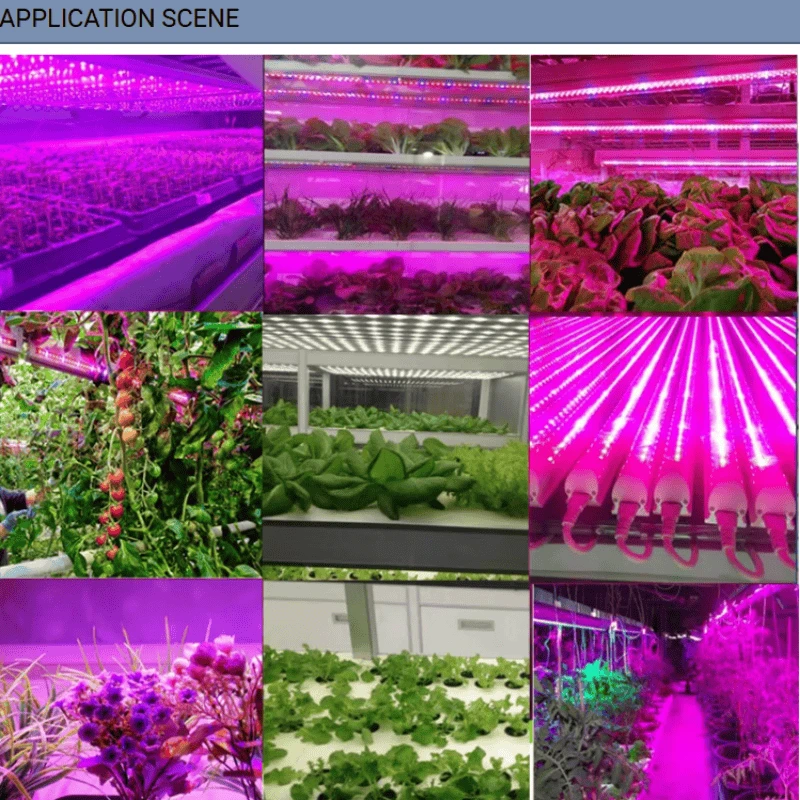
Because high-efficacy tubes convert less input into heat, they can run closer to the canopy without scorching leaves. Closer mounting raises intensity and reduces spill, which shrinks the effective footprint and lets a grower fit more productive trays into the same room. The plants respond with shorter internodes and denser leaf area - the same visible signature that sells a comparison photo, achieved with less hardware.
Cooler Rooms, Lower HVAC Load, Quieter Racks
In sealed cabinets, container farms, and small apartments, waste heat is a cost twice over: it stresses plants and it must be removed. Passive, efficient tubes add little to the room's heat load, so ventilation and cooling systems work less and humidity swings calm down. There are no fans inside the fixture either, which means no hum, no bearing wear, and no dust drawn into the optical path over a season of service.
Longer Service Life and Fewer Replacements
Efficiency and longevity are the same phenomenon seen from two angles. Lower operating temperature slows lumen depreciation, so a well-built tube holds its output longer before crossing the maintenance threshold that triggers replacement. Fewer replacements mean less labor, less downtime, and steadier uniformity across a rack, because shelves are relamped as batches rather than patched tube by tube.
Higher Yields per Kilowatt-Hour
The commercial version of this argument is yield per kilowatt-hour. Two rooms can produce similar grams per square meter, but the efficient room spends less to reach that yield and has more electrical capacity left for dehumidification, circulation, or simply more trays. Once a facility's electrical service is fixed, efficiency becomes the binding constraint on how much canopy one building can support.
Efficiency Across Crop Types
Leafy Greens and Herbs: The Fast Payback Segment
Leafy crops are short-cycle and low-to-moderate in light demand, which makes them the fastest payback segment for efficient tubes. A daily light integral in the high teens delivered by efficient fixtures produces compact, heavy heads in a predictable window, and the electricity cost per head stays small. Basil and mint are heavier feeders of light, but they reward intensity with thicker leaves and stronger oil content.
Fruiting Crops: Where High PPFD Actually Matters
Tomatoes, peppers, and strawberries are the crops that expose weak fixtures. They need a high daily dose to set and fill fruit, and they respond to a red-dominant spectrum during development. Here efficiency is not a nicety but a feasibility question: reaching the required PPFD across a bench may be impossible with low-efficacy hardware, or possible only at an electricity cost that erases the margin.
Propagation and Tissue Culture: Efficiency at Low Intensity
Propagation runs at low intensity, which is exactly where cheap fixtures waste proportionally more. At low drive currents, driver losses and optical absorption take a larger share of the total, so a well-designed tube holds its efficacy better across the dimming range. Even, gentle light also produces uniform plugs and fewer hyperhydrated tissue-culture shoots, protecting the highest-margin product in the nursery.
Succulents and Ornamentals: Color per Photon
Ornamental value is measured in color, and color is a photon-driven response. Efficient tubes deliver enough red and blue to trigger anthocyanin and carotenoid accumulation without bleaching, producing the red-rimmed, tight rosettes that command premium prices. In this segment the return on efficiency is aesthetic as much as agronomic, and it is visible within two weeks of installation.
Microgreens: Density, Speed, and Shelf Life
Microgreens compress an entire production cycle into days, so photons per hour matter intensely. High efficacy means level, dark, thick-stemmed trays harvested on schedule, plus better keeping quality after cutting because denser tissue loses moisture more slowly. For growers selling to restaurants on standing orders, that reliability is the product as much as the greens are.
Efficiency Mistakes That Cost Real Money
Buying on Wattage Instead of Photons
The most common error is treating watts as a proxy for light. Wattage is input; µmol is output, and the ratio between them varies enormously across products. A grower who specifies "forty watts per shelf" may end up with half the intended dose - or double it - depending on which fixtures were purchased. Specify the dose you need, then choose fixtures whose efficacy lets you reach it economically.
Over-Lighting: Diminishing Returns and Damage
Efficiency tempts growers toward excess, because more photons feel like more value. Past a crop-specific threshold, additional intensity yields almost nothing and starts to cost: curled margins, bleached leaves, faded pigment, stalled growth. The efficient approach is not maximum output but matched output, tuned by distance and duration to the crop's actual requirement at each stage.
Bad Geometry: Photons That Miss the Canopy
A highly efficient tube aimed at the wrong place is an expensive heater. Fixtures mounted at the shelf edge spill half their output onto the aisle; fixtures mounted too high spread their dose over an area larger than the tray; fixtures spaced wider than their mounting height leave dark bands between light cones. Efficiency has to be preserved through installation, not just purchased at the factory.
Cheap Drivers, Hidden Costs
A low-cost driver shows up as flicker, a poor power factor, and premature failure rather than as a line item. When a driver dies mid-cycle, the grower loses uniformity on the shelf and often a full crop's worth of timing. Replacing a shelf's worth of drivers costs more than the difference in purchase price, and the labor is rarely accounted for in the original budget.
Mixing Generations on One Shelf
Old tubes and new tubes on the same shelf deliver different doses, so the tray stratifies into fast and slow zones that never fully converge. Because efficiency and depreciation differ by age, mixed shelves also make diagnosis impossible: a yellowing plant might be underlit, overwatered, or simply standing beneath the weaker fixture. Replace in batches and keep each tier internally consistent.
Selecting a High-Efficiency Tube: A Buyer's Protocol
Spectrum Ratios and Crop Fit
Confirm the spectrum before the efficacy figure, because the wrong curve wastes even efficient photons. A 3R:1B blend suits leafy greens, seedlings, and compact vegetative growth; a 5R:1B blend handles mixed shelves and general production; a 7R:1B curve belongs over flowering and fruiting crops; full-spectrum tubes add canopy-penetrating green for propagation, display, and inspection-friendly rooms. Match the crop first, then optimize the hardware around it.
Efficacy Verification: Test Reports, Integrating Spheres
Efficacy claims should arrive as documents. Ask for a photometric test report generated by an integrating sphere, listing PPF, wattage, and the calculated µmol/J, with the test method and date stated. Ask whether the tested unit came from the production line or from an engineering sample. A supplier who can produce this report on request is working from measurement; one who cannot is working from adjectives.
|
Metric |
What it tells you |
What to request |
|
PPF (µmol/s) |
Total photons emitted in the PAR band |
Sphere test report with date |
|
Efficacy (µmol/J) |
Photons delivered per joule consumed |
Calculated from the same report |
|
Power factor |
Driver conversion quality |
Driver datasheet, PF above 0.9 |
|
Spectrum |
Crop fit and color rendering |
Measured spectrum curve, not a rendering |
|
IP rating |
Suitability for humid rooms |
IP65 or higher for misting areas |
Wattage per Area and Height Budget
Size by footprint and target dose rather than by shelf count. As a working range for modern LED tubes, leafy greens and herbs need roughly 10–18 watts per square foot of canopy, while high-light fruiting crops move toward 25–35 watts per square foot spread across overlapping fixtures. Then confirm the mounting height: a closer fixture raises intensity but narrows coverage, so the layout must be checked with a meter at the tray center and edges.
Mechanical and Environmental Ratings
Efficiency is worthless if the fixture fails in its environment. Confirm molded end caps with gaskets, strain-relieved cable entries, and an ingress protection rating appropriate to the room - IP65 or higher for misting benches and overhead irrigation, IP44-class for dry shelving. Also check the stated maximum number of units per daisy chain; exceeding it overloads the first connector and turns a lighting upgrade into an electrical risk.
Warranty, Spares, and Supply Stability
For anyone buying beyond a single shelf, continuity matters more than a single spec. Ask what the warranty actually covers - driver, LEDs, or housing - for how long, and whether spare end caps, link cords, and clips are stocked. Ask how long the model will remain in production. A fixture that is efficient but discontinued in a year leaves a rack of mismatched output and no path to a clean batch replacement.
Deployment: Getting the Weapon Into the Field
Rack Layout and Overlap Ratio
Lay out tubes parallel to the shelf's long axis and centered over the tray. Space them roughly one tube-to-canopy distance apart so their beams overlap and the intensity curve flattens; under-lapping leaves dark bands, over-lapping wastes photons on the same leaves twice. On multi-tier racks, leave a few centimeters of air gap above each fixture so convection can work and the driver stays cooler.
Height, Acclimation, and the Hand Test
Begin 30–45 cm above fresh seedlings, 25–35 cm above established vegetative plants, and 15–25 cm above flowering canopies, then lower gradually over three to five days. A crude but useful check: hold the back of your hand at canopy height for thirty seconds - uncomfortable warmth means the fixture is too close for that crop. Raise it and lengthen the photoperiod instead of cooking the leaves.
Photoperiod, DLI and Seasonal Tuning
Deliver the dose with a timer rather than with guesswork. Leafy greens and herbs typically run 16 hours on and 8 off; propagation and mother plants suit 18 and 6; flowering crops switch to 12 and 12. In summer, when ambient light contributes, shorten the supplemental window; in winter, extend it. Keep the dark period uninterrupted and change schedules in steps so plants are not asked to rebalance overnight.
Metering: PAR, Watt Meter, and a Notebook
Two inexpensive instruments turn efficiency from a slogan into a management tool. A PAR meter shows the dose at canopy level across the tray; a plug-in watt meter shows what the shelf actually draws. Record both, along with mounting height and photoperiod, once a month. Trends reveal depreciation, drifted heights, and drivers that are quietly drawing more than they should.
Retrofitting Fluorescent Sockets Safely
Old T8 sockets are a convenient mount and a potential hazard. Before reusing them, confirm the circuit is de-energized, verify that the new tube's voltage and pin configuration match the socket, and remove or bypass the old magnetic ballast where the tube is self-driven. If any part of that is unfamiliar, have an electrician check the circuit; a lighting upgrade should not become the reason a grow room is investigated.
Total Cost of Ownership: Crunching the Numbers
A Home Shelf Model
For a home grower, the model is short and honest: hardware cost, electricity over the fixture's life, and the value of what comes off the shelf. Efficient tubes lower the second term and stretch the first across more seasons, so the effective cost per harvest falls even though the sticker price may be higher. The payback usually arrives within a couple of seasons of herbs and greens.
A Commercial Bench Model
Commercial arithmetic adds labor, pack-out rate, and cycle time. Efficient fixtures compress cycles by reaching target dose sooner, raise pack-out by improving uniformity, and reduce culling at the tray edges. They also free electrical capacity, which in a fixed-service building is the difference between running eight benches and running ten.
What Efficiency Does to Payback Period
Efficiency shortens payback from both ends: lower operating cost raises monthly savings, and longer service life lowers the annualized capital charge. Combined, the two effects can move a payback from several years into a single season for fast, high-value crops. The calculation is unglamorous, but it is the calculation that decides whether a second rack gets built.
The Cost of Getting It Wrong
The expensive mistakes are rarely the visible ones. They are trays that mature unevenly and miss a delivery window, drivers that fail mid-cycle, and shelves relamped at eighteen months because the output collapsed. None of those show up on a purchase order, and all of them are downstream consequences of choosing fixtures on price alone.
Frequently Asked Questions
Are high-efficiency tubes dimmer to the eye?
Often yes, and that is a feature rather than a flaw. Efficient horticultural spectra concentrate output where plants absorb it, so a tube can look less blinding than a legacy fixture while delivering more usable photons. Judge by a PAR meter and by plant response, not by how bright the shelf looks when you walk in.
Can I run them on a dimmer or controller?
Many quality tubes support 0–10 V dimming or an external controller, which lets a grower match intensity to crop stage and cut energy during propagation. Confirm the dimming protocol and the minimum load of the controller before buying; a dimmer that buzzes or drops out below 20 percent is worse than no dimmer at all.
Do I need a PAR meter?
For one shelf and one crop, you can succeed with height guidance and observation. For anything larger, a PAR meter pays for itself quickly: it turns "the plants look fine" into a number, exposes uneven coverage, and tells you when a fixture has depreciated enough to replace. Phone-app estimates are useful for orientation, not for decisions.
How many tubes per 4-foot shelf?
For a typical 120 cm shelf at 40–45 cm mounting height, two tubes spaced roughly 30–35 cm apart generally produce a flat field for leafy greens, with a third adding intensity for high-light crops. Measure at the tray center and both edges; add fixtures until the variation is acceptable for the crop you are actually growing.
Conclusion: The Weapon, Stated Plainly
The Secret, Stated Plainly
The secret weapon is not a secret at all - it is arithmetic. Enough photons, in the right spectrum, delivered evenly, at the lowest power and heat cost that still reaches the crop's requirement. High-efficiency LED grow tubes win because they make that arithmetic favorable at every scale: a windowsill, a four-tier rack, a propagation bench, a container farm.
Your First Efficient Shelf
Start with one shelf and one measurable goal. Choose the spectrum for the crop, confirm the efficacy figure from a real test report, size the wattage by footprint, and mount at the recommended height. Then measure: PPFD at center and edges, watts at the plug, grams or heads at harvest. One shelf that hits its numbers is the most persuasive argument for the next twenty - and it costs less to run than the shelf it just replaced.
How To Cooperate With Us?
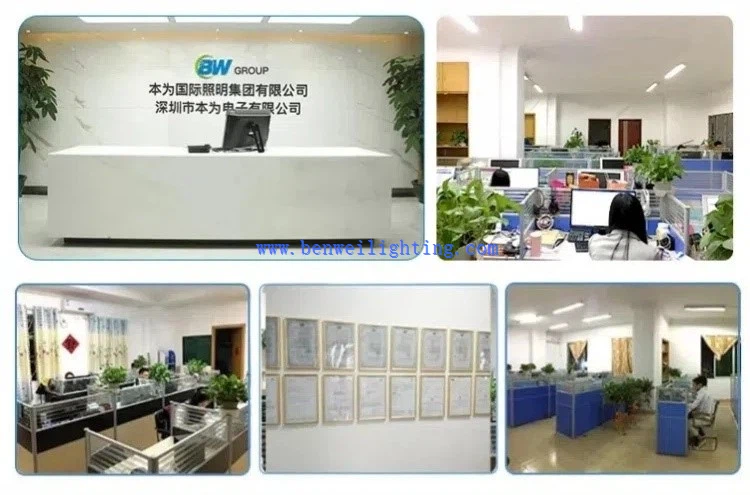
Our firm prides itself on owning its own factory, guaranteeing complete control over the production process and the quality of our goods. We are not only agents; we are manufacturers committed to offering our clients the most competitive rates available. We invite consumers to evaluate our samples first, as we are assured that the quality and pricing of our items are self-evident. Our dedication to excellence and client satisfaction compels us to consistently perform at our best and provide superior quality products.
Our address
3rd Floor, 5th Building, Hebei Industrial Park, Hualian Community, Longhua District, Shenzhen, China