You're certainly acquainted with black light technology from Halloween events and cool dorm room posters to scientific museums and CSI: Crime Scene Investigation television series. Black lights have a similar appearance to regular fluorescent lamps when they are off, but when they are on, they perform a somewhat different function!
If you've ever been near a black light, you may have noticed that everything designed to function with black lights, even anything that is white, glows a little bit brighter. But you've probably wondered how black lights operate. Actually, the physics underlying UV black lights is rather intriguing.
The science behind black lights, several uses for black lights, and how you may design your own black light experiments to learn more independently will all be covered in this blog.
What Exactly Does the "UV" in UV Black Light Mean?
The first thing you'll undoubtedly notice when using a black light in a pitch-black space is that it's not really black. In reality, a black light bulb emits a blue-purple radiance. Yet why? In order to comprehend it, we must first discuss the visible light spectrum.
The visible range of light to the human eye is limited to a band of wavelengths between 380 and 750 nanometers, with blue and violet light falling in the 380-495 range. UV light, which is beyond violet light and is not visible to the human eye.
The phrase "ultraviolet light" is perhaps most recognizable to you in relation to the sun and how it affects your skin. However, ultraviolet radiation comes in a variety of forms, such as UVA, UVB, or UVC. The ultraviolet radiation generated by a typical UV black lamp is UVA, which is far less damaging than the UVB rays produced by the sun that may result in sunburn.
You'll notice an intensity to that recognizable purple glow when you shine your black light on a white t-shirt, an invisible hand stamp you could get at a bar, or even your teeth. This is the glow of phosphors, which are substances that generate visible light when subjected to radiation. Before the term "radiation" scares you away, keep in mind that all types of light are radiation. The invisible black light is transformed into visible light by a phosphor.
So how does it accomplish this?
A phosphor is struck by a light particle, which causes an electron to move to a higher energy level and produce heat. Since part of the energy was lost as heat, the second photon that is released when the electron returns to its usual level has less energy than the first.
Two Different Black Light Bulb Types
Black light bulbs come in two distinct varieties, although they both function essentially the same way:
A regular light bulb and an incandescent black light are identical, but an incandescent black light has specialized filters that absorb all except UVA rays from the bulb.
A fluorescent light with a unique phosphor coating is comparable to a tube black light in its functionality. The more dangerous UVB and UVC radiation is absorbed by this covering, which only permits the emission of UVA light. With the exception of the blue-purple glow that corresponds to UVA radiation, the black coating effectively conceals the majority of visible light.
The UVA light that is released by the bulbs reacts with external phosphors, and as long as those phosphors are exposed to the UVA light, they glow. This is how these black lights function in both configurations.
The Various Uses of Black Lights
Phosphors may be found all around if you spend the whole night walking about with a portable black light. Numerous phosphors are found naturally, for example in your teeth and fingernails. Several paints, fabrics, and polymers, as well as television screens, contain phosphors in significant quantities.
The majority of fluorescently colored items, including highlighters, include phosphors, which are also present in all goods that shine in the dark. Special black light paint that lights in multiple hues is used in clubs and theme parks. Invisible black light pen, fluorescent black light flooring, fluorescent black light bubbles, and even fluorescent black light hair gel are all available for purchase.
True CSI: Crime Scene UV black lights are really used by investigators to inspect crime scenes! For instance, forensic experts would utilize a fluorescent dust that adheres to fingerprints to locate fingerprints. They will next shine a black light around the area to highlight any fingerprints that may be there.
Black light pens may be used by law police, bank tellers, and even shop employees that handle cash to verify the legitimacy of currencies. Five dollar notes and above in the US have these fluorescent watermark strips to the left of the bill's center. Therefore, you should reconsider using a false bill if you ever consider doing so.
To enjoy some good ol' fashioned fun, black lights are often employed! Black lights provide a unique kaleidoscope of color that may be further accentuated if partygoers are suitably attired, from Halloween parties to neon-lit raves. A festival or Halloween costume may be made into something unique with the use of special fluorescent body paint and cosmetics. Also, don't forget your fireworks viewing glasses!
Have you ever gone into a theme park or baseball game only to have to leave right away? On your way back out, you most likely obtained a hand stamp. That is using black light technology, then! Fluorescent hand stamps and associated dark lights are used at bars, clubs, performance halls, sporting events, and theme parks to permit reentry.
An antique appraiser may use a black light to spot forgeries since phosphors, which shine under black light, are present in many contemporary paintings. Older paint discovered on genuine antiques does not include phosphors; if it lights, it indicates... that it is not genuine!
Black lights may be used by HVAC unit repair specialists to find leaks that might otherwise go undetected. They do this by dissolving a little amount of fluorescent dye in the cooling system's liquid coolant. The machine and its network of vents are then illuminated with a black light to look for system leaks.
Whether you like it or not, scorpions shine when exposed to a black light. This is because the cuticle of the scorpion's exoskeleton contains a luminous material. Therefore, carry a black light with you if you ever want to spend the night outside in the desert so that you can look out for any possibly harmful critters.
Black lights, of course, are a fantastic instrument for researching light and color. In order to educate students about the electromagnetic spectrum, visible light vs invisible light, and how black lights function in general, educators might use black lights to conduct another visually appealing experiment.

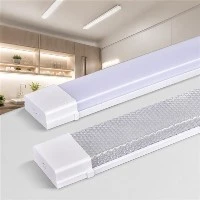
Benwei UV 120cm led tube light Product Specification:
|
Item |
UV led light tube bulb T8 |
|
Input Volt |
AC85-265V |
|
Power |
10W,18W,24W |
|
Length |
60cm/2ft, 120cm/4ft, 150cm/5ft |
|
Bean Angle |
120°, 180° |
|
Lifespan |
50000 hrs |
|
Wavelength |
365nm 395nm 254nm 280nm |
|
Warranty |
3-5 years |