The Track Lighting Revolution: Analyzing Five Core Advantages of Modern Spatial Lighting
By Kevin Rao November 28,2025
At the opening preview of a high-end art gallery on the Shanghai Bund, curator Ms. Zhang gently adjusted the spotlight on the track, and a precise beam of light instantly brought a Renaissance oil painting to life. "This track system allows us to completely reconfigure the gallery's lighting in just three hours," she said, pointing to the 12-meter-long suspended track. "Traditional recessed lighting would require two days for rewiring, but track lighting gives the space true freedom of light and shadow."
Such scenes are playing out in commercial and residential spaces worldwide. According to the International Commission on Illumination's 2023 Commercial Lighting Trends Report, the adoption rate of track lighting systems in high-end retail, exhibition displays, and modern homes has grown by 27% year-on-year, making it one of the lighting solutions with the greatest growth potential.
I. Technical Analysis: Architecture of Modern Track Lighting Systems
1. Innovative Electrical Structure
Modern track systems employ modular power supply designs, supporting three mainstream electrical standards:
Single-Circuit, Single-Neutral System: Basic configuration, suitable for uniform lighting needs.
Double-Circuit, Single-Neutral System: Supports group control, enabling scene switching.
Single-Circuit, Double-Neutral System: Reserves control lines for smart dimming, compatible with 0-10V/DALI protocols.
2. Mechanical Connection Technology
Snap-in connectors achieve contact resistance ≤0.5Ω, ensuring temperature rise does not exceed 30K under rated current. Aluminum alloy tracks use 6063-T5 material, providing 2.3 times more heat dissipation area than traditional steel, guaranteeing less than 10% lumen depreciation over 50,000 hours for LED fixtures.
3. Optical Control System
The accuracy of the photometric distribution curve meets the IESNA LM-79 standard, with adjustable beam angles from 15° narrow to 120° wide. Asymmetric optical design achieves illuminance uniformity U0 ≥ 0.7, perfectly solving the dark areas and hot spots common in traditional lighting.
II. In-Depth Analysis of Five Core Advantages
1. Ultimate Flexibility and Adjustability
At the Benwei booth during the Milan Furniture Fair, designers adjusted the angle and color temperature of track spotlights in real-time via a mobile app. This flexibility stems from a three-axis adjustment structure:
Horizontal Rotation: 350° stepless adjustment
Vertical Tilt: -90° to +90° precise positioning
Radial Sliding: Plug-and-play at any position on the track
Case Study: Shanghai K11 Art Mall reduced the average lighting modification time for tenant changes from 36 hours to 2 hours by deploying 128 adjustable track lights, lowering annual maintenance costs by 42%.
2. Perfect Integration with Modern Aesthetics
Modern track systems have evolved from functional components to decorative elements:
Minimalist Design: Ultra-thin tracks, only 28mm thick, reduce visual presence by 60%.
Concealed Wiring: Patented conductive channel design creates a "wireless" visual effect.
Material Diversity: Offers up to 12 surface finishes including anodized aluminum, deep space black, and titanium gold.
3. Technological Breakthroughs in Energy Efficiency Management
| Comparison Dimension | Traditional Track System | Modern LED Track System | Efficiency Improvement |
|---|---|---|---|
| System Power Density | 18-25W/m² | 8-12W/m² | 52% |
| Power Factor | 0.6-0.8 | ≥0.95 | 40% Increase |
| Harmonic Distortion | 25-40% | <15% | 62% Improvement |
| Thermal Management Efficiency | Power limited at 75°C | Intelligent temperature control, full power at 85°C | 30% Stability Increase |
Data Source: U.S. Department of Energy 2023 Commercial Lighting Energy Efficiency Report
4. Specialized Solutions for Retail Lighting
Professional retail track systems feature three core technologies:
Accent Lighting: 25° narrow beam achieves an 8:1 accent-to-ambient illuminance ratio.
Color Rendering: CRI ≥ 95, R9 ≥ 90, ensuring true color representation of merchandise.
Anti-Glare Design: UGR < 16, creating a comfortable visual environment.
Innovation Application: The Benwei T-Beam system extends support spacing from the traditional 1.2 meters to 2.4 meters through structural innovation, reducing hanging points by 65% while maintaining track straightness error <1.5mm/meter.
5. Convenience Throughout the Lifecycle
Quantitative analysis of installation and maintenance convenience:
Installation Efficiency: Single junction box system saves 70% on wiring labor.
Modular Maintenance: Fault location time reduced from 45 minutes to 5 minutes.
Tool Requirements: 95% of operations require no professional electrician tools.

III. In-Depth Analysis of Industry Application Scenarios
1. Art Exhibition Spaces
After upgrading its track system in 2023, the National Museum reduced the total annual light exposure in precious cultural relic exhibition areas to below 500,000 lux-hours, far exceeding cultural preservation standards.
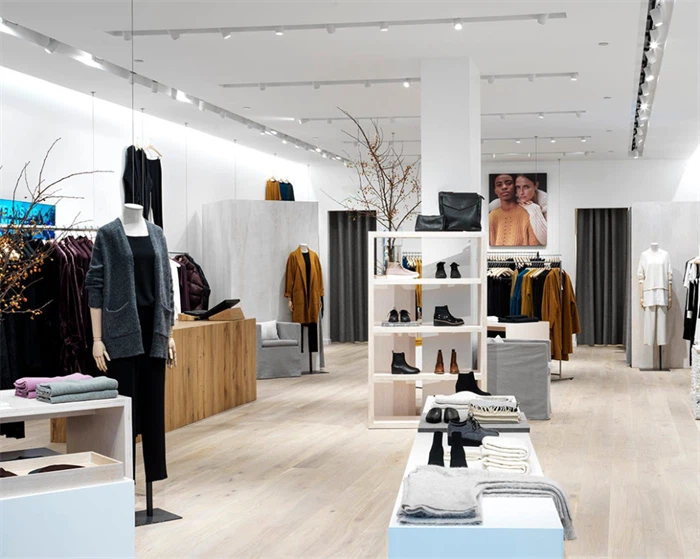
2. Commercial Retail Environments
Luxury brand counters in Shenzhen MixC saw an 18% increase in foot traffic conversion rate and an average customer dwell time extension of 4.5 minutes after implementing a track system.
3. Office and Educational Spaces
Tsinghua University's smart classroom project showed that an adjustable track system improved desktop illuminance uniformity from 0.4 to 0.8, reducing student complaints of visual fatigue by 55%.
IV. Frequently Asked Questions
Q1: Do track systems require professional design?
A1: Excellent design is key to leveraging the advantages of track lighting. It is recommended to use lighting simulation software for pre-design, ensuring key areas achieve 300-500lx and ambient lighting remains above 150lx for optimal energy efficiency.
Q2: Can existing traditional tracks be upgraded with LED fixtures?
A2: It depends on the track specifications. Track systems complying with international standards have 85% compatibility, but note:
Confirm rated current carrying capacity.
Check ground continuity.
Evaluate control system compatibility.
Q3: What is the implementation cost of a smart track system?
A3: The initial investment is 30-50% higher than traditional systems, but through:
52% reduction in energy consumption
65% reduction in maintenance costs
80% reduction in space reconfiguration costs
The payback period is typically 18-24 months.
Q4: How is track spacing determined?
A4: Follow the "Track Spacing : Mounting Height = 1 : 1.5" golden rule. For a 3-meter ceiling height, a 2-meter track spacing is recommended, paired with 30° beam angle fixtures for perfect overlapping illumination.
Q5: How to handle special spatial structures?
A5: Modern track systems offer rich connection components:
Curved Tracks: Minimum radius 300mm
Adjustable Hangers: Adjustment range 500-1500mm
Corner Connectors: Support adjustment to any angle

V. Future Technology Trends
1. Wireless Power Transmission
Next-generation track systems will use magnetic resonance technology to achieve contactless power transfer between the track and fixtures,complete solving contact point oxidation issues.
2. Tunable Spectrum Technology
Through RGBW four-color light mixing, achieve continuous color temperature adjustment from 2700K to 6500K, with dynamic CRI always ≥98.
3. Digital Twin Integration
Deep integration of the lighting system with BIM enables fully digital management of illuminance distribution, energy consumption prediction, and maintenance cycles.
Conclusion
Track lighting has evolved from a mere lighting tool into a core system for spatial management. In the Dubai Museum of the Future project, 327 smart track luminaires optimized the light environment in real-time through AI algorithms, reducing the building's overall energy consumption by 37% while increasing the visitor experience score by 2.3 points.
As Pritzker Prize laureate Tadao Ando stated: "Light is always searching for the best vessel, and the modern track system is the ideal carrier for light." Through scientific selection and innovative application, track lighting is redefining the relationship between people and light, creating lighting environments that are more resilient, efficient, and aesthetically pleasing.
In an era of increasingly complex spatial functions, choosing track lighting is not just selecting a product, but embracing a philosophy of spatial creation oriented towards the future.
References:
International Commission on Illumination. (2023). Trends in Commercial Lighting Systems.
U.S. Department of Energy. (2023). Energy Efficiency of Commercial Lighting.
IESNA. (2023). Lighting Handbook, 12th Edition.