When remodeling their workplaces, many businesses prioritize the design, cost, and incorporation of corporate culture, but they frequently undervalue the significance of office lighting design. Nonetheless, the impact of workplace lighting design on productivity cannot be understated, given that workers spend eight hours a day in the office. In a comfortable setting, workers can produce more value. It has significant effects on staff retention as well.
According to a report, designing a high-quality and comprehensive control office lighting system can reduce office energy costs by up to 80%. This promotes resource utilization, energy conservation, and emission reduction, which not only helps businesses grow sustainably but also protects the environment.

LED flat panel illumination
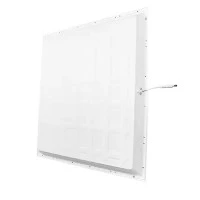
With four installation options, various sizes, soft, comforting light, and good lighting uniformity, flat panel LED lights are the ideal substitute for grille lamp panels and conventional fluorescent light fixtures. Lighting in workplaces, hospitals, shopping centers, and schools is now commonly utilized.
There are numerous sizes available for flat LED panel lights. Commercial office lighting frequently uses three standard sizes, small round and square shapes, and bespoke sizes.
2x2 LED panel light in square
Rectangular: 1x4 LED flat panel
2x4 LED flat panel in a rectangular shape
Once the proper size and installation of the flat panel LED office lighting fixtures have been established, you must decide which illumination technique best suits your requirements.
Edge-lit LED light panel: very thin at just 9mm, ideal for portability. Because the LEDs are placed at the frame's edge, the light may not be consistent. Additionally, edge-lit panel LED office lighting are slightly more expensive because to their intricate craftsmanship.
Back-Lit Panels: Back-lit LED panels are less expensive and have semi-automated manufacture. Additionally, the light is even and gentle because LEDs are placed behind the frame rather than at the edge. More importantly, long-term use of backlit panels should not cause their light to turn yellow. The LED back-lit panel light is now gaining popularity.
Linear LED lighting that is suspended
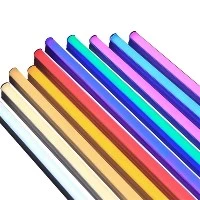
Suspended LED linear lighting can be your best option if you don't want to hang the ceiling or make holes in it. Both installation and maintenance are simple. High-lumen output and a diffused, aesthetically pleasing workplace light are produced by linear hanging LED light fixtures. The most crucial feature is that they are connectable, and there are numerous sizes and types to pick from. thus you may customize the lighting patterns in your business. For interior lighting applications in businesses, hotels, and homes, the constant, gentle light is the perfect architectural luminary.
You are mistaken if you believe that linear light can only be suspended. Recessed linear LED ceiling lights are also available from GRNled. Recessed linear LED lighting has the same range of applications as suspended linear lighting.

Overhead lighting in a recessed office
Typically, LED recessed lighting is put at uniform intervals. Behind the ceiling, they are concealed. People are unable to see the lamp; they can only see the light. The primary characteristic of contemporary recessed lighting is this. This will preserve the suspended ceiling's aesthetic appeal and allow it to blend seamlessly with architectural accents. In some circumstances, recessed LED lights might be panel, linear, or downlight. LED downlights are different from other types of downlights since they are focused and may be used for both basic and accent lighting.
Downlights serve as auxiliary illumination when used in conjunction with a primary light. For example, placing downlights over a sofa can improve visibility when reading a book or newspaper on the sofa.
For lighting without main lights, a lot of downlights will be employed so that they can both provide the basic lighting requirements and add layers to the light. For workplace lighting design, an LED recessed directional downlight is therefore essential.
Five things to think about while designing office lighting:
Utilize as much natural light as possible:
Natural light should be used as much as possible when creating lighting. The human eye has evolved over millions of years to be best suited to natural light.
A study conducted by Cornell University's Department of Design and Environmental Analysis found that employees who were exposed to natural light in the workplace experienced an 84 percent reduction in headaches, impaired vision, and eye strain. According to research from the American Academy of Sleep Medicine, exposure to natural light also helps control hormones and maintain a healthy circadian rhythm, which enables workers to get a good night's sleep and perform well the following day.
However, in order to optimize the influence of direct sunshine, natural light is strongly tied to the building orientation, window position, weather, office curtain shade, and nearby building impediments. In order for as many people as possible to have access to natural light, spaces with windows are usually reserved for general areas rather than individual offices.
varied light colors provide varied atmospheres; the best light colors are those that resemble natural light. A nice lighting atmosphere can be created in offices by combining artificial natural light lights with sunshine.
These days, natural light should be the primary source of light and artificial lighting should be utilized as a supplement to achieve energy-saving and emission reduction under the concept of promoting green and energy-saving offices.
The quantity of visible light flux per unit area of the lit item is referred to as illumination. The measurement is lux (lx), and a minimum lighting level of 300 lux is typically required by national standards. An office with comfortable lighting is a better place for employees to work.
For general lighting, the ratio of the illuminance values surrounding the work surface should not be less than 0.5, nor should the ratio of the minimum to the average illuminance values be less than 0.7.
When local and general lighting are utilized simultaneously, the average illumination in non-working regions should be at least 200 lux and at least half of the working area.
The illumination in the lower area should be at least 150 lux, and the average illumination ratio to the aisle next to the office should not be greater than 5:1 for two adjacent workstation spaces. Otherwise, employees may experience visual strain due to stark contrast changes in brightness in the office lighting environment.
The table regarding office lighting requirements is shown below.
Make that the lighting design for your office conforms with all applicable local construction requirements and regulations, particularly those pertaining to energy efficiency.
Anti-glare:
Preventing glare is a crucial first step. One of office workers' foes is glare. Employees suffer a great deal from it, including exhaustion, disgust, and even long-term exposure to glare that can cause irreversible eye damage. As a result, anti-glare ceiling lights (UGR<19) must be selected for the office, and their placement and orientation must be thoughtfully considered.
This image illustrates how to lessen glare.
Considerations for Maintenance:
Set up a routine maintenance schedule to change the bulbs or clean the fixtures, and choose high-quality fixtures that are free of client complaints to save maintenance expenses.
Test of Lighting:
Mock-ups or lighting simulations must be produced before the design is finalized to make sure the selected fixtures and layout achieve the intended goals. Provide contractors with thorough lighting plans and paperwork to guarantee precise construction.
After installation, assess the lighting's functionality and make any required modifications.
Different Office Design Areas Need Different Lighting
To choose the illuminance and light hue of the lighting, we must take into account both artificial and natural lighting configurations, as well as the diverse lighting needs in different parts of the office throughout the actual design process.
Area of Reception (LED strips and track lights)
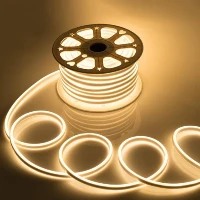
The welcome room is crucial since it creates the initial impression of a business. Track lights are frequently used in lighting design to emphasize the firm image and show off its strength, and basic lighting is typically mixed with logo background picture wall accent lighting. You might require an LED downlight, spotlight, or strip light.
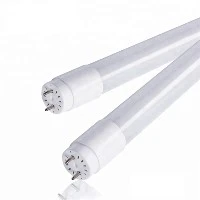
The workplace (LED panels, downlights, and linear lights) is the largest space in the office and is where employee behavior, engagement, and communication, as well as personnel negotiations and other tasks, take place. Typically, a lighting arrangement with consistent spacing is employed, along with matching lighting fixtures for ground functional areas. To create uniform lighting and lessen glare, a linear light is installed in each working area. Corridor areas are supplemented with energy-efficient LED downlights.
Conference Room with LED lighting and downlights
The conference room serves a variety of purposes in addition to conferences, including negotiation, entertainment, and action. To enable unrestricted scene lighting switching, the lighting design should be matched with various setups. For instance, a surface light source, like a lamp shade, is required during a formal meeting; a line light source, like an LED strip, is appropriate for amusement purposes; and a local light source, like an LED downlight, is required during a PowerPoint presentation.
Corridors (motion sensor and low-power LED downlight)
The lighting requirements for corridors are low since they serve as a public space that connects different departments, and functional lighting is adequate. Energy-saving downlights or hidden light fixtures (recessed LED downlights) are typically utilized in accordance with the height and structure of the corridor ceiling. The lighting atmosphere of the entire office can be efficiently reduced by arranging the illumination in each location uniformly and, if feasible, by varying the illumination appropriately.
We talked about the advantages of contemporary office lighting, including pendant and recessed lighting, as well as how to use them properly for optimal effectiveness. I'm hoping this post can assist you in selecting the best kind of LED office lighting fixture.
Which color temperature is ideal for office lighting?

What kind of lighting works best in offices?
Because of its extended lifespan, energy economy, and versatility, LED lighting is without a doubt the finest option for offices. Retrofitting high-lumen LED lights with conventional HID and fluorescent lights is popular.
In an office, how many lights are necessary?
IES recommended workplace lighting levels
Areas of the General Office:
General ambient lighting in open office spaces should be between 30 and 50 footcandles (fc) or 300 and 500 lux (lx).
For private offices, the general ambient lighting should be between 30 and 50 fc or 300 and 500 lx.
Particular Task Domains:
Reading tasks: 500–750 lx or roughly 50–75 fc at the task surface.
Tasks involving writing or typing: roughly 30–50 fc or 300–500 lx at the task surface.
Computer workstations: The desk surface should be between 30 and 50 FC or 300 and 500 lx, with appropriate display contrast and minimal glare.
Meeting rooms provide general ambient lighting of about 30 to 50 FC or 300 to 500 lx, with additional task lighting available if necessary.
The general ambient lighting in the reception and lobby areas is about 20–30 fc or 200–300 lx.
Corridors and Circulation Areas: For typical ambient lighting, use about 5–10 fc or 50–100 lx.
How should bright office lights be handled?
Installing lighting diffusers or filters is the simple solution. To lessen direct glare and soften the light, use diffusers or filters. The light can be dispersed and distributed more evenly by attaching these accessories to the light fixtures. Alternatively, you can use personal task illumination, like a floor lamp or desk lamp.
Is natural light necessary in an office?
Yes, natural light should be given more consideration in modern offices since it improves worker health and well-being, increases alertness and productivity, and creates a visually pleasant atmosphere.
What are the typical issues with lighting in offices?
Glare and eye strain
Inconsistent color temperature and cri
Flicker
Uneven illumination
Compatibility with dimming systems


Our address
No. 5-3 Niujiao Road, Yanchuan Community, Yanluo Street, Bao'an District, Shenzhen
Phone Number
+86 18659785153
bwzm04@ledbenweilighting.com