Need Damp-Proof Fixtures? What to Know About T8 IP65 Sealed Lighting?

Power outages can happen unexpectedly, leaving you in the dark and disrupting your daily life. While traditional flashlights and candles are go-to solutions, a more modern and convenient option has emerged: the Emergency LED Bulb. But what exactly are they, and how do you choose the right one?
This guide answers the five most common questions about these ingenious devices, helping you make an informed decision for your home's safety and convenience.
1. What Exactly is a "Sealed & Damp Proof Fixture"? What Does It Protect Against?
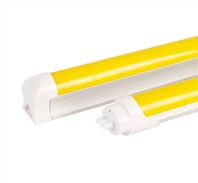
The term "Sealed & Damp Proof Fixture" (often called a "Tri-Proof" fixture in some regions) refers to a fully sealed linear LED fixture designed specifically for harsh, demanding environments. The "protection" typically encompasses three core areas, often defined by the IP65 rating:
| Protection Type | What It Means | Practical Implication |
|---|---|---|
| Dust Ingress (IP6X) | Completely dust-tight. No dust can enter the enclosure. | Prevents buildup that can cause overheating and failure in dusty environments like warehouses or woodshops. |
| Water Jets (IPX5) | Protected against low-pressure water jets from any direction. | Can withstand wash-downs, splashes, and direct rainfall, making it suitable for food processing areas and damp locations. |
| Corrosion/ Chemicals | Resists damage from corrosive substances, moisture, and salts. | The body, made from high-purity PC plastic, stainless steel, or coated die-cast aluminum, won't rust or degrade in humid or chemical-laden air. |
These three protective features work in concert to ensure the fixture operates reliably, safely, and for an extended lifespan in environments where standard open fixtures would quickly fail.

2. Where Are These Fixtures Required or Recommended?
These fixtures are essential for any indoor or outdoor location where moisture, dust, cleaning processes, or corrosive elements are present. Common applications include:
Food & Beverage Industry: Kitchens, dishwashing areas, meat processing plants, breweries, and cold storage facilities.
Industrial & Manufacturing: Chemical processing plants, pharmaceutical labs, automotive workshops, and warehouses with high dust levels.
Agriculture & Aquaculture: Greenhouses, livestock barns, and seafood processing facilities.
Commercial & Public Spaces: Underground parking garages, car washes, indoor swimming pool areas, public bathrooms, tunnels, and loading bays.
Case Study: A Food Processing Plant
A chicken processing plant was using standard fluorescent fixtures in its cleaning area. The constant high-pressure wash-downs led to frequent failures, rusted housings, and electrical hazards. After switching to IP65 sealed fixtures with polycarbonate bodies, they eliminated rust issues, ensured worker safety, and drastically reduced maintenance costs and downtime associated with bulb replacements.

3. How Do You Correctly Install Them to Ensure Sealing Integrity?
Proper installation is critical to maintaining the fixture's IP65 rating. A single mistake can compromise the entire seal.
Inspect the Seals: Before installation, verify that the silicone gaskets at both ends and along the cover are intact, clean, and properly seated in their grooves.
Use Waterproof Cable Glands: The power supply cable must enter through the fixture's IP-rated cable glands. Tighten the gland nut securely to create a watertight seal around the cable.
Evenly Tighten Screws: When securing the diffuser or cover, tighten the screws in a criss-cross, diagonal pattern and gradually. This ensures even pressure on the gasket, preventing gaps or warping of the cover.
Post-Installation Check: After installation, a simple visual inspection and, if safe, a water spray test can help confirm there are no obvious leaks.
4. Do They Require Special "Sealed & Damp Proof" T8 LED Tubes?
While a standard T8 LED tube might physically fit, it is highly recommended to use the dedicated, integrated LED modules designed for these fixtures. Here's why:
Heat Management in a Sealed Environment: Sealed fixtures have different thermal dynamics. Dedicated modules are engineered with this in mind, often using the entire fixture body as a heatsink. A standard tube trapped inside may overheat, leading to premature light output degradation (lumen depreciation).
Corrosion Protection: Dedicated modules are built with components and coatings that resist the high humidity trapped inside the sealed environment, whereas the internal components of a standard T8 tube may corrode over time.
Optical & Electrical Integration: They are designed as a complete system, ensuring optimal light distribution, electrical efficiency, and safety.
5. What Are the Pros and Cons Compared to Traditional Open Fixtures?
| Aspect | Sealed & Damp Proof Fixture | Traditional Open Fixture |
|---|---|---|
| Durability | High. Built for long life in harsh conditions. | Low. Prone to damage from environmental factors. |
| Safety | Excellent. Greatly reduces risk of electrical shorts and fire in wet/dusty areas. | Standard. Not suitable for challenging environments. |
| Maintenance | Low. Easy to clean; rarely needs replacement. | High. Frequent bulb and ballast changes often needed. |
| Initial Cost | Higher. | Lower. |
| Installation | More complex, requiring care to maintain seal. | Simple and straightforward. |
| Versatility | Specialized for harsh environments. | Suitable only for dry, clean, indoor spaces. |
Conclusion: A Smart Investment for Demanding Environments
A T8 Sealed & Damp Proof Fixture is not just a light; it's a robust environmental management system for your lighting. While the initial investment is higher than for a standard fixture, it pays for itself over time through dramatically reduced maintenance, enhanced safety, and unparalleled reliability. By selecting the right fixture for the environment and installing it with care, you secure a long-term lighting solution that performs when and where it matters most.