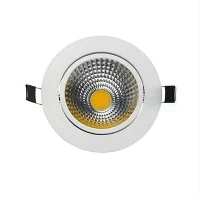
If you have ever noticed boxy, wall-mounted fixtures on the exteriors of warehouses, factories, or commercial buildings that cast a pool of light on the ground below at night, you were likely looking at an "LED wall pack light." Though unassuming, these are among the most widely used lighting fixtures for outdoor security. This article explains what they are, the different types available, where they should be installed, and the key specifications to consider when making a purchase.
What Is an LED Wall Pack Light?
An LED wall pack light is a lighting fixture designed to be mounted directly onto a wall, primarily to illuminate the perimeter of a building, entryways, and surrounding areas. Typically featuring a compact, rectangular or trapezoidal metal housing, these lights are space-efficient and do not occupy any ground area.
Unlike standard wall-mounted lights-which are often decorative-LED wall packs are functional. They are designed to illuminate the ground, improve visibility, and minimize dark spots. Consequently, they feature more robust, durable housings, higher ingress protection (IP) ratings, and precision-engineered optics to direct light exactly where it is needed, rather than scattering it indiscriminately.
Basic Structure and Operation
A typical LED wall pack consists of the following components:
Housing: Usually made of die-cast aluminum, which provides both structural strength and effective heat dissipation; the surface is typically powder-coated for corrosion resistance.
LED Light Module: The number and quality of the LED chips directly determine the fixture's luminous efficiency and lifespan.
LED Driver: Converts mains electricity into the stable current required by the LEDs; this can be integrated within the unit or mounted externally.
Optical Lens or Cover: Controls the direction and spread of the light; commonly made from polycarbonate (PC) or tempered glass.
Mounting Base: Used to secure the fixture to a wall (via the back or side); some models allow for angle adjustments.
The operating principle is straightforward: power is supplied from the building's electrical system, the driver converts and stabilizes the current, the LEDs emit light, and the lens focuses that light onto the target area. Many models also include a photocell or motion sensor, allowing the light to turn on automatically at dusk and off at dawn.
Common Types
Based on light distribution and functionality, these fixtures can generally be categorized as follows:
Full cutoff: Light is directed exclusively downward, with virtually no upward or lateral spill; ideal for areas with strict light pollution regulations.
Semi-cutoff: Allows some light to diffuse outward, providing a broader illumination range and a greater sense of brightness.
Forward throw: Projects light further ahead; suitable for illuminating long stretches of exterior walls or pathways.
Adjustable wattage/CCT: Features multiple settings for power output and color temperature within a single unit-highly convenient for inventory management and a favorite among distributors and contractors.
Models with photocells or motion sensors: Enable automatic switching, save energy, and are well-suited for unattended locations.
Models with emergency battery backup: Provide continued illumination during power outages; used for exit paths and safety evacuation zones.
Key Application Scenarios
The primary purpose of wall pack lighting is perimeter illumination and security. They are most commonly used in the following settings:
Warehouses and logistics centers: Loading docks, areas above roll-up doors, and along exterior walls.
Factories and industrial parks: Exterior walls of production facilities, areas surrounding equipment, and inspection walkways.
Commercial buildings: Facades and rear entrances of shopping malls, supermarkets, and office buildings.
Parking areas: Supplemental lighting along building exteriors, covering the edges of parking spaces and pedestrian walkways.
Schools, hospitals, and government facilities: Entrances/exits, exterior corridors, and walls adjacent to stairwells.
Residential complexes and apartment buildings: Building entrances, side pathways, and common areas.
Gas stations and convenience stores: Exterior wall illumination and security lighting for entrances.
Service entrances for hotels and apartment complexes: Waste disposal areas, rear doors, and the exteriors of utility/equipment rooms.
What these environments have in common is the availability of walls for mounting, a need for consistent nighttime visibility, and a preference for fixtures that require minimal maintenance.
Advantages Over Traditional Wall-Mounted Lights
In the past, wall-mounted lights typically utilized high-pressure sodium or metal-halide lamps. Today, an increasing number of projects are transitioning to LED technology for the following reasons:
Greater Energy Efficiency: For the same level of brightness, power consumption is generally reduced by more than half.
Longer Lifespan: With a typical rated lifespan of around 50,000 hours, the frequency of lamp replacements is significantly lower, which also reduces the costs associated with maintenance work at heights.
Instant-On Capability: No warm-up period is required; furthermore, the lights are not damaged by sensor-based controls or frequent switching.
Improved Color Rendering: Surfaces, vehicles, and human faces are more clearly visible, which also enhances the effectiveness of surveillance cameras.
Robustness and Durability: Lacking filaments or glass bulbs, these units are more reliable in environments prone to high winds or vibrations.
Environmentally Friendly: They contain no mercury, making disposal simpler and more responsible.
Conclusion
LED wall pack lights are functional lighting fixtures designed specifically for installation on the exterior walls of buildings. They are primarily used for security lighting around entrances, perimeter pathways, and outer areas. Featuring a simple design and easy installation, they are well-suited for a wide range of settings, including warehouses, industrial facilities, commercial buildings, schools, and parking lots.
https://www.benweilight.com/led-wall-pack-light/commercial-led-wall-pack-lights.html