In recent years, you may have found that the halogen bulb you've been buying for years is no longer available at your local hardware store. That's because LED spotlights are quickly being introduced to the market as a more energy efficient alternative.
With the transition to LED technology, a lot of the metrics and points to consider are now different. If this is your first time purchase of LED spotlights, you might be worried, confused or frustrated.
Not to worry! After reading our 4-point guide below, you'll be able to make a confident and educated LED spotlight purchase in no time.
Consideration #1: Size & form factor
First and foremost, you will want to narrow down your LED spotlight search by determining what mechanical size and shape of bulb you will need.
Generally speaking, there are three types of LED spotlights: MR, BR and PAR. The type name is typically followed by a two digit number, which indicates the bulb diameter in 1/8ths of an inch.
MR16
MR16 bulbs are the smallest type of spotlight with a 2 inch diameter. These bulbs are typically used for lower brightness applications. LED spotlights of this size are typically 5-8 Watts.
MR16 bulbs come in two variants that differ in base type (how the bulb is mounted into the socket).
If you see a narrow, two-pin connector without rounded bottoms as shown in the photo below, you have a GU 5.3 version. These are almost always very low voltage (12V AC or DC).

If you see a broader 2-prong connector with rounded bottoms as shown in the photo below, you have a GU 10 version. These are almost always mains voltage (120/240V AC).

!Protip: you may sometimes find that certain manufacturers refer to MR16 bulbs with GU 5.3 bases as simply [MR16] (without the base designation) and MR16 GU10 bulbs as [GU10] bulbs. This is not technically correct but you may want to be aware of this when you are reviewing product specifications.
PAR20
The next size up is a PAR20 bulb, which is 2.5 inches in diameter. PAR20 bulbs are common in residential applications in smaller homes or where ceilings are not as tall. LED spotlights of this size are typically 13 Watts.
The vast majority of PAR20 bulbs use the same E26 Edison screw base that standard A19 bulbs use, and operate on mains voltage (120/240V AC).

PAR30
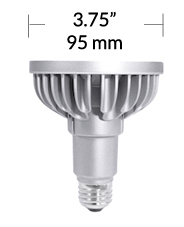
PAR30 bulbs are similar in shape and function to PAR20 bulbs, but are quite a bit larger at 3.75 inches in diameter. These are commonly used in higher ceiling applications. LED spotlights of this size are typically 15 Watts.
PAR38
The largest of the commonly used residential spotlight sizes is the PAR38. At 4.13 inches in diameter, these are large and bright, rated at upwards of 100W for halogen bulbs. LED spotlights of this size are typically 18 Watts.
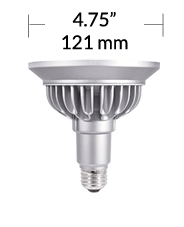
Now that we've gone over the bulb types, how do you know which one to choose? The short answer is: follow the directions on the lampholder.
If you take a look at any reputable lamp fixture, you should see a sticker or imprint noting the type of bulb size that is compatible.
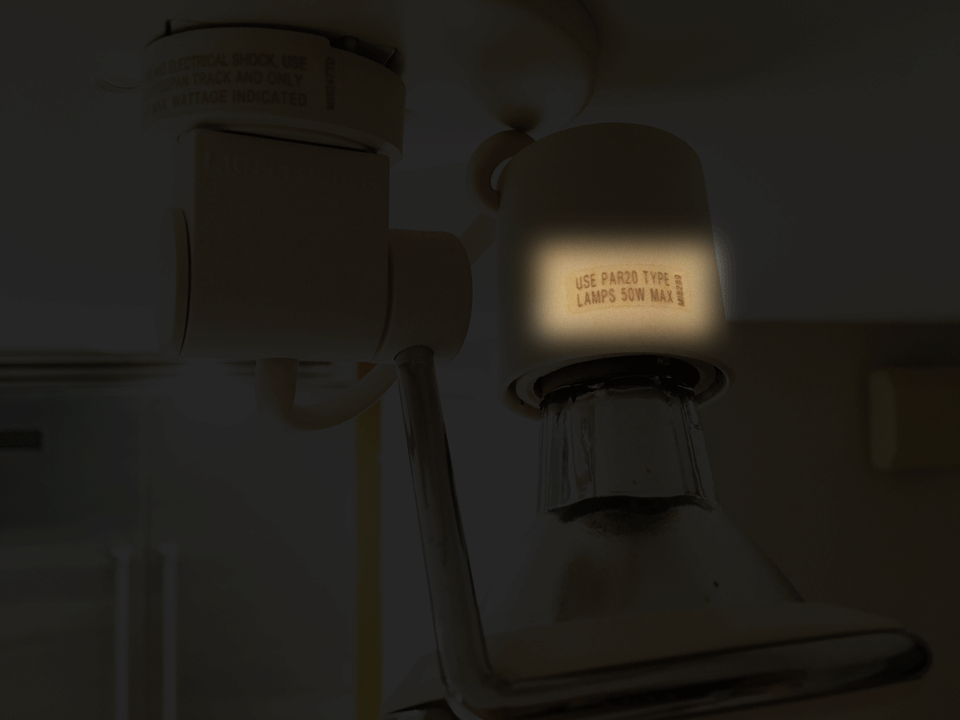
In this example, the lampholder says "USE PAR20 TYPE" so we know for certain that this is the type of LED spotlight that is needed.
Consideration #2: Color - CCT and CRI
With halogen spotlights, color was never an option - pretty much all products from all manufacturers had the same color temperature and color quality.
With LED spotlights, however, many color temperature and CRI options exist, making it more difficult to ensure that you pick the right one for your needs.
Color temperature: pick 3000K LED spotlights
Color temperature is a number that describes how "yellow" or "blue" a light's color is.
2700K is considered the same color as the classic incandescent light bulb
3000K is slightly bluer and is similar to halogen bulb light color, but still has a warm, inviting yellow color to it.
4000K is often called "neutral white" because it is neither blue nor yellow - and is the middle of the color temperature scale.
Anything over 5000K will appear blue-ish and would not be recommended for standard residential applications.
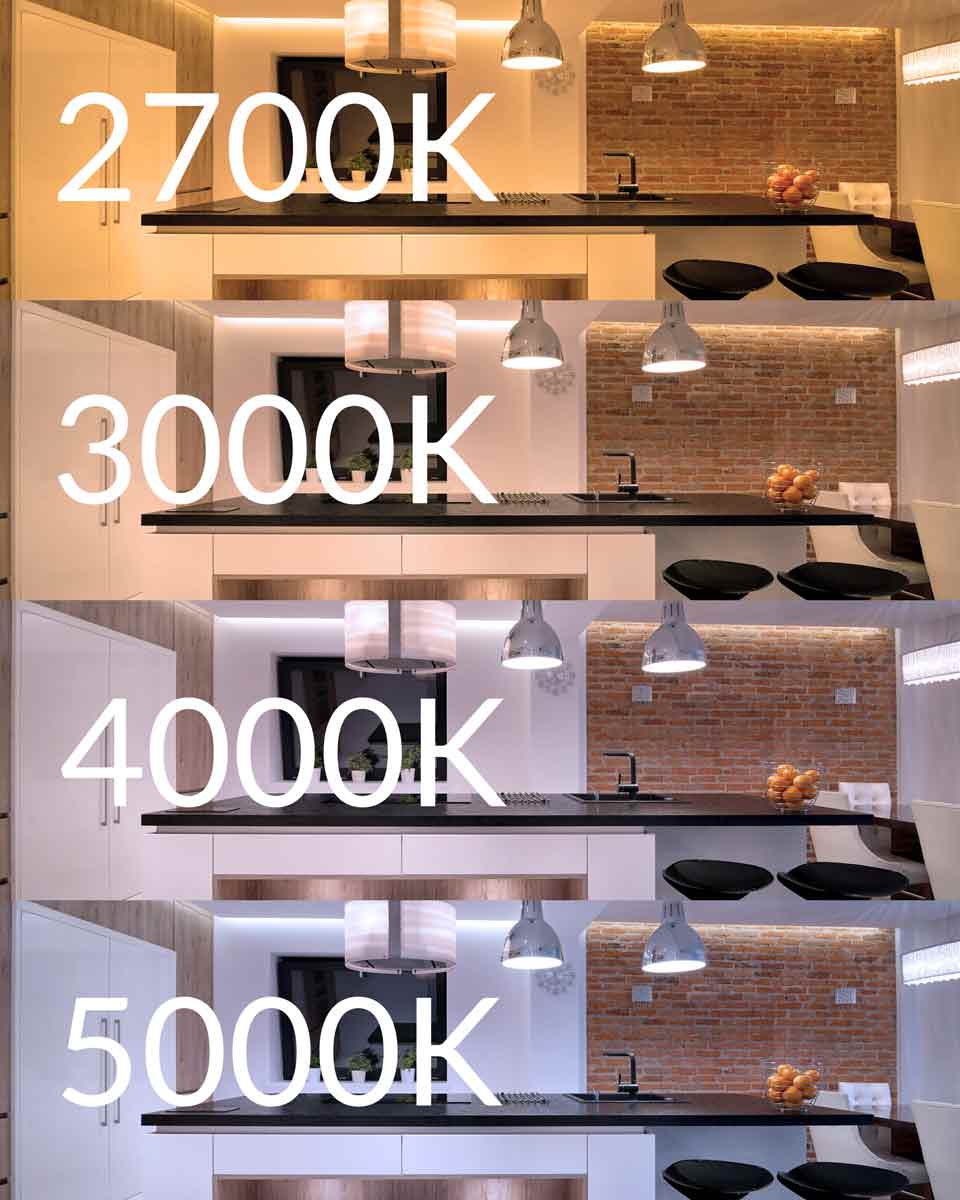
Lighting for your home is ultimately a personal choice, but we recommend starting with 3000K LED spotlights to test. If you think it's too yellow, you can switch to 3500K or 4000K. If you think it's too blue, you can switch to 2700K.
Most of these color temperatures are readily available from most manufacturers.
CRI: pick 80 or above
CRI is a bit tricky to understand because it is not immediately visible from just simply looking at an LED spotlight.
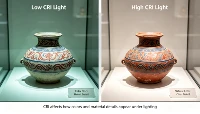
CRI is score ranging from 0 to 100 which measures how accurate objects appear under a light. The higher the score, the more accurate.
What does accurate really mean, anyway?
Let's say you are trying to light up a painting. An perfectly accurate LED spotlight would make the painting look exactly the same as it does under a halogen bulb.
An inaccurate (low CRI) LED spotlight, however, would make the painting look "off" - the colors might appear mismatched, washed out, or indistinguishable.