Introduction: The Cosmetic Assumption and the Thermal Reality
Why the Two Bulbs Look Different
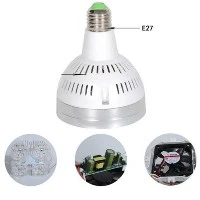
A side-by-side comparison of the two bulbs reveals a structural divergence that is immediately visible. The Type A bulb features a pronounced finned section between the diffuser and the E27 base-a series of vertical aluminum ribs designed to increase surface area for convective heat transfer. The Type B bulb presents a smooth, continuous cylindrical surface from the diffuser down to the base, with no exposed fin structure. To a casual buyer, the Type A looks "industrial" and the Type B looks "clean." To an engineer, the Type A looks like a heat sink and the Type B looks like a thermal compromise.
That difference is not an aesthetic choice made by a designer. It is a consequence of the thermal load that a high-power E27 bulb must reject. An LED converts only a fraction of its input energy into visible light; the remainder becomes heat at the semiconductor junction. In a low-wattage bulb, the heat flux density is modest enough that a simple aluminum shell can dissipate it. In a bulb rated at 50W, 100W, or higher, the heat flux density rises to a level where the external geometry of the bulb determines whether the junction temperature stays within its operating window or climbs into a region where lumen depreciation and driver failure accelerate. The fins on the Type A bulb are the visible evidence of an engineering decision to prioritize heat rejection. The smooth surface of the Type B bulb is the visible evidence of a different set of priorities.
The Stakes: Junction Temperature and Maintained Output
The practical consequence of the thermal difference is measured in junction temperature. The engineering literature on high-power LEDs is consistent: elevated junction temperatures degrade luminous efficiency and reduce operational lifetime, and reducing peak junction temperature by even 8–10 K can extend service life by 20–40% depending on the device's activation energy. A bulb that holds its junction temperature within its design window will maintain its lumen output and color quality over tens of thousands of hours. A bulb that allows the junction to run hotter will exhibit faster lumen depreciation, color shift, and driver degradation, regardless of its initial lumen rating.
The choice between Type A and Type B is therefore not a choice between two equally durable products with different shapes. It is a choice between two different thermal architectures, and the thermal architecture is the primary determinant of whether the bulb's rated life is a realistic projection or an optimistic one.
The Scope of This Comparison
This article compares the two bulbs across the variables that matter in a high-power E27 selection decision: photometric distribution and glare, thermal architecture and service life, fixture compatibility and application fit, and the economic consequences of choosing one over the other. It does not treat the two as interchangeable options differentiated only by silhouette. It treats them as solutions to different problems, and it provides a framework for matching the bulb to the problem the installation actually presents.
Photometric Character: Distribution, Glare, and the Shape of the Light
Type A: Broad Distribution for General Illumination
Type A bulbs are, by convention, general-purpose omnidirectional sources. In the conventional residential and commercial lighting vocabulary, the "Type A" designation refers to a standard pear-shaped bulb intended to cast light in a broad distribution-typically described as 360 degrees or close to it-for general illumination in floor lamps, ceiling fixtures, and open pendants. The high-power Type A variant evaluated here adapts that broad-distribution philosophy to a higher output class, using a large diffusing surface to spread the light across the room or the work plane rather than concentrating it into a narrow beam.
The broad distribution is an advantage in open high-bay and general commercial settings where the goal is even ambient fill. A fixture mounted at 20–40 feet needs to project light across a wide floor area, and a source with a broad, diffuse distribution reduces the contrast between bright and dim zones on the rack faces and the floor. The Type A geometry, with its substantial diffusing section and its finned body acting as a secondary optical element, is configured for this kind of area illumination.
Type B: The Smooth Profile and the Risk of Hotspotting
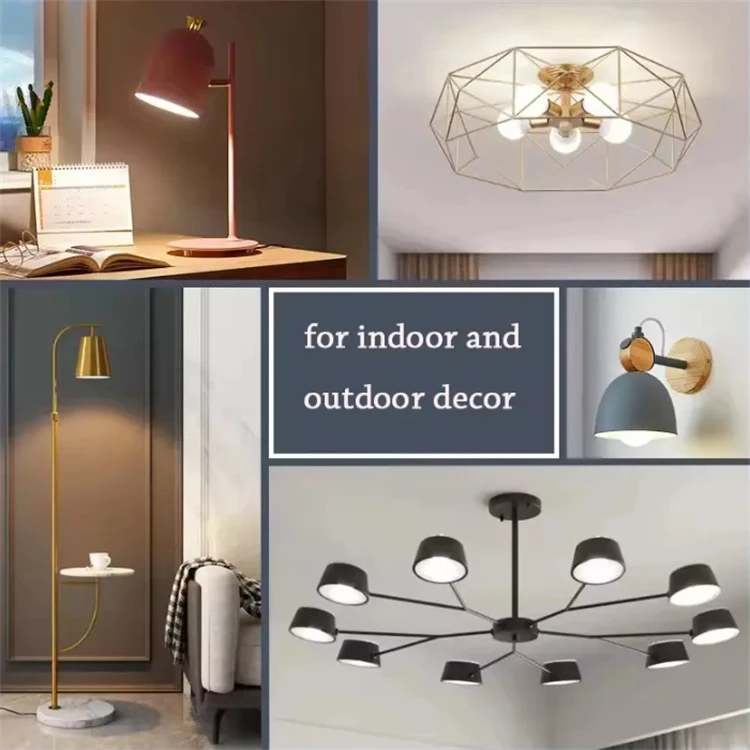
Type B bulbs occupy a different optical niche. In the conventional vocabulary, "Type B" refers to a decorative, bullet-shaped or tapered lamp designed for directional or accent applications, often in multi-bulb fixtures where the beam is intended to interact with crystal, glass, or metallic surfaces rather than to flood the room. The high-power Type B variant in this comparison retains the smooth, enclosed profile associated with that decorative lineage, but applies it to a higher-wattage source.
The smooth profile has an optical consequence. Without the external fin structure to break up the source and provide secondary diffusion, the Type B bulb's output is more directly shaped by its internal reflector and diffuser. In a multi-bulb fixture, this can produce a more controlled and directed beam, which is desirable when the fixture is designed to create sparkle or accent. But in a high-output single-source application, the smooth profile offers less thermal and optical "breathing room" than the finned Type A, and the risk of visible hotspots or uneven distribution increases as wattage rises. The Type B is optically cleaner in appearance, but that cleanliness is achieved with a smaller thermal and optical margin.
Glare and Visual Comfort in the Installed Environment
Glare is the photometric variable that most directly affects occupant comfort, and the two bulbs address it differently. The Type A bulb's large diffusing surface and its finned body-which interrupts the line of sight to the source from many viewing angles-produce a softer luminance profile. The Type B bulb's smooth cylinder can present a more uniform surface from directly below, but from oblique angles the enclosed profile may offer less shielding, particularly in fixtures where the bulb is exposed.
In commercial and industrial settings, the difference is secondary to the thermal question. In residential or decorative settings, where the bulb is visible and the occupants are close to the source, the photometric difference becomes an aesthetic one. The Type A reads as a softly glowing engineered object; the Type B reads as a clean, minimal cylinder. Neither is inherently better, but the choice should be made with the viewing geometry in mind rather than on the basis of the product photograph alone.
Thermal Architecture: The Decisive Variable at High Power
Type A: Fins, Airflow, and the Thermal Margin
The Type A bulb's finned section is its defining engineering feature. Aluminum fins serve two thermal functions: they conduct heat away from the LED board and driver, and they increase the surface area available for convective transfer to the surrounding air. In a compact high-power E27 form factor, the finned geometry is the primary path by which heat exits the lamp.
The finned architecture is not merely a passive heat sink. The high-power Type A design typically pairs the aluminum fins with an active cooling fan, and this combination is what allows the bulb to sustain high output in continuous duty. Published product specifications for high-power E27 bulbs in this class describe "fin heat sink + built-in cooling fan realistic double heat dissipation" as the mechanism that "ensures long lamp life". The fan changes the convective coefficient on the fin surfaces, moving heat out of the lamp at a rate that passive finning alone cannot achieve in a restricted airflow environment.
The result is thermal margin. The Type A bulb can operate at a higher wattage without allowing the junction temperature to rise above its design window, and that margin is what preserves lumen maintenance, color stability, and driver reliability over the service life. The engineering literature supports the principle: reducing junction temperature by 8–10 K extends projected life by 20–40%, and the finned-plus-fan architecture is the mechanism by which that reduction is achieved in a high-power E27 envelope.
Type B: The Smooth Surface and the Thermal Trade-Off
The Type B bulb's smooth, enclosed profile presents a different thermal picture. Without an exposed fin structure, the surface area available for convective heat rejection is reduced relative to the Type A design. The enclosed body may still contain internal heat-spreading elements-an aluminum core, a thermal interface to the base-but the external geometry offers less direct contact between the heat-generating components and the ambient air.
This is not a defect in every application. At moderate wattages, the thermal load is low enough that a smooth-surfaced bulb can maintain an acceptable junction temperature through internal conduction and the limited convection available from the enclosure. But as wattage rises into the high-power range, the reduced external surface area becomes a constraint. The bulb must either operate at a lower output, accept a higher junction temperature, or rely on a more aggressive internal cooling strategy-and in the compact E27 envelope, the internal volume for such a strategy is limited.
The practical consequence is that Type B is thermally better suited to moderate-power applications, or to fixtures where the bulb is not operated at its maximum rated output for extended periods. In a continuous-duty high-bay installation at the top of the bulb's wattage range, the Type B's thermal margin is narrower than the Type A's, and the service-life projection must be adjusted accordingly.
Driver Protection and the Cascading Effect of Heat
The thermal difference between the two architectures extends beyond the LED chips to the driver. The driver is a thermally sensitive subsystem, and its electrolytic capacitor is often the weakest link in the entire lamp. Capacitor life approximately doubles for every 10°C reduction in operating temperature, and the fan-and-fin architecture of the Type A reduces the driver compartment temperature relative to a smooth-surfaced alternative.
The cascading logic is straightforward. A cooler driver compartment extends capacitor life, which extends the interval before the bulb exhibits flicker, color shift, or outright failure. A hotter driver compartment-the likely condition in a smooth-surfaced high-power bulb operating near its thermal limit-shortens capacitor life and brings the failure point forward. The Type A's thermal architecture protects both the light-generating and the power-conversion subsystems within the same envelope. The Type B's smooth profile offers less thermal protection to both, and the effect compounds over the service life.
The Fan as a Shared Variable and the Quality of Its Implementation
Both bulb types may employ active cooling in their high-power variants, but the presence of a fan is not a binary specification. Fan bearing quality, thermal speed control, and ingress protection determine whether the fan is a reliability asset or a new failure mode. A fan with a sealed bearing rated at 50,000–70,000 hours L10 is a long-life component; a fan with a sleeve bearing rated at 30,000 hours may become the limiting factor in the system's durability.
The Type A's external fin structure provides more space for effective airflow and more surface area for heat rejection per unit of fan power, which means the fan can achieve the required cooling at a lower speed. A lower-speed fan accumulates less dust, produces less noise, and wears its bearing more slowly. The Type B's enclosed profile may require the fan to work harder to achieve the same thermal result, which shortens the fan's life and increases its acoustic signature. The thermal architecture is therefore not only about the LED; it is about the entire cooling system's duty cycle and longevity.
Fixture Compatibility and Application Fit
Where Type A Belongs: Open High-Bay and General Commercial
The Type A bulb's finned body and broad distribution make it the appropriate choice for open high-bay fixtures, industrial pendants, and commercial ceiling sockets where the bulb is exposed to ambient air and the goal is even area illumination. In these environments, the finned structure is an asset: it provides the thermal margin needed for continuous high-output operation, and its diffuse distribution fills the space without creating harsh hotspots on the rack faces or the floor.
The Type A is also the better choice in fixtures where the bulb is visible but the fixture is large enough to accommodate the finned geometry. A high-bay pendant, a workshop ceiling socket, or a commercial storage fixture has the spatial envelope to accept the Type A's larger diameter, and the finned body reads as a functional element rather than a visual intrusion. The bulb's appearance is consistent with the industrial character of the installation.
Where Type B Belongs: Enclosed Fixtures and Aesthetic Contexts
The Type B bulb's smooth profile and enclosed body make it suitable for fixtures where the bulb must fit within a restrictive shade, globe, or decorative enclosure. A lantern with a narrow aperture, a sconce with a close-fitting glass, or a decorative pendant designed around a clean cylindrical form will accept the Type B more easily than the Type A. The absence of external fins means the bulb presents a smaller effective diameter and a more uniform silhouette, which can be an advantage in tightly specified decorative fixtures.
The Type B is also appropriate in applications where the wattage is moderated to match its thermal envelope. A residential pendant, a decorative sconce, or a moderate-output commercial fixture that operates for limited hours may not impose the continuous thermal load that a high-bay installation does. In those contexts, the Type B's smoother optical profile and cleaner appearance can be the deciding factors without the thermal penalty becoming consequential.
The Compatibility Trap: Fitting Is Not the Same as Suitability
A critical distinction in the selection process is between physical compatibility and thermal suitability. A Type A bulb may fit into a socket that is nominally E27, but its finned body may be too wide for the fixture's shade or globe. A Type B bulb may fit into a fixture that was designed for a lower-wattage source, but its thermal margin may be insufficient for the high-power operation the installation requires. The socket type confirms electrical and mechanical compatibility; it does not confirm that the bulb's thermal architecture is aligned with the fixture's airflow and ambient conditions.
The correct selection process begins with the fixture, not the bulb. Determine the available diameter and height, the airflow path, and the ambient temperature at the fixture location. Then select the bulb whose thermal architecture can maintain its junction temperature within the design window under those conditions. If the fixture cannot accommodate the finned Type A, the Type B may be the only physical fit-but the wattage should be moderated, or the fixture's thermal environment improved, to compensate for the narrower thermal margin.
The Economic Comparison: Service Life and Total Cost
Initial Cost Versus Maintained Output
The two bulb types may carry different purchase prices, but the economically relevant comparison is the cost per maintained lumen over the service life, not the cost per initial lumen. A Type A bulb with a higher purchase price but a longer maintained-output interval may be the lower-cost choice in a high-bay installation where access costs dominate the maintenance budget. A Type B bulb with a lower purchase price but a shorter thermal-limited service life may be the higher-cost choice when the cost of accessing the fixture is included.
The documented economics of high-bay LED retrofits illustrate the scale. An 80W LED high-bay retrofit bulb producing 11,600 lumens can replace a 250W metal halide source, delivering substantial wattage displacement and energy savings. But the savings are realized only if the bulb survives to its projected service life. A thermally marginal bulb that fails early erodes the energy savings and reintroduces the maintenance burden that the retrofit was intended to eliminate.
Thermal Margin as an Economic Asset
The Type A's thermal margin is an economic asset because it protects the payback model. A bulb that holds its junction temperature within the design window will maintain its lumen output and its driver reliability over the service interval that the economics assume. A bulb that operates with a narrower thermal margin-the Type B in a high-power continuous-duty installation-may still function, but its maintained output and service life will be shorter, and the total cost of ownership will be higher than the purchase-price comparison suggests.
The economic comparison therefore favors the Type A in applications where thermal margin is scarce: high-bay ceilings, continuous operating hours, elevated ambient temperatures, and enclosed or semi-enclosed fixtures. It favors the Type B in applications where thermal margin is not the binding constraint: moderate-wattage decorative fixtures, limited operating hours, and open or well-ventilated spaces where the smooth profile's optical or spatial advantages are the deciding factors.
Selection Framework and Conclusion
A Decision Matrix for the High-Power E27 Choice
The selection decision can be organized around three primary questions.
First, what is the thermal environment? If the fixture is open, the mounting height is 20 feet or more, the operating hours are long, and the ambient at the fixture is elevated, the Type A's finned-and-fan architecture is the appropriate specification. If the fixture is enclosed, the operating hours are moderate, and the wattage is within the range where the smooth profile can maintain an acceptable junction temperature, the Type B may be suitable.
Second, what is the optical requirement? If the goal is broad, even area illumination in an open commercial or industrial space, the Type A's diffuse distribution is advantageous. If the goal is a controlled beam in a decorative or multi-bulb fixture, the Type B's smoother optical profile may be preferable, provided the thermal conditions are compatible.
Third, what is the maintenance access? If the fixture is difficult to reach and the cost of replacement is high, the thermal margin that extends service life becomes the dominant economic variable. The Type A's thermal architecture is the better hedge against premature failure in high-access-cost installations. If the fixture is easily accessible and the replacement cost is low, the purchase-price and aesthetic differences may carry more weight.
The Verdict: Thermal Architecture Is the Specification
The Type A and Type B high-power E27 bulbs are not interchangeable products differentiated only by shape. They are different thermal solutions to the same optical problem. The Type A prioritizes heat rejection and sustained output through an exposed finned architecture and active cooling. The Type B prioritizes a clean, enclosed profile and fixture compatibility, with a narrower thermal margin that becomes consequential as wattage and duty cycle rise.
For the buyer whose installation demands maximum maintained output, long service life, and protection against the cascading thermal failure of LED and driver, the Type A is the technically superior choice. For the buyer whose fixture cannot accommodate the finned geometry, or whose wattage and duty cycle are moderate enough that the smooth profile's thermal margin is sufficient, the Type B is a viable alternative. The decision is not a matter of preference. It is a matter of matching the bulb's thermal architecture to the thermal reality of the installation-and in the high-power E27 category, that match is the specification that matters most.
How To Cooperate With Us?
We are happy to have total control over the manufacturing process and the calibre of our products since we have our own facilities. Since we are producers rather than just brokers, we are dedicated to providing our customers with the best pricing. Since we are certain that the price and quality of our products are clear, we invite customers to see our samples first. Our commitment to quality and customer satisfaction drives us to continuously provide top-notch goods.
Our address
3rd Floor, 5th Building, Hebei Industrial Park, Hualian Community, Longhua District, Shenzhen, China