What are LED corn lights?

Corn lights are intended to be an energy-efficient alternative to SON lamps and high-intensity discharge (HID) lamps. They produce a lot of light using a big arrangement of LEDs on its metal frame. The term "corn lights" refers to how these LEDs are arranged, which roughly resembles a corn cob.
Anywhere that needs a lot of light, such as parking lots, football stadiums, and street lights, uses them. In contrast to halogen HID and SON lamps, LED corn lights can effectively provide a lot of light while keeping a broad color range.
Where can you get corn lights?
Any high-lumen light, whether indoors or outside, may be replaced with corn lights, which are energy-efficient. They're used to lighting:
- Parking lots
- Football fields
- Streets Roads
- Internal high bay lighting
- Housing and athletic facilities
- Areas for recreation (like parks and fields)
LED Corn Lamps have developed into a go-to practical option for spaces where distinctive bright illumination is required because of its durable and splashproof construction. They are particularly beneficial in outside applications.
Metal Halide vs SON Lamps vs LED Corn Bulbs
Metal Halide* |
Sodium vapour lamps** |
LED Corn Bulbs |
|
| On/Off Cycling | Can take up to 15–30 minutes to warm up | 5–10 minutes | Instantaneous |
| Ultraviolet | Yes. Emits UV radiation which requires a filter built into the bulb. | Small amounts | None |
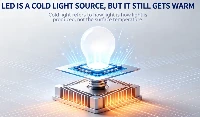
| Heat Emissions | A significant amount (10–15% of the total energy consumed) | A significant amount (15% of total energy) | Produces very little heat |
| Costs | From £22 | From £22 | From £22 |
| Average Lifespan | 6,000–15,000 hours | 18,000—24,000 hours | 50,000 hours |
| Colour Temperature | 2,700k (very warm) to 20,000k (super daylight) | 2,700k (very warm) | 2,700k (very warm) to 6,500k (daylight) |
| Energy Rating*** | C | B | A+ |
* Metal halide: Creates light using a combination of mercury vapour and metal halides. Sports arenas, parking lots, warehouses, and other huge locations are often utilized.
** High-pressure sodium lamps that are often used for general floodlighting and street lighting are known as sodium vapour lamps.
*** Energy Ratings: In order to accommodate evolving technology, all lighting product ratings have subsequently been reevaluated.
Corn Lights by Wattage, Lumens and Colour Temperature
LED Wattage (w) |
SON/MH Equivalent |
Lumens (lm) |
Colour Temperature (k) |
Cap Type |
| 20w | 75w | 2,200lm | 6000k (daylight) | E27 |
| 30w | 105w | 3,200lm | 6000k (daylight) | E27 |
| 30w | 105w | 3,200lm | 6000k (daylight) | E40 |
| 40w | 150w | 4,200lm | 6000k (daylight) | E40 |
| 60w | 200w | 6,500lm | 6000k (daylight) | E40 |
| 80w | 250w | 7,800lm | 6000k (daylight) | E40 |
| 100w | 400w | 9,800lm | 6000k (daylight) | E40 |
| 120w | 400w | 13,000lm | 6000k (daylight) | E40 |
| 150w | 450w | 15,000lm | 6000k (daylight) | E40 |
| 200w | 600w | 20,000lm | 6000k (daylight) | E40 |
Power vs. Lumens
A brief explanation of lumens and wattages.
Wattage: The measurement of electrical power in watts. In the past, we used watts (w) to indicate a bulb's brightness. Wattage, however, no longer provides us with sufficient information in light of the popularity of energy-efficient LED lights. For instance, a 5w LED will provide the same number of lumens as a normal 40w CFL bulb. Study More: What Wattage of Light Bulb Do I Need?
Lumens are a unit of measurement for light intensity. The lumen (lm) value is a measure of light intensity. You should look for bulbs that give a minimum of 5,000lm for a space that requires a lot of light. The more lumens are needed, the bigger and darker the area must be.