One of humanity's most exquisite fusions of renewable energy with useful engineering is solar lighting technology. These systems eliminate complicated infrastructure and provide sustainable alternatives to grid-dependent lighting by turning plentiful sunshine into lights at night. A thorough understanding of the structure of solar lighting exposes a complex interaction of parts, each of which plays a vital part in absorbing, storing, controlling, and transforming solar energy into visible light. The five essential elements that make up the framework of contemporary solar lighting systems are examined in this article, with special focus on the advancements influencing integrated designs.
Solar Photovoltaic Panels: The Harvesters of Energy
The basic energy source for solar lighting systems is solar panels. These panels use the photovoltaic effect to directly convert sunlight into direct current (DC) power. They are composed of interconnected photovoltaic (PV) cells, which are usually constructed of crystalline silicon. The total energy production of the system is directly impacted by its efficiency, which is dictated by elements like as tilt angle, orientation, and cell technology. Monocrystalline silicon panels are frequently used in modern integrated solar street lights because of their greater efficiency (usually 18–22%) and compact design, which enables maximum power output from a small surface area.
Modern designs minimise wind resistance while optimising angle and exposure by integrating panels directly into the luminaire frame. Modern all-in-one solar lights integrate panels into the fixture housing, improving longevity and aesthetic appeal in contrast to early models that placed panels separately. Importantly, panels must endure severe environmental factors such moisture, temperature fluctuations, and UV rays; hence, corrosion-resistant frames and tempered glass encapsulation are necessary for lifespan.
2. LED Light Fixtures: The Most Effective Light Sources
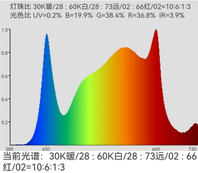
Because of their remarkably low energy consumption and great lumen output, Light Emitting Diodes (LEDs) have completely changed solar lighting. While providing better colour rendering and directed light distribution, modern LED lights use around 50% less energy than conventional high-pressure sodium (HPS) bulbs. With lifespans surpassing 50,000 hours, its solid-state construction provides outstanding longevity, greatly lowering maintenance requirements.
LEDs are included straight into the lighting assembly in integrated designs, frequently with optics that may be adjusted to regulate beam patterns for area, walkway, or road illumination. Their ability to work with low-voltage DC power from batteries, which eliminates energy losses from DC-AC conversion, is a crucial improvement. LEDs may function at different intensities when combined with sophisticated controllers, dimming during periods of low traffic and illuminating upon motion detection to further optimise energy consumption. LEDs are essential for energy-conscious solar applications because of their versatility.
The Energy Stores: Rechargeable Batteries
Batteries are essential to system dependability because they store solar energy collected during the day for use at night. Their applicability is determined by three important factors: temperature tolerance, cycle life, and depth of discharge (DoD). Early systems were dominated by lead-acid batteries, but modern integrated solar street lights are more likely to use lithium-ion batteries, especially Lithium Iron Phosphate (LiFePO4), because of its higher energy density, longer cycle life (2,000–5,000 cycles), and low maintenance requirements. Even in pole-top designs, their small size enables smooth integration within the luminaire body.
Advanced charge controllers use multi-stage charging (bulk, absorption, and float) to optimise capacity while avoiding overcharge or deep discharge damage, demonstrating that battery management goes beyond chemistry. Because deterioration is accelerated by severe temperatures, thermal control is equally important. To ensure lifespan in a variety of conditions, high-end systems use temperature sensors to dynamically modify charging settings. Batteries of the right size ensure steady operation even in the face of weather variations by providing autonomy for a number of overcast days.
Intelligent Regulators: Charge Controllers
Charge controllers, which serve as the "brain" of the system, regulate the flow of energy between LED lighting, batteries, and solar panels. They carry out three essential tasks:
Regulation: Stopping battery charging when it reaches its maximum capacity to avoid harm from overcharging
Optimisation: Using methods like Maximum Power Point Tracking (MPPT) or Pulse Width Modulation (PWM) to maximise energy harvest
LEDs are automatically turned on at nightfall and turned off at dawn thanks to load control.
By dynamically modifying electrical operating points to extract maximum power from panels under fluctuating light circumstances, MPPT controllers, albeit being more expensive, increase efficiency by 20–30% when compared to PWM counterparts. Smart features like motion-based brightness changes, configurable dimming schedules, and remote monitoring through Internet of Things connectivity are all integrated into advanced controllers. Solar lights become responsive, energy-efficient assets thanks to this intelligence, which changes them from basic illuminators.
Mounting Frameworks: The Structural Foundation
Brackets and mounting poles offer component integration, structural stability, and ideal placement. Solar lighting poles are self-contained, which greatly simplifies installation in contrast to traditional street lights that require substantial trenching for power cables. Integrated designs eliminate ground-level cabinets and lower the danger of vandalism by combining all parts-panel, battery, controller, and LED-into a single pole-top device.
Poles that house wire inside for weather protection must be able to sustain mechanical stresses including wind, ice, and collision. Materials include corrosion-resistant aluminium alloys and galvanised steel, and powder coating is frequently used to finish them. Height and tilt are designed to meet site-specific needs, with LED optics positioned to accurately illuminate target regions and solar panels inclined towards the sun's path. This comprehensive integration, which turns separate parts into a cohesive, robust system, perfectly captures the beauty of contemporary solar lighting.
Integrating Systems: Going Beyond Component Synergy
The smooth integration of these elements is the real innovation in contemporary solar illumination, especially integrated solar street lights. Designers are able to accomplish the following by combining panels, batteries, LEDs, and controllers into a single small unit:
Simplified Installation: By removing external wire, setup time is cut from hours to minutes, and trenching and electrical knowledge are not needed.
Increased Reliability: Fewer connecting points lower the possibility of corrosion or moisture-related failures.
Cost Efficiency: Lower shipment weights and quantities cut logistical expenditures.
Smart Functionality: Adaptive lighting, which reduces energy consumption by up to 70% by dimming when inactive and illuminating when movement is detected, is made possible by integrated motion sensors (such as PIR).
Illuminating the Sustainable Future
Because solar lighting systems capture sunlight during the day, store it effectively, and release it as light at night, they are the perfect example of circular energy architecture. Every part is essential, from the silicon cells that absorb photons to the lithium batteries that store electrons and the LEDs that convert them into light. By combining these components into reliable, approachable solutions that can be implemented whenever the sun shines, the shift towards integrated designs represents a substantial advancement. These systems will take over urban and rural lighting more and more as solar efficiency rises and battery densities increase. This will lessen reliance on the grid and provide clean, quiet, renewable energy to light up our nights. Their widespread use represents not just technological advancement but also our increasing dedication to balancing technology with environmental constraints.