What are the current common problems of classroom lighting?
At present, most of our country's school classroom lighting uses energy-saving lamps or LED lamps as the light source, usually using "bracket lamps or grid lamps + bare lamps" to achieve basic lighting and blackboard lighting. Frequently have the following questions? Let's get to know them together now!
1. The uniformity of blackboard lighting is poor.
There is no matching blackboard light. Under normal circumstances, fluorescent tubes (or with reflectors) are used as blackboard lights. As a result, the upper part of the blackboard is too bright for students to distinguish the white chalk characters on the upper part of the blackboard, while the lower part is too dark and there is insufficient lighting, and students cannot see the text clearly.
2. The overall lighting of the classroom is insufficient, and the desk lighting is generally insufficient.
The illuminance and uniformity of the illuminance of the desks are lower than the national standard (300lx), the classroom blackboard has no special lighting fixtures, and the uniformity of the illuminance and illuminance of the blackboard surface is lower than the national standard (500lx). Students studying in a light environment with low light and poor light uniformity for a long time can easily cause visual fatigue.
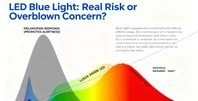
3. Ignoring the harm of blue light, the color temperature is generally higher than 6000 degrees.
Too high color temperature can easily cause visual fatigue. Ignoring the effect of color temperature, using fluorescent tubes with a color temperature above 6000K, studies have shown that lighting with a high color temperature can attract people's attention and increase people's vigilance. However, long-term study in a high temperature and light environment can easily lead to students' hyperactivity and fatigue, and even insomnia.
4. The lamp has no mirror, the light source is obviously exposed, and the glare is easy to hurt the eyes.
LED classroom lighting uses fluorescent stent lights, and the light source is exposed outdoors. The light hits the eyes of students and teachers directly. The glare is serious, making the eye muscles too tight, easily distracting students and reducing learning efficiency.
5. The efficiency of the lamps is low, the layout is unreasonable, and the overall energy consumption is high.
According to the survey of classroom lighting, two-tube fluorescent lamps (mostly T8) are generally used. The total power of each unit is 80W, most of which adopt the "3×4" layout. The total power consumption is about 960W. The power consumption and power consumption of all indoor lighting in the school are calculated comprehensively, and the energy consumption is not low.
What are the advantages of the LED classroom eye protection lamp developed and produced by Benwei Lighting?
1. The illuminance and uniformity of illumination of the desks meet the national standards to ensure that students study in a learning environment with high illumination and uniformity of illumination.
2. Set up special blackboard lights in the classroom to improve the illumination of the blackboard and reduce the eyesight fatigue of students.
3. The light source has high color rendering index and high fidelity.
4. the color temperature is about 4000K~5000K, and the appearance is comfortable. It can reduce the fatigue of work and study and help improve work efficiency.
5. Through advanced structural design, the light source is not exposed, not direct to the eyes, the light is soft, the illuminance is high, no glare, and no glare.
6. Stable light source, no stroboscopic, avoid visual illusion caused by stroboscopic, improve the safety of various workplaces, and reduce visual fatigue.
7. Blue light is not harmful to the eyes, and should not be continuously harmed by blue light during work and study.