What are the effects of substandard classroom lighting on visual health?
Since the invention of electricity, lighting has become an important part of people's lives. It prolongs people's biological clock and accelerates the process of human civilization. Both the current society and the future society can reflect the increasingly important existence value of lighting.
Statistics show that the incidence of myopia among Chinese students ranks first in the world. The reason is that in addition to eye fatigue caused by the much-criticized schoolwork load, the lighting conditions in the classroom are not up to standard. Since most of the existing classrooms in our country were built more than 10 years ago, most of the lamps and lanterns in the classrooms are designed according to the old standards. Such lighting situation is difficult to meet the lighting needs of students.
So what impact will classroom lighting have on students' vision health?
The high stroboscopic light source causes the pupillary sphincter muscle to open and close continuously, causing eye fatigue and decreased vision. Nowadays, 220V, 50Hz fluorescent lamps are generally used as lighting sources in schools, causing the lamps to flicker 100 times per second. Learning under constant stroboscopic light sources requires the visual system to constantly adjust the size of the eye pupil to protect the retinal light intensity. Stability and imaging clarity. Studying in this light environment for a long time will definitely make the pupillary sphincter fatigued due to overuse, resulting in eye fatigue and soreness at light, and damage to the visual system at worst.
The color rendering index of the light source is low, and the spectrum of ordinary fluorescent lamps is incomplete, which will lead to color loss and color cast, which is far from reaching the national standard Ra ≥ 80, and the poor color reproduction ability of lighting fixtures will directly affect children's ability to distinguish colors.
The color temperature of the classroom lighting is high and the light is white.
The national standard stipulates that classrooms should use lights with a color temperature of 3300k-5500k. Most school classrooms have a color temperature of about 6500K, and the light is white, which can easily lead to students being easily excited and fatigued, and long-term cause myopia.
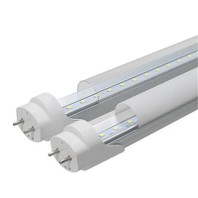
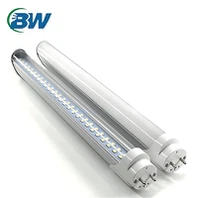
BENWEI educational lighting, aiming at the problems in educational lighting, prescribes the right medicine, and solves the defects in the field of educational lighting very well. By using Mingyang educational lighting fixtures, the following 3 changes can be achieved:
1. BENWEI educational lighting "targets" students
The color of Mingyang light is more real, not dazzling, and brighter than before. The eyes are very comfortable, the fatigue degree is low, there will be no weariness due to eye fatigue, and the myopia rate will be reduced.
2. BENWEI educational lighting "targets" teachers
The brightness of the blackboard is more uniform and the eyes are more comfortable.
3. BENWEI educational lighting "targets" schools
Save electricity costs and maintenance costs. Improve the motivation of learning and help the school's admission rate.