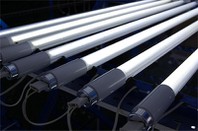
What are the lighting elements that affect children's eyesight in the classroom lighting environment
Children nowadays have a lot of myopia. Some have myopia since elementary school, and some have a rapid increase in myopia as soon as they go to middle school. The reasons for this are naturally heavy academic burdens and rapid physical development, but the problem of school classroom lighting cannot be ignored. After all, school-age children stay at school for at least five days a week. The unsatisfactory classroom lighting environment will always directly affect the children's vision health. So what are the lighting factors that affect children's vision health in the classroom lighting of primary and secondary schools? Let's take a look now!
1. Light. The lighting fixtures in the classrooms of primary and middle schools are equipped according to the standard layout, but in fact, it is difficult to ensure that the light distribution of any child in any seat is uniform at any time. Too much light or too weak light or uneven light distribution will have an adverse effect on the child's vision. Over time, it will naturally lead to myopia or vision loss.
2. Spectrum. The full name of the spectrum is the optical spectrum, which is a pattern arranged in order according to the wavelength or frequency of the polychromatic light after being split by the dispersion system. The wider the spectral composition, the better the color rendering performance of the light source, and the higher the comfort of use. On the contrary, the school classroom lighting environment with low color rendering index is prone to visual fatigue.
3. Strobe. The human eye’s perception of light source flicker mainly depends on the amplitude and frequency of the light source brightness. The modern technology level is high. Under normal circumstances, our naked eyes cannot detect whether there is flicker. Fatigue, decreased vision, distraction, etc. still exist.
So what are the lighting standards for campus classrooms?
1. Excellent illuminance and uniformity of illuminance: According to the national standard GB7798-2010, the classroom desktop maintains flat illuminance ≥300, illuminance uniformity ≥0.7, blackboard maintains average illuminance ≥500, and illuminance uniformity ≥0.8. As of the end of 2018, more than 90% of the illuminance and uniformity of all the classroom lights in the 10,000 primary and secondary schools that we have renovated did not meet the requirements of the national standard. Even the illuminance of some school desks and blackboards is only more than 100 lux. Students studying in such a light environment for a long time can easily cause eyesight fatigue and cause myopia.
2. Anti-glare: The national standard stipulates that the glare value of classroom lighting is <19, and most school classroom lighting uses simple fluorescent lamp brackets, the light source is directly exposed, the light is very dazzling, and the glare value exceeds 22. As a result, the eye muscles are too tight, which seriously affects the students' ability to concentrate in class.
3. ,: Generally fluorescent lamps use AC power supply, the current changes periodically with time, and the flashing 100 times per second causes the brightness of the light to be unstable. When learning under the stroboscopic light source, the visual system needs to constantly adjust the pupils of the eyes. The size is used to protect the stability of retinal light intensity and the clarity of imaging. Long-term learning under this light environment will definitely make the pupil sphincter tired due to overuse.
4. Anti-blue light and other light hazards: The high-frequency and short-wave blue light between 400-500nm in ordinary LED light sources can cause irreversible damage to the eyes, such as the formation of myopia, to the macular disease area that directly penetrates the eyeball and reaches the fundus. In addition to the blue light hazards in traditional LEDs, there are seven harmful lights such as actinic ultraviolet, near ultraviolet, retinal heat, weak vision stimulation, small light sources, and infrared radiation. These 7 kinds of harmful light seriously harm our eyes and body to varying degrees.
5. Anti-light decay and prolong service life: Ordinary lamps will have serious light attenuation after half a year of use, resulting in a decrease in luminous flux, which will not meet the national low standard requirements. Currently, in order to maintain the lighting brightness that meets the national standard, the cycle of replacing the lamps It takes 2 to 6 months and requires long-term maintenance by relevant maintenance personnel, resulting in high maintenance costs and waste of resources.
6. Excellent color rendering index: the spectrum of ordinary fluorescent lamps is incomplete, resulting in color loss and color cast. Far from reaching the national standard Ra≥80, and the poor color reproduction ability of lighting fixtures will directly affect children's color discrimination ability.
7. Comfortable color temperature: The national standard stipulates that the color temperature is 3300-5300K, and the actual measurement result reaches 6500K. Too high color temperature will increase the proportion of blue radiation, and the blue light will also increase. Blue light will be aggravated due to genetics, nutritional environment, healthy habits and old age Related problems caused by macular degeneration. Late self-study for a period of time will also affect the secretion of melatonin in the students, reduce the quality of sleep, and affect the learning efficiency of the next day.
8. Resist the related hazards of fluorescent lamps: fluorescent tubes contain mercury, phosphors and other heavy metal substances. If mercury and heavy metal phosphors are improperly stored and disposed of, they will also cause great harm to the ecological environment. They can enter the ecology in various forms. The environment directly pollutes soil, air and water. Then enter the human body through the food chain, directly endangering human health, and the luminous efficiency of fluorescent lamps is low, generally fluorescent lamps are only 50lm/w. Although the fluorescent lamp emits light at 365 degrees, the light emitted in the opposite direction is basically useless. Although it is reflected back through the lampshade, the reflection efficiency is low and the energy consumption is too high. The ballasts in fluorescent lamps also emit infrasound waves that are harmful to the body.
Therefore, it is necessary to take actions to reform the school classroom lighting in order to effectively prevent the harm caused by the classroom lighting glare.