What Does Led Mean: From Light-Emitting Principles to Illuminating the World
I. What is LED?
LED (Light Emitting Diode) is a semiconductor device that directly converts electrical energy into light energy. Unlike traditional incandescent and fluorescent lamps, LEDs do not rely on heating filaments or exciting gases to produce light. Instead, they generate photons through the movement of electrons in semiconductor materials, offering significant advantages such as high efficiency, energy savings, and long lifespan.
1. Basic Structure of LED
The core of an LED is a semiconductor chip, typically composed of a P-type semiconductor and an N-type semiconductor (forming a PN junction). When current passes through, electrons and holes recombine near the PN junction, releasing energy in the form of light. Different semiconductor materials (e.g., gallium arsenide, gallium nitride) emit different colors of light, such as:
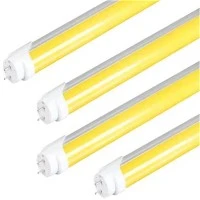
Red/Yellow Light → Gallium Phosphide (GaP) Blue/White Light → Gallium Nitride (GaN)
Green Light → Indium Gallium Nitride (InGaN)

2. Why Are LEDs More Efficient Than Traditional Lights?
Incandescent Lamps: Emit light by heating a tungsten filament, converting 90% of energy into heat (only 10% efficiency).
Fluorescent Lamps: Rely on gas discharge and phosphors (~30-40% efficiency).
LEDs: Directly convert electricity into light (50-80% efficiency) with minimal heat loss.
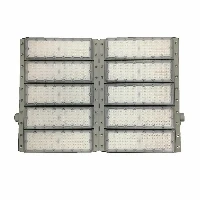
Case Study: The U.S. Department of Energy estimates that switching to LED streetlights nationwide could save 35 TWh annually (enough to power 3 million households).
II. A Brief History of LED Development
1. Early Exploration (1907–1960s)
1907: British scientist Henry Round first observed electroluminescence in silicon carbide.
1962: General Electric (GE) engineer Nick Holonyak Jr. invented the first visible red LED, earning him the title "Father of the LED."
2. Technological Breakthroughs (1990s–2000s)
1993: Japanese scientist Shuji Nakamura developed the high-brightness blue LED (winning the 2014 Nobel Prize in Physics), paving the way for white LEDs.
Post-2000s: LED costs plummeted, leading to widespread replacement of traditional lighting.
Case Study: Philips' LED retrofit of Egypt's pyramid lighting reduced energy consumption by 80% while eliminating UV damage to artifacts.
III. Wide-Ranging Applications of LEDs
1. General Lighting
Residential Lighting: LED bulbs last 25,000–50,000 hours (vs. 1,000 hours for incandescent bulbs).
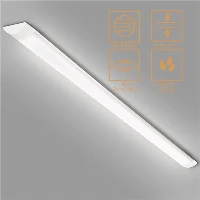
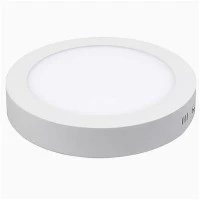
Commercial Lighting: LED panel lights and downlights cut energy costs by 30–70%.
2. Specialized Lighting
LED Grow Lights
Custom red (660nm) and blue (450nm) spectra optimize photosynthesis.
Case Study: Dutch greenhouses using LEDs increased tomato yields by 20% while reducing energy use by 40%.
Poultry LED Lighting
Specific spectra boost egg production (e.g., 17 lux blue light increases yield by 5–10%).
Tri-proof LED Lights
Waterproof, dustproof, and corrosion-resistant for harsh environments like oil fields and cold storage.
3. Display & Backlighting
LED Screens: Examples include Olympic opening ceremony mega-displays.
Mini/Micro LED: Apple's Pro Display XDR uses Mini LED for 1,000,000:1 contrast ratio.
IV. Future Trends in LED Technology
Higher Efficiency: Lab prototypes achieve 300 lm/W (vs. ~150 lm/W in commercial LEDs).
Smart Lighting: IoT integration enables adaptive dimming and circadian rhythm lighting.
Li-Fi Technology: LED-based data transmission at speeds up to 10 Gbps.
Case Study: Dubai aims for 100% LED public lighting by 2025, cutting CO₂ emissions by 1.6 million tons annually.
V. Conclusion
LEDs represent not just a lighting revolution but a cornerstone of sustainable development. From homes to aerospace, agriculture to telecommunications, their potential continues to expand. As materials science advances, LEDs may transform our lives in even more unexpected ways.