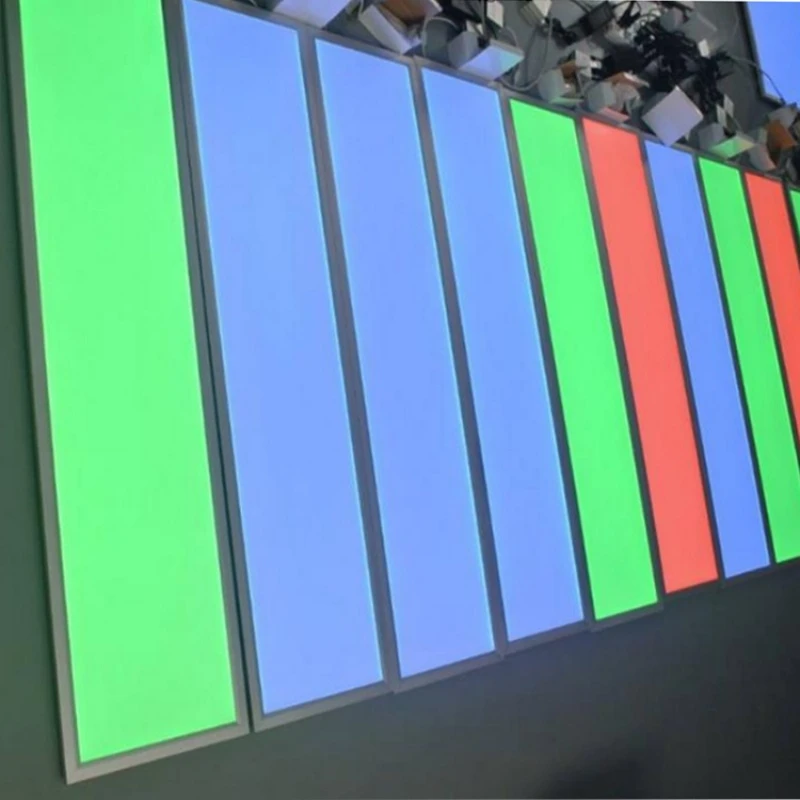
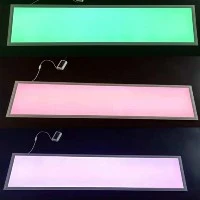
If you have visited a modern office, bar, gaming room, or boutique recently, you have likely encountered this type of light: a flat, illuminated panel capable of shifting colors-transforming from a soft, warm white one moment to a blue-to-purple gradient the next. These are known as RGB LED backlit panel lights.
While they may appear simple, there are several nuances to consider when selecting them. What exactly does "backlit" mean? How do they differ from standard panel lights? Where are they best installed? This article clarifies these points to help you navigate the procurement or design process more effectively.
Defining RGB LED Backlit Panel Lights
An RGB LED backlit panel light is a flat-panel fixture that utilizes red, green, and blue (RGB) LEDs as its light source, employing a "backlit" configuration. Light is emitted from the rear of the panel and-after passing through a light-guiding or diffusion layer-emerges uniformly from the front, creating a soft, continuous luminous surface free of distinct, visible light spots.
By adjusting the brightness ratios of the three primary colors, these lights can produce millions of different hues. Most models also support pure white light or adjustable color temperatures, serving both functional lighting and ambient atmosphere-creation purposes.
Working Principle and Structural Components
A typical RGB backlit panel light consists of the following key components:
RGB LED Chips: The light source itself, featuring red, green, and blue chips-either packaged together or arranged individually.
Light Guide Plate (LGP) or Diffusion Layer: Converts point-source light into a uniform surface light, determining the "clarity" and evenness of the illumination.
Diffusion and Reflection Films: The reflection film minimizes light leakage from the back, while the diffusion film softens the emitted light.
Aluminum Alloy Frame and Backplate: Provide structural support and heat dissipation, which directly influence the lifespan of the fixture.
Control and Driver System: Includes the power driver and control module, enabling color switching, brightness adjustment, and dynamic lighting effects.
Common control methods include remote controls, wall-mounted panels, mobile apps, the DMX512 protocol, and smart home system integration-the choice of which depends on the complexity of the specific application environment.
Differences from Standard White-Light Panel Lights
While they may look similar, their intended purposes differ:
Light Color: Standard panel lights primarily emit white light, whereas RGB versions offer full-color, dynamic lighting.
Usage: Standard models focus on functional illumination, while RGB models are geared toward creating ambiance and visual decoration.
Control Complexity: RGB models require an additional controller, adding an extra step to the system setup compared to standard white-light versions.
Price: Due to the inclusion of color-capable chips and control modules, RGB models are more expensive than standard versions of the same size.
If a project requires only bright, uniform, and basic illumination, standard panel lights are sufficient. If the goal is to evoke a specific "mood" or atmosphere, RGB models are the better choice.
Key Advantages
Uniform Illumination: The light is even and free of "dotting" or granular effects. A backlight structure combined with diffusion treatment ensures consistent brightness across the entire panel, so no individual light points are visible even at close range.
High Color Flexibility: A single fixture can adapt to various scenarios, eliminating the need to replace lights when changing the atmosphere.
Slim, Lightweight Design: Typically only a dozen millimeters thick, these lights are suitable for surface mounting, recessed installation, or suspension-making them ideal for spaces with low ceilings.
Energy-Efficient and Durable: LED light sources consume very little power and often last for tens of thousands of hours, resulting in low long-term maintenance costs.
Highly Customizable: Dimensions, shapes, color modes, and control protocols can be tailored to specific project requirements-a major benefit for commercial projects and brand-specific custom solutions.
Common Application Scenarios
Commercial Spaces
In hotel lobbies, restaurants, cafés, bars, and KTV venues, RGB panel lights can be used to adjust the atmosphere throughout the day-for instance, providing bright light during the day and shifting to warm tones or thematic colors at night.
Retail Displays
In brand boutiques, beauty stores, and showrooms, lighting can be color-coordinated with products to create a compelling visual focal point for displays.
Entertainment and Gaming Spaces
In e-sports arenas, internet cafés, live-streaming studios, and home media rooms, features like dynamic color-changing and music synchronization are highly popular.
Office and Meeting Spaces
In creative offices, co-working spaces, and conference rooms, cool white light can be used to support a productive work environment, while areas intended for relaxation can be switched to softer, more soothing tones.
Home Decor
Ideal for living room feature walls, bedroom ceilings, or children's rooms. Colors can be adjusted via remote control or a mobile app, serving both as decorative lighting and as a nightlight.
Stage and Event Settings
Perfect for small stages, wedding venues, and event backdrops. When integrated with DMX control systems, they allow for professional-grade lighting choreography.
Advertising and Signage
Excellent for illuminated light boxes, wayfinding signage, and branded feature walls-RGB panels create a luminous background that is both uniform and dynamic.
Conclusion
RGB LED backlit panels combine the concept of a "uniform area light source" with "color-changing LED technology." Versatile enough for both functional illumination and decorative purposes, these slim, energy-efficient, and customizable panels are suitable for a wide range of environments, including commercial spaces, retail, entertainment venues, offices, homes, and stages.
When making a purchase, rather than simply chasing the highest technical specifications, first consider where the lights will be installed, the desired visual effect, and your preferred control method. Then, evaluate factors such as brightness, color rendering, heat dissipation, and product certifications to ensure you choose the solution that best fits your needs.
Want to learn more? Get in touch with us.
If you are looking for RGB LED backlit panels for hotels, retail stores, office spaces, or specific engineering projects, we offer a variety of sizes and control solutions, with full support for OEM/ODM customization.
https://www.benweilight.com/ceiling-lighting/square-led-panel/led-panel-620x620mm.html