What is the best lighting for a manufacturing environment?
Industry needs high-quality light to increase productivity and keep workers safe. Industrial lighting needs to be durable enough to withstand the harsh conditions of the industry, such as vibration, high temperatures, corrosive materials, dirt, and high humidity. In addition, industrial lighting should meet fire and manufacturing lighting safety requirements and be suitable for the purpose of lighting.
Types of Industrial Lighting
1. High-intensity discharge
The HID bulb glows as the arc passes between the cathodes, evaporating the metal additive in the pressurized tube. HID lights are efficient and long lasting. However, they do not produce high quality light. Therefore, they are mainly used for outdoor security and area lighting.
2. High-output fluorescence
When an electric current passes between the cathodes and excites mercury and other gases that produce radiant energy, they produce light. This energy is then converted into visible light by a phosphor coating. They consume about 20% less energy than incandescent bulbs and last 20 times longer. The main disadvantage is that they contain mercury, so they should be disposed of properly.
3. LED lights
LED lights are an efficient but expensive lighting solution. LEDs generate very little heat. This means they are able to convert most of their energy into light.
LEDs are about 1.5 times more expensive than high-output fluorescent lamps. However, research shows that businesses can recoup the cost of replacing lighting with LEDs in less than 3 years. Another benefit of LED industrial lighting is that they don't contain any mercury, which means companies don't have to worry about lamp disposal.
Because LEDs are non-corrosive, bright and do not generate a lot of heat, they can be used in many industrial applications such as CNC machining and industrial inspection where adequate lighting is required.
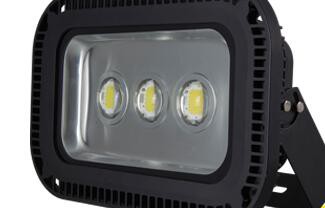
Why LEDs are the best lighting for manufacturing environments
LED lamps are preferred over HID lamps, such as high pressure sodium and metal halide lamps, for a number of reasons.
These benefits are:
1. LED lights are a more efficient option for industrial lighting. LEDs use half the energy of HID bulbs to provide the same amount of light. Replacing your existing HID lights with LEDs can cut your lighting energy costs in half. This means that the investment in high-quality LED bulbs will have a very short payback period.
2. HIDs are expensive to maintain and replace. LED lamps have an average lifespan of 150,000 light hours, while HIDs have a lifespan of only 20,000 hours. This means more costs for your business as HID lights require more frequent replacement.
3. The metal halide takes about 15 minutes to reach full brightness when turned on, and about 20 minutes to turn on again after it is turned off. However, the LEDs reach full brightness as soon as they are turned on, and can be turned on and off at any time.
4. HIDs generate a lot of heat. For example, metal halides produce up to 350F of heat, while LEDs produce only 100F.
5. HIDs are more likely to explode during use. This makes it necessary to invest in bulb housing fixtures. They also increase the risk of fires in factories.
6. Metal halides contain mercury gas, which is harmful to the environment.
Benwei Lighting is an LED Tube, LED flood light, LED Panel Light, LED High Bay, LED manufacturer with 12 years of experience. If you want to purchase a high-quality LED flood light or have a more in-depth understanding of the application of LED flood lights, please contact send us inquiry, our web:  https://www.benweilight.com/.