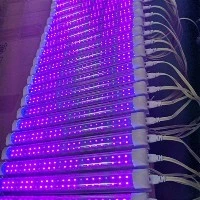
There is no single "best" wavelength for organic reactions. The optimal wavelength is a variable that must be matched to the specific mechanism of the reaction you want to perform. The choice is essentially a trade-off between photon energy, penetration depth, and selectivity.
1, The Core Principle: Match the Wavelength to the Absorber
The fundamental rule is to use a wavelength that is efficiently absorbed by the species responsible for initiating the chemistry. This "absorber" falls into two main categories:
The Substrate Itself (Direct Excitation): Here, light directly excites a bond in the starting material, providing the energy to break it. This typically requires higher-energy UV light.
A Photocatalyst (Photoredox Catalysis): Here, a separate molecule (the photocatalyst) absorbs the light and then uses that energy to drive the reaction via electron or energy transfer. The wavelength must match the photocatalyst's absorption spectrum, which is often in the visible range.
2, UV Wavelengths: High Energy for Direct Activation
UV light is used when you need to directly activate a strong bond or a specific functional group that doesn't absorb visible light.
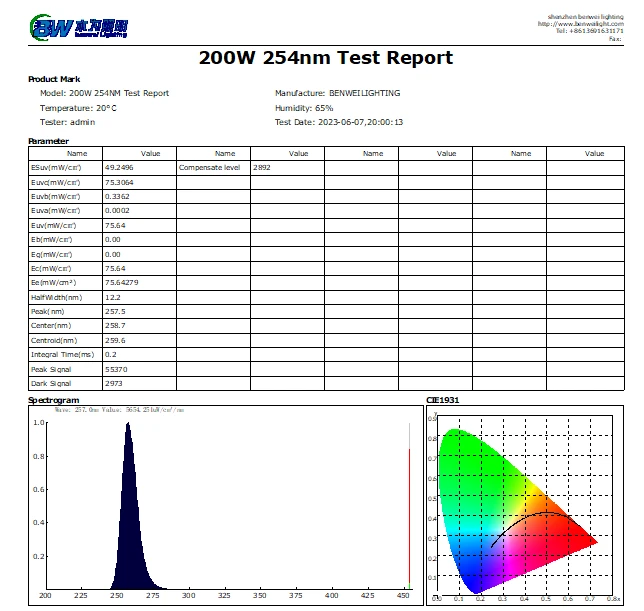
254 nm (UVC): This high-energy light is a workhorse for direct photolysis. Its photons carry enough energy (~472 kJ/mol) to cleave relatively strong bonds like C-Cl (~327 kJ/mol) or C-O (~358 kJ/mol), making it useful for reactions like the benzylic bromination of toluene, where the C-Br bond in the reagent absorbs strongly below 300 nm. However, its high energy is indiscriminate and can lead to side reactions, and it is strongly absorbed by most organic solvents, limiting its penetration to very thin films.
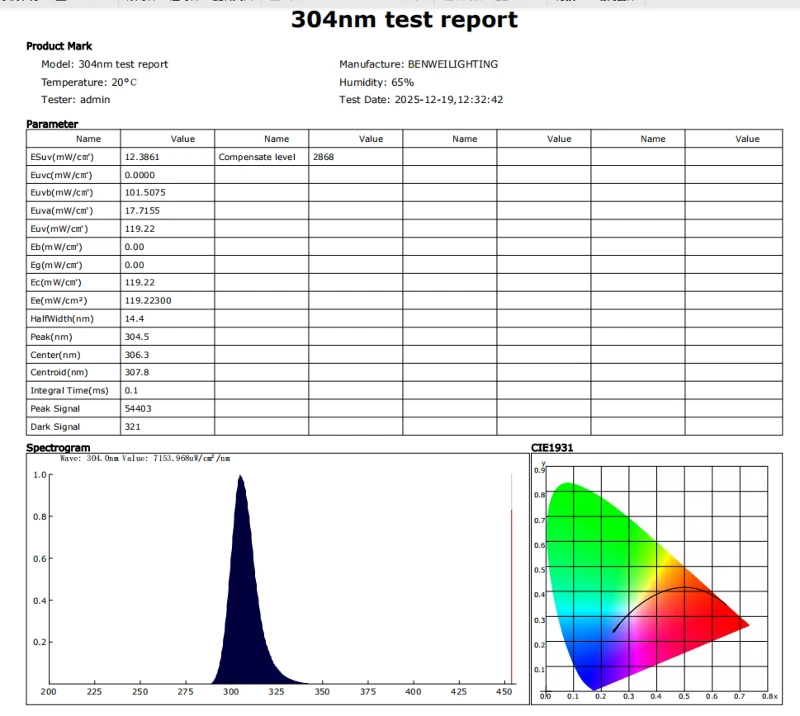
300–365 nm (UVA/UVB): This range is a common compromise. 365 nm is widely used, especially with a sensitizer like benzophenone, which absorbs UVA light and then transfers energy to the substrate. This strategy enables reactions that would otherwise require far-UV light, such as certain photocyclizations, while using a lower-energy, safer light source.
3, Visible Light: The Realm of Photocatalysis
Visible light is lower in energy but more selective and penetrates reaction media better than UV. It is almost always used in conjunction with a photocatalyst.
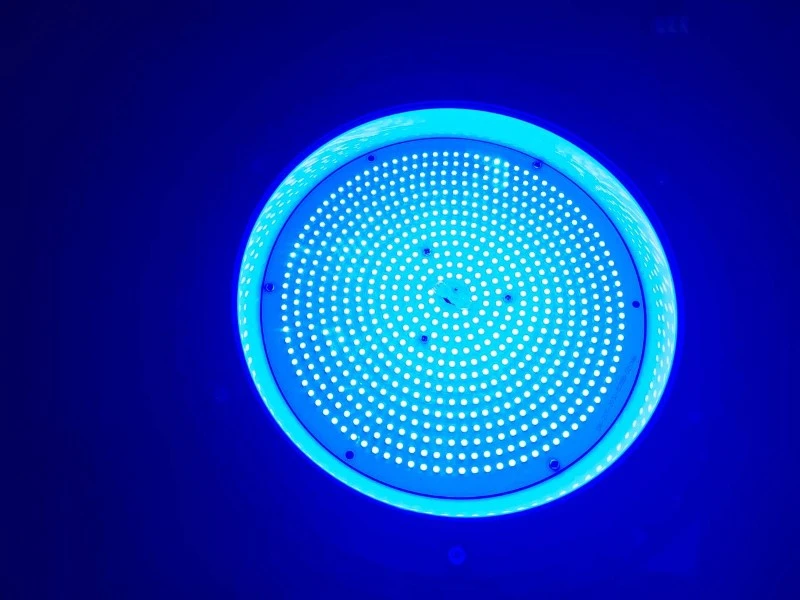
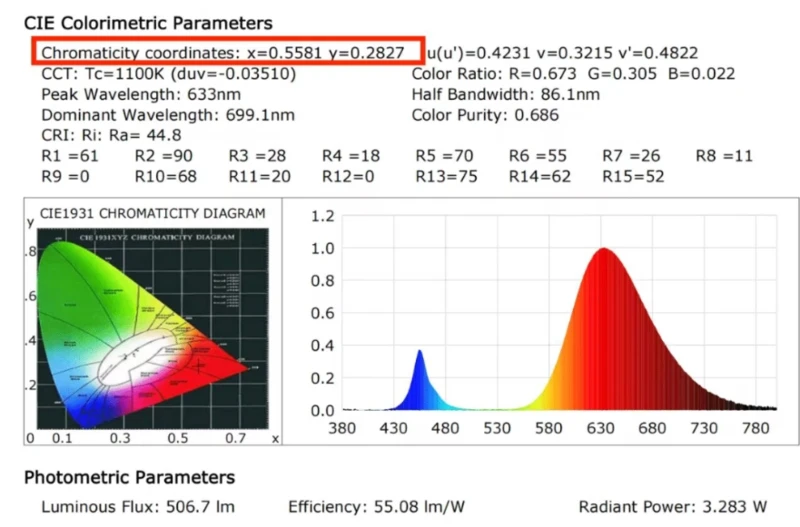
Blue Light (~450–460 nm): This is the most common wavelength in modern photoredox catalysis. It perfectly matches the Metal-to-Ligand Charge Transfer (MLCT) absorption bands of ubiquitous transition-metal catalysts (e.g., Ru(bpy)₃²⁺, Iridium complexes) and the absorption maxima of organic dyes like Eosin Y. Using a blue LED that closely overlaps with the catalyst's absorption spectrum can dramatically increase reaction efficiency-in one case, improving photocurrent by a factor of 5 compared to a white light source of much higher total power.
Green Light (~530 nm): This wavelength offers chromoselectivity. The choice between blue and green light can change the reaction outcome. For example, the dye catalyst Rhodamine 6G can be selectively excited with green light (530 nm) to form a mild reducing agent, while subsequent excitation with blue light (455 nm) can trigger a different reactivity pathway. This allows for precise control in multi-step or orthogonal reactions.
Red Light (~620–660 nm): Red light is valuable for its greater penetration depth through reaction media and its lower energy, which helps avoid unwanted side reactions. Specialized photocatalysts, such as selenoxanthylium salts, have been designed with absorption bands centered around 560 nm that extend to 620 nm, enabling low-energy photoredox catalysis.
4, Near-Infrared (NIR) Light: Maximizing Penetration
NIR light represents the frontier for maximizing photon penetration, especially in thick or turbid reaction mixtures.
850 nm & Beyond: NIR light's key advantage is its ability to travel through solutions with minimal scattering and absorption. A compelling demonstration: in a series of reaction tubes, visible light (456 nm) achieved an 89% yield in the first tube, but the yield dropped to 12% in the second tube due to poor penetration. In contrast, NIR light (850 nm) gave a 100% yield in the first tube and still achieved 71% in the fourth tube.
Two-Photon Absorption (TPA): To use NIR light with catalysts that normally only absorb higher-energy light, chemists use two-photon absorption. Specialized TPA photosensitizers can simultaneously absorb two lower-energy NIR photons to reach an excited state, effectively mimicking the energy of a single UV/visible photon. This has been achieved with various systems at 850 nm and even in the 900–1500 nm (NIR-II) window.
5, A Decision Framework
To choose the "best" wavelength, consider this simple flowchart:
Is your substrate directly photolabile? If yes, use UV light (254 nm or 300–365 nm). Choose the shortest wavelength needed to achieve the desired bond cleavage without causing excessive side reactions.
Are you using a photocatalyst? If yes, the choice is determined by the catalyst:
Standard metal complexes or organic dyes: Use blue light (~450–460 nm).
Need to switch reactivity or use a specific dye: Consider green (530 nm) or red (~620 nm) light.
Reaction mixture is thick, turbid, or you need to penetrate a barrier: Use NIR light (850 nm) with a specialized TPA sensitizer.
In short, there is no universal answer. The "best" wavelength is the one that most efficiently and selectively drives your specific chemical transformation, which is determined by the interplay between your substrate, catalyst, and reaction conditions , you can see more information on http://www.benweilight.com