What is the difference between 365nm and 395nm? Which one has higher intensity?
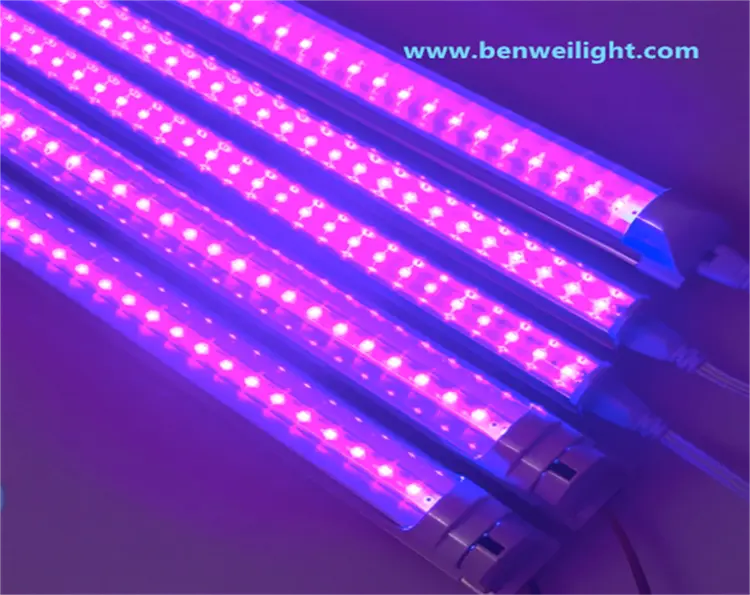
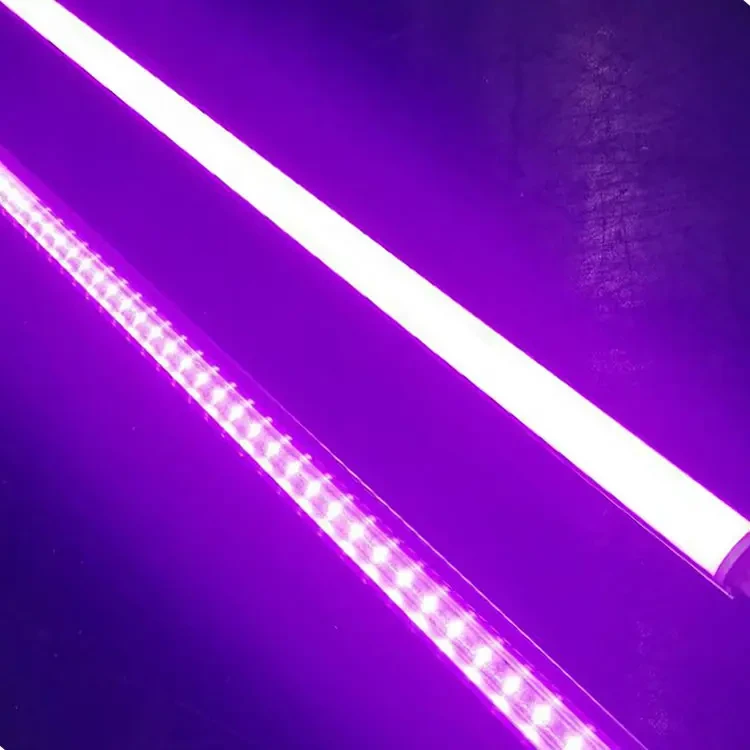
Many buyers easily get confused by UV LED tubes: they see bright purple light and automatically assume it means stronger UV power. This is one of the most common traps when selecting UV lamps! Both 365nm and 395nm fall within UVA spectrum, yet their photon energy, visible light output and practical performance differ greatly.
The shorter the wavelength, the higher the photon energy. 365nm carries higher photon energy than 395nm. Even though 395nm produces striking visible purple glow to human eyes, much of that purple light belongs to visible spectrum rather than effective UV radiation. That means the purple brightness you see cannot represent real UV irradiance (measured in mW/cm²). Many customers judge lamp performance purely by naked-eye observation, which often leads to failed curing tests after mass purchase.
Core Performance & Application Differences
When you are working on curing applications, the photon energy directly controls the chemical cross-linking reaction of UV-sensitive materials. For UV glue, cast resin, screen printing ink and precision component bonding, 365nm shows stronger penetration and reliable deep curing effect, and it lowers the risk of material yellowing after long-time exposure. In contrast, 395nm UV light triggers much milder chemical reactions. It can only cure thin surface layers efficiently. If you apply it on thick resin or high-viscosity glue, the surface may dry quickly while the inner layer remains sticky and uncured.
On the other hand, 395nm is perfect for fluorescence excitation, anti-counterfeit detection, decorative lighting and nail curing. The obvious purple visible light helps operators quickly confirm whether the lamp is powered on and working normally. It features lower chip cost and stable long-term performance, but its UV energy is weaker and not suitable for thick-layer resin curing.
| Comparison Item | 365nm UV LED Tube | 395nm UV LED Tube |
|---|---|---|
| Visible Light Appearance | Faint bluish-white, almost no purple | Bright obvious purple light |
| Photon Energy | Higher, stronger UV reactivity | Lower, weaker curing penetration |
| Best Application | UV glue curing, resin, printing ink, precision bonding | Fluorescence detection, anti-counterfeit, decoration, nail lamp |
| Chip & Cost | Higher cost, strict heat dissipation requirement | Cost-effective, stable long-run performance |
Light Decay & Continuous Operation Considerations
Besides application differences, these two types also vary in chip cost and light decay. 365nm chips cost more and require better heat dissipation to slow down light attenuation; 395nm enjoys better stability under continuous operation. High photon energy brings stronger curing capability, yet it also accelerates chip aging. Therefore, for 365nm UV LED tubes, our product design focuses more on heat sink structure to keep operating temperature within a safe range. Always select based on your material, required irradiance, working distance and exposure time, not just visual purple brightness.
Another practical factor worth considering is the operating environment. If your production line runs 24/7 nonstop, 395nm usually has a longer service life under the same power setting. However, for batch production with strict curing quality standards, 365nm is still the preferred option even with higher investment. Our engineering team can adjust the irradiance output according to your production line layout, to match your required curing speed.
Clear Up Typical Customer Misconceptions
Many customers hold wrong assumptions about UV wavelength selection, which may cause costly production failures. Check the table below to avoid these pitfalls.
| Misconception | Fact |
|---|---|
| Brighter purple = stronger UV intensity | Visible purple light ≠ effective UVA irradiance |
| 395nm can replace 365nm for deep resin curing | 395nm only cures surface, inner layer remains uncured |
| 365nm is always better than 395nm | Depends on your application, no universal "better" option |
Customization & Product Advantages
We also offer flexible customization options for both series. You can choose different tube lengths, power ratings and installation types to fit your existing lamp fixtures. Our UV LED tubes can directly replace traditional mercury UV tubes, helping you cut power consumption and reduce maintenance work. All products pass strict quality inspection and are available with CE, CB and EMC certifications to meet different market import requirements.
Ready to pick your suitable UV tube? Tell us your usage, required UV intensity and working size. We can offer free samples for your testing, provide CE/CB certificates and custom length options. Send your inquiry now to get our best quotation!