What is the hazard to students' eyes when using stroboscopic fluorescent lamps in classrooms?
Quite a few teenagers are not nearsighted before school age, but their eyesight has been declining since elementary school and junior high school, and some students have dropped sharply. Health care workers usually explain children's homework, fatigue, improper reading and writing posture, and insufficient classroom illumination after school. Although this is also an important influencing factor, it ignores the adverse effects of fluorescent lighting in classrooms on young people's eyesight. Nowadays, the number of myopia among students is increasing. There are reasons for the heavy academic burden. However, the "crime" of fluorescent lighting in the classroom cannot be ignored.
1. Fluorescent lighting in the classroom is not good for the eyes
The main reason that fluorescent lights in classrooms affect eyesight is because of the "flicker" of fluorescent lights. This kind of high-frequency flashing can easily make the eyes tired. In order to see the words clearly, children often unconsciously bury their heads lower, which naturally causes or aggravates myopia.
In addition, the constantly flashing lights will cause another kind of damage when the eyes are forced to adapt-forming astigmatism. Ordinary classroom fluorescent lamps are bright because of their white color, which often makes people feel that the intensity of the light is enough, but in fact it is harmful to children's eyes.
1. Harm of light stroboscopic effect
1. Harm the eyes
First of all, working and learning under a stroboscopic light source with constantly changing light intensity, the visual system needs to constantly adjust the size of the eye pupil to ensure the stability of the retinal illuminance and the clarity of the image, so that you can work in this environment for a long time. , Will inevitably make the pupil sphincter tired due to overuse, thereby causing damage to the optical system of the eyeball.
Secondly, because the adjustment frequency of the pupillary sphincter can not keep up with the speed of light intensity flashing, the light intensity reaching the retina must fluctuate to a certain extent. In this visual environment, in order to adapt to this changing light intensity, the retina needs to constantly adjust the dynamic distribution of its neural network activities in space and time, so that the retina can be kept in different adaptive states to adapt to different light intensities.
Therefore, working and studying under a light source with flickering light will inevitably cause adverse consequences of retinal neurons due to frequent activities, such as changes in retinal pH, accumulation of harmful substances in neuronal metabolites, etc., which will cause damage to the retina.
In addition, the light intensity flicker also interferes with the processing and comprehensive analysis of the image by the visual center, resulting in phenomena such as dazzling and visual illusion.
In short, working and studying under a stroboscopic light source can cause eye fatigue and soreness in the lighter ones, and damage to the visual system in the worst cases. Especially in classrooms where students are in class, fluorescent lamps are generally used for lighting, and the flickering phenomenon of fluorescent lamps should arouse our attention.

Second, the method to solve the hazard of fluorescent lamp stroboscopic
1. Choose classroom lights that meet national standards
A good eye protection lamp for classrooms, without mentioning other things, must first meet three basic conditions: one is no stroboscopic; two is anti-glare; and three is no blue light hazard.
1. No flicker. The stroboscopic is mainly due to the unstable output of the working frequency of the light. The frequency of the illuminating lamp, that is, the number of times a lamp emits the "light" to the surroundings every 1 second. If in 1 second, the greater the number of times of irradiation to the surroundings, the more stable, then the stroboscopic effect of this kind of lamp will be smaller. Conversely, the lower the working frequency of the eye protection lamp in the classroom, the greater the beating amplitude and the greater the strobe.
2. No glare. Glare is one of the important causes of visual fatigue. Use lights in school classrooms. At night, many children have to go to class or study on their own. Use eye-protection classroom lights to reduce the effect of glare, so that they can take care of their eyes.
The LED classroom lights produced are anti-glare + light-transmitting design on the overall back panel. The classroom is bright as a whole with uniform illumination, creating a healthy and green school environment for students.
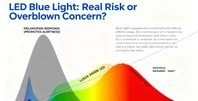
3. No blue light hazard. The harm of blue light to the human eye is mainly manifested in the eye pathological harm and the harm of human rhythm that cause myopia, cataract and macular degeneration. Therefore, if the school classrooms use poor-quality classroom eye protection lamps with high blue light, it will cause blue light damage and harm the eyesight of students.
Benwei's classroom LED eye protection lamp has no flicker, is bright and has uniform illumination, high color rendering index, and good color reproduction.
Benwei Lighting has been established for 20 years and has a good reputation in the industry. It focuses on the transformation of lighting energy-saving projects. It has a strong independent R&D team and more than ten patents. It is a high-tech enterprise and a famous brand in Guangdong Province. Product enterprise.
The eye-protecting classroom lamp produced by Benwei Lighting has a unique anti-glare, softer light and no glare, protecting human eyesight. Can save electricity, high illuminance, high CRI and soft light. And the appearance is simple and atmospheric, thin and easy to install, it is a good choice for classroom lighting design