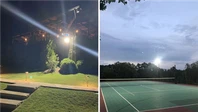
LED lights have become increasingly popular due to their energy efficiency, longer lifespan, and brighter illumination. When designing a lighting system with LED lights, a key factor to consider is the spacing between each light. The spacing criteria for LED lights can depend on multiple factors, including the location, the intended purpose of the lighting, and the type of LED fixture being used.
For outdoor applications such as landscape lighting or parking lot lighting, the spacing between each LED light should typically be between 8-12 feet. This spacing range provides optimal illumination while maintaining a consistent level of brightness across the area being lit. For indoor lighting applications such as office or warehouse lighting, the spacing between each LED light can vary depending on the height of the ceiling and the intended level of illumination. Generally, most LED fixture manufacturers recommend spacing LED lights every 10-14 feet for standard ceiling heights.
Another factor to consider when determining the spacing criteria for LED lights is the type of LED fixture being used. For example, a recessed LED fixture may require closer spacing than a surface-mounted fixture due to the angle at which the light is emitted. In addition, it is important to ensure that the spacing is consistent with the beam angle of the fixture being used. For example, LED lights with a narrow beam angle may require closer spacing to ensure even illumination across a larger area.
When designing a lighting system with LED lights, it is important to also consider the intended purpose of the lighting. For example, if the lighting is intended for security purposes, then closer spacing may be necessary to ensure that there are no blind spots. Alternatively, if the lighting is intended for aesthetic purposes, then wider spacing may be acceptable to create a more subtle lighting effect.
In conclusion, the spacing criteria for LED lights can depend on multiple factors, including the location, the intended purpose of the lighting, and the type of LED fixture being used. It is important to consider all these factors when designing a lighting system to ensure optimal illumination while maintaining energy efficiency and a longer lifespan for the LED lights.