Lighting Tricks for Better Atmosphere and Lighting Mood
What kind of feel do you want to create in your space? Whether it's at your house, office, or other business facilities you own, you'll want to make the most of the available space and give the setting a unique personality.
Did you know that one of the most important factors you can use to produce the finest lighting atmosphere and mood is lighting? Here, we'll go over some pointers for efficiently designing your interior lighting to create the greatest mood for your room.
Step 1: Establish a Goal
There should always be an end objective that you hope to accomplish, just like in everyday life. You don't want to give the impression that your space is forced or disjointed, do you? Instead, you should have a distinct and unified vision for your area.
Determine your space first. Are you remodelling your kitchen, living room, or any other area of your house, as well as your workplace or a business location? Next, decide what kind of finish you want for that specific area. Last but not least, decide what atmosphere that specific room needs or, at the very least, what mood you want to create for that specific location. Your objective is there.
Let's imagine, for illustration, that you are remodelling your home office. You must now decide what kind of finish you want. It would be nice if you could settle on a theme. Let's imagine you decide to decorate your home office with an industrial theme. The next step is to decide on the type of mood you want to set for yourself and the environment you want to create. Since it is a home office, it makes sense that you would want to be productive, awake, and energised at all times when in the space.
That is how you set a goal, too!
Plan your Lighting, the second tip.
Knowing your end aim allows you to move on to the details and correctly design your lighting. A quick lighting strategy will be crucial. These elements are crucial to your quick lighting plan.
1. What should be done in the room of interest
2. Important elements of the space that need to be highlighted
3. Interior decorating style
4. Locations for lighting
5. To be utilised colour temperature
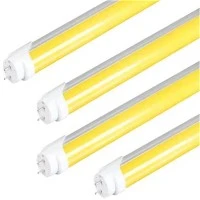
6. Type of lighting fixture
Third-grade tip: Layer your lighting
Having a lighting strategy is essential, but it may be improved even more with layered lighting. Basics will be developed and it will unquestionably be functioning with a quick lighting strategy. But once more, the objective is to create a better interior ambience and lighting mood, which is why layered lighting is necessary.
Why is layered lighting crucial then? And how does it improve the mood and atmosphere? The truth is that a room cannot be adequately lit by a single light source, especially in big spaces. A well-lit and harmonious area can be produced with layered lighting, which is essentially lighting with several light sources.
The fundamental idea behind layered lighting is to use ambient lighting to provide general illumination, accent lighting to draw attention to specific objects or collections, and task lighting to facilitate prolonged work on a specific area (such as a desk or counter). Continue reading if you want to learn more about layered lighting.
In addition, layering your lighting gives you versatility by adjusting to your demands. Imagine being able to quickly shift from a morning of online meetings to a night of relaxation in the same environment, which is bright during the day and sophisticated during the evening. Layered lighting makes it possible for all of these.
Picking the Proper Lighting Fixture is the fourth tip.
As many have said, a room's lighting can make or break it. However, the importance of light extends beyond the light itself. Obviously, lighting fixtures play a significant role in creating the ideal ambiance and enhancing your design.
Simply put, you only utilise the majority of your lights at night, but you can see the fixture itself from morning till dusk. Lighting fixtures have an impact on interior design in that way. And to state the obvious, having aesthetically pleasing lighting fixtures at your location will surely promote happiness, fulfilment, and contentment.
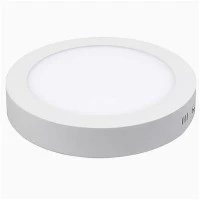
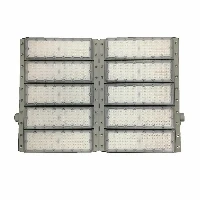
You can choose from the following more popular lighting options:
Mounted Ceiling Lights
Tip No. 5: Pick Your Bulb Wisely
Brightness and colour are two important factors to take into account when choosing a lightbulb or light source in general.
Studies have shown that bright lighting can improve your ability to concentrate since it stimulates the brain and raises serotonin levels. Therefore, it goes without saying that if you work from home, you must ensure that the ambient lighting is strong enough to give you more energy and aid in your concentration. Additionally, several research have demonstrated that strong emotions are heightened by bright lights. According to these research, bright lighting tends to make you feel warmer, which in turn heightens emotions like excitement, happiness, anxiety, and melancholy.
When picking a bulb, it's crucial to select the one with the proper colour temperature of light. Your choice of light's colour temperature might influence the ambiance that is created in your room. The most popular colour temperatures in the Singaporean market are Warm White and Natural White.
White light or day light is the ideal colour temperature for spaces where creativity, critical thinking, and efficiency are anticipated to flourish. On the other hand, warm white or yellow light is preferable if the room's primary function is leisure or entertainment.
Tip No. 6 Recommendations for Each Room
Using Ambient Lighting in the Living Room:
Fixture to Consider: A Contemporary Ceiling Fan or Hanging Lamp
Daylight (white light) is the ideal colour temperature for task lighting.
Track lights or wall lamps are suggested fixtures.
Daylight (white light) is the ideal colour temperature for accent lighting.
Recessed lighting or wall lamps are suggested fixtures.
Colour temperature that is advised is warm white (yellowish light).
dining area
Regarding Ambient Lighting
Recommended Fixture: a chandelier or pendant lamp
Daylight (white light) is the ideal colour temperature for accent lighting.
Recessed lighting or wall lamps are suggested fixtures.
Colour temperature that is advised is warm white (yellowish light).
Kitchen
Regarding Ambient Lighting
Recommended Fixture: Track lights or a ceiling-mounted light
Warm white is the ideal colour temperature for task and accent lighting.
Light fixture to use: under cabinet lights
Colour temperature that is advised is daylight (white light).
Office at home
Regarding Ambient Lighting
Recommended Fixture: A pendant or hanging light
Daylight or cold white (white light) is the recommended colour temperature for task lighting.
Track lights, wall lamps, or table lamps are the recommended fixtures.
All of these combinations give you versatility and convenience. It's like getting the best of both worlds when you have a bright room that is both useful and aesthetically beautiful while still being able to create the right ambience and mood that you want.
Please read this article attentively and take note of the advice provided for better atmosphere and lighting mood. Light up, please!