What to Know About Your Emergency and Exit Light Batteries
Any building's maintenance must include saving the backup batteries for the emergency and exit lights in order to keep them ready for the worst. Fortunately, once you are familiar with the fundamentals of emergency light batteries, doing it correctly is pretty simple.
Batteries for exit and emergency lights
Emergency and exit lights must have a backup power source in case the power goes out. Emergency and exit lights are typically connected to the building's electrical system. This calls for having batteries that should be able to run for 90 minutes and be ready to use when the primary power source fails. This can be done by using sealed lead-acid batteries or nickel-cadmium cells in emergency and exit lights.
The invention of nickel-cadmium batteries, which don't require the addition of any liquids, is rather more recent. They function by sandwiching a layer of non-conductive material between a little amount of nickel and cadmium. As a result, the metals release charged ions, which in turn produce electricity. These tiny batteries have a longer lifespan than lead-acid batteries and can be placed in any orientation. Lead-acid batteries are still widely used for emergency lights despite the fact that they are more expensive, don't handle temperature extremes as well, and occasionally need to be entirely depleted.
Lead alloy plates submerged in acid are what make sealed lead-acid batteries work. They generate electricity as the acid breaks down the lead. Since lead-acid batteries are the most traditional type of rechargeable battery, they are probably what you have if you inherited older light fixtures. Allowing sealed lead-acid batteries to totally lose their charge shortens their lifespan and causes permanent harm. Regular recycling preserves them and lowers your costs.
Batteries are being tested
Because exit lights and emergency lights can be powered by the building's electrical system and continue to function regardless of the backup power supply's condition, it can be challenging to determine when their batteries are low. The batteries will also have a surface charge even when they are not fully charged, allowing the lights to continue to operate for a brief period of time when the building's electricity is cut off. Because of this, most exit lights have a button on their casing that is designated as the test button. If you push this for 30 seconds, the light ought to come on and stay lit throughout that time. Your battery is in jeopardy if it dims or shuts off. Just keep in mind to hold the button for the full 30 seconds to avoid being duped by the battery's last-ditch attempt at power.
Another method of testing the batteries in your emergency and exit lights is to locate the switch that turns on the lights on your circuit breaker and flip it off. This method is especially helpful if you have a large building with lots of lights to test. This is advised for the yearly 90-minute exam. Your batteries are safe if your lights remain on throughout the entire duration. Your emergency and exit lights can last for many years if you get them routinely inspected and recycled in between your annual testing.
ring us up.
Feature
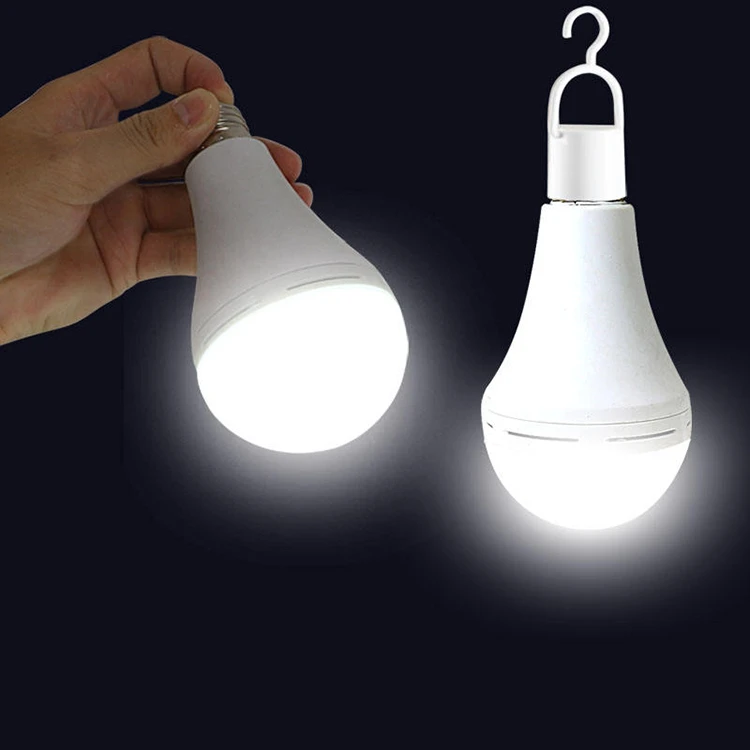
● A 9 Watt emergency bulb 9w, best for emergency situations of power cuts, offering cool daylight
● Power backup: During power cuts, emergency bulb 9w will provide light up to 4 hours continuously, therefore being a perfect power backup for your home
● Fast-charging: With the automatic charging feature, emergency bulb 9w will get automatically charged when it is kept ON, with the charging time of 8-10 hours
Specification
| Battery Capacity |
2200 mAh |
| Colour Temp. (K) | 6500K |
| Power Consumption |
9 W |
| Power Requirements |
220-240 50 Hz |
| Charging Time |
10 hrs |
| Color |
White |
| Product Name | emergency bulb 9w |
| Brand | BENWEI |