Emergency Rechargeable Inverter LED Bulb Working and Circuit
Here, we've described the circuit and operation of the inverter bulb.
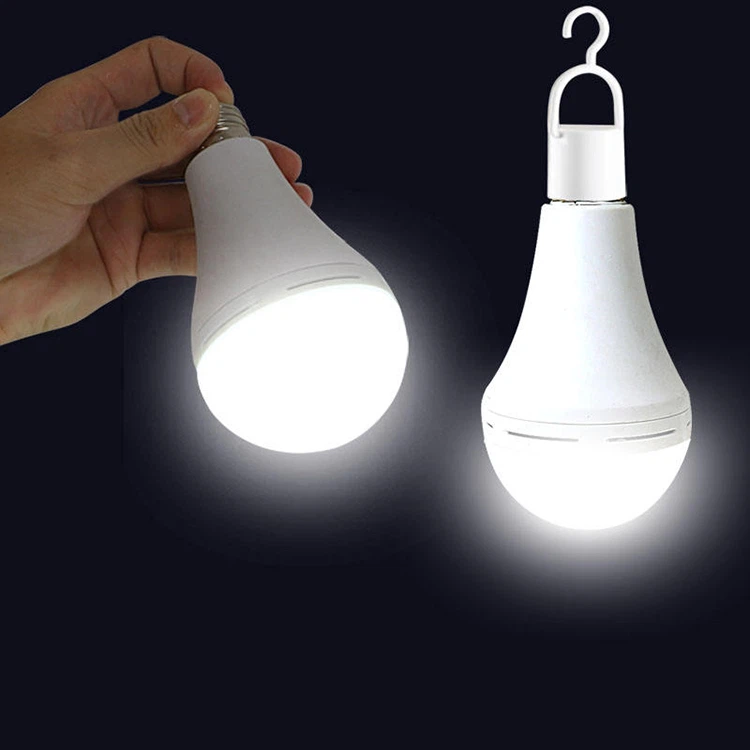
A LED emergency bulb is essentially an inverter bulb. Since there is no inversion process (DC to AC or vice versa) present in the circuits where these products are used, they are actually a little bit ambiguous.
When there is a power outage, the technology in these bulbs enables them to automatically turn on the LED light and charge the internal battery. An inverter LED bulb is essentially a two-in-one bulb. That is, it functions as a regular light bulb when there is AC mains power, but it functions as an emergency light bulb when there is a power outage.
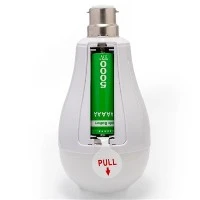
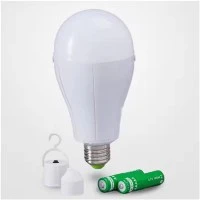
The majority of inverter LED lights include lithium-ion backup batteries that last three to four hours. Three to four hours are needed to fully charge these internal batteries.
After then, an automated voltage cutoff prevents the battery from being overcharged. Even when it is in use, the bulb is built to recharge its internal battery.
The majority of inverter LED bulbs do, however, provide a charge-only mode. With the LED bulb off, this mode is utilized to recharge the internal battery.
This inverter bulb automatically turns on to function as a DC emergency light when the AC mains power is lost. If not needed, it can be turned off.
An inverter LED bulb has excellent efficiency, low power consumption, and fully automatic management. It features a built-in electronic control circuit and backup power supply, so it can still detect the switch's condition when the power is out.
Construction of Circuits
These parts would be included in the circuit:
a battery to supply backup power, such as a 3.7V lithium-ion battery or a 12V lead-acid battery
a boost converter or DC-DC converter to increase the battery's voltage to the voltage required to power the LED bulb
a circuit with an inverter that switches the bulb between mains and battery power
a toggle to manually switch between main power and the battery
a battery charging circuit for use when main power is available
The main power source would be linked to the inverter circuit's input, and the inverter circuit's output would be connected to the DC-DC converter's input. The LED light bulb would be attached to the DC-DC converter's output. The switch and the inverter circuit's main power input would be connected in parallel. The battery and the primary power input would be linked to the charging circuit.
When the main power is available, the inverter circuit will power the LED bulb while the charging circuit charges the battery. The switch would be flipped to activate the inverter circuit when the main power was gone, and the LED light would receive battery power via the DC-DC converter.
working inverter bulbs
A tiny battery and an inverter circuit are both present in an emergency inverter LED bulb. The inverter circuit converts the bulb to battery power when there is a power outage. Until power is restored, the LED bulb will continue to operate normally utilizing the battery as its power source. At that time, the inverter circuit switches the bulb back to using the main power supply. In power outages, the LED bulb can thus continue to serve as an emergency light.
Feature
● High brightness (9w)
● Less heat
● Low power consumption
Specification
| Wattage: | 9w |
| Voltage: | 120V |
| Base: | E26/E27 |
| Operating Temp: | -20°C to +40°C |
| Life Hours: | 50,000 |