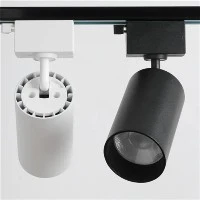
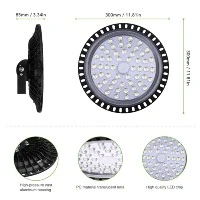
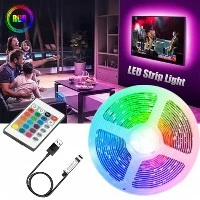
If you've recently searched for led grow light bulbs, you've probably seen that there are a lot of options for seed-starting lights. They come in a wide range of types, forms, and prices. We should first determine which options would best meet your seed-starting needs.
Sizes and Shapes
Led grow light bulbs come in a variety of sizes and forms, ranging from those that resemble those you would put in a lamp to those that are cut on poles to lengthy shop lights. The ideal size and form for you depends on the layout of your seed-starting system.
Your light should be positioned directly over your seedlings in an ideal scenario. They will extend to reach it if it's out of the way or too far above them, which results in thin, frail stems.
Therefore, if you only have one plate of seedlings, a single bulb model will probably work out well, especially if you have additional lighting to enhance it, like a bright window. A better, usually more expensive option would be a cylinder light that is the same length as your seedling plate so the light is distributed more evenly.
A longer led grow light bulb will provide really consistent inclusion throughout your plate if you're starting many seedling pads.
Technology for bulbs
Either glaring lights or light-emitting diode (LED) bulbs are used by the majority of nursery employees. There are other types of develop lights, such as sodium fume lamps, but these are harder to locate and more often used in commercial nursery settings.
For a long time, nursery workers used fluorescent shop lights for seed starting, but LEDs have quickly replaced them as the go-to option. LEDs are often more expensive than brilliant light bulbs, but they are also far more durable and energy-efficient. Additionally, they don't produce a lot of heat and come in a variety of sizes and shapes. The two types are often available at local tool stores, online, and at gardening centres.
Dark Colour
The photo synthetically dynamic radiation spectrum, which includes frequencies from 400 (violet) to 700 (red), is used by plants. When plants are seedlings, they typically use more continuous blue-green light, and later in their lives, when they begin to bloom and produce seeds, they typically use more red light.
Use lights that are either designated as blue-green range or adjusted light range if you're just using them to start seeds or grow lush vegetables. Lights with the words "for greens and seeds" or "for blossoms and natural product" on them have become more and more common.
Intensity of light
Generally speaking, the greater light power, the better when buying led grow light bulbs. Ordinarily, lights are estimated in Watts, which represents the amount of energy needed to power the light. They should also include a measure of light intensity known as PPF (photosynthetic photon transition) or foot-candles (one candle is equal to one square foot of surface area located one foot from a light source). Normal develop lights range in PPF from around 10 to 50, with greater values generally being beneficial for seedlings.
In a few circumstances, having a high PPF rating (or foot light rating) is very important:
More light is especially important for seedlings that need to be established quickly, like peppers or tomatoes. A seedling that has only recently been established inside before being transplanted outside can make up for lost time outside, but a seedling that has spent months inside needs as much light as possible to reach its major areas of strength for delivery and to gain a significant head start on the growing season.
A less severe supplementary develop light could be enough for seedlings placed in a really beautiful window. However, a higher power develop light will be a better fit if you're starting seeds in a location with little natural light.
Did you have any notion that you may start and grow all of your vegetable and flower seeds indoors this year using necessary,
conventional led grow light bulbs?
In addition to being simple to use and effective, they work brilliantly to grow more mature, sturdy seedlings. Perhaps the best feature is that they are quiet, energy-efficient, and reliable. The truth is that LED grow light bulbs only cost pennies a day to operate and may easily last for at least 10 growing seasons.
Many nursery employees refrain from starting their own seedlings inside. Tragically, a lot of people believe that the cycle is too expensive and time-consuming to commit to. In any event, contrary to popular belief, starting your own plants from seed doesn't need a significant financial commitment. It won't even require a strong desire for ostentatious lighting fixtures, heated pillows, or other exceptional equipment.