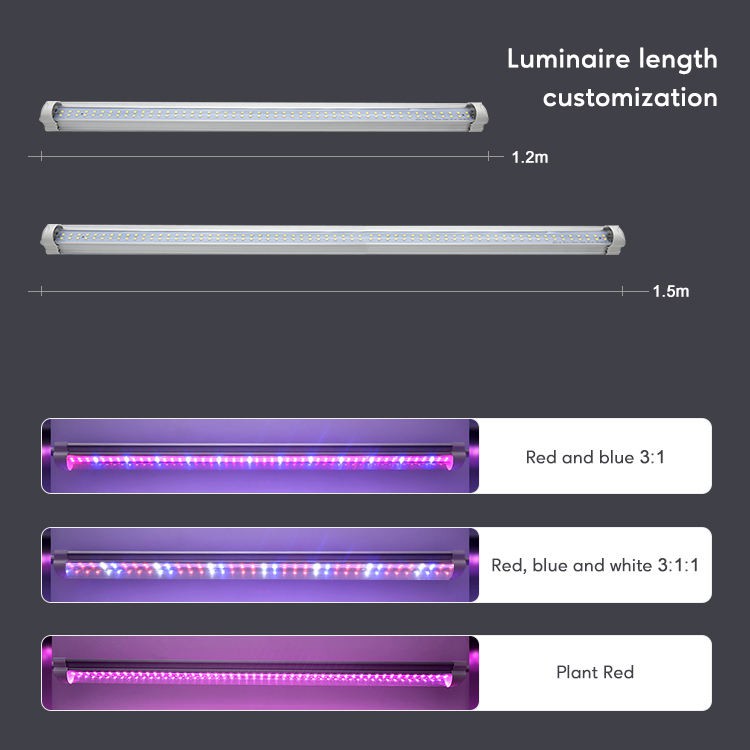
Compared to regular LED illumination, LED grow lights are frequently the recommended choice for plant growth. This is due to the fact that LED grow lights, as opposed to conventional fluorescent or incandescent bulbs, offer a more specialised light spectrum that promotes plant growth. In particular, the precise amounts of blue and white light emitted by LED grow lights promote the health of plants' photosynthesis. They also contain non-visible spectrums including ultraviolet (UV) and infrared (IR), in addition to visible light in the green and red colours.
In contrast, LED lights do not offer the same degree of customisation when it comes to lighting plants properly. They only have one colour temperature, such as warm or cold white, but they are devoid of many of the wavelengths needed for more robust plant growth. These limited colour options, as compared to natural sunlight, might result in stunted growth or even death if used excessively without enough rest intervals.
LED grow lights are much more energy-efficient than conventional LEDs, yet they still offer your plants with all the nutrients they need to flourish. By carefully evaluating the wattage output, beam angle, and coverage area, you can maximise the performance of your LED grow light setup while consuming the least amount of power.