What You Should Know About Buying LED Shop Lights

Since their release, inefficient incandescent bulbs have been swiftly replaced by energy-efficient LED lights. LED is your only choice if you care about your carbon impact. A broad range of designs are available for LED lights. Their variety of designs enables them to be used in a variety of settings.
Utilization of LED shop lights
LED is the finest choice when it comes to store lighting. Lighting fixtures are required in garages and workshops to illuminate work surfaces like tabletops and workbenches. With regard to store lights, you will need illumination that is straightforward and affordable, which LED lights provide.
Workshops and garages are common in modern residences. Shop lighting are thus more essential than ever. When it comes to store lighting, proper illumination is crucial since it guarantees the area is secure. A productive and efficient atmosphere is created by lighting that gives exceptional vision. The location and height of LED store lights may be changed to suit your needs. LED lights have swiftly replaced fluorescent store lights since their debut. LED store lights are the popular choice due to their advantages and fantastic features.
Although it should be evident, we may be biased since we work in the industry.
• Efficiency is perhaps the feature that LED lights are most praised for. LED lights only consume 80% less energy than incandescent bulbs when compared to LED lights. LEDs convert power to light instead of wasting 90% of it as heat as incandescent lights do. LED lights are always cold to the touch since there is no heat buildup. When compared to an incandescent bulb, an LED bulb uses 20% less energy to generate the same amount of light. Halogen lights use 30% less energy than incandescent bulbs, whereas fluorescent lamps use 75% less. You may save your utility costs by adopting LED lighting.
• Another advantage of LED lighting is its longevity. The lifespan of an LED light is 50,000 hours. This might last up to twenty years, depending on how long you leave your lights on throughout the day. The lifetime of halogen and incandescent bulbs is just 1000 hours. On the other hand, fluorescent lights have a ten thousand hour lifespan. Since the need to replace your lights won't occur for years, LED lighting may help you save money. LED lights do not fail as quickly as other types of lighting. When their lumen output reaches 70% of their original output over time, they are deemed dead.
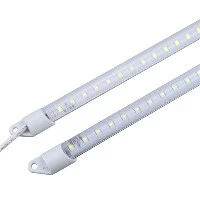
• There are several designs for LED lights. The LEDs are particularly adaptable due to their small size and may be created in a variety of patterns. Tubes that are four feet long are available for LED store lighting. You may install retrofit LED shop lights in lieu of fluorescent shop lights if you already have a fixture for them.
• LED lights are long-lasting. Since they are well-made, there is little chance that they will break quickly and need replacement. Polycarbonate, a material that is very durable, is used to make LED lights. Sturdiness is crucial for shop lighting. Shop lights are situated close to workbenches and tabletops, making them very vulnerable to being hit by tools and other things. LED lights are a great option for usage as store lighting due to their durability.
• LED lights are mercury-free. In contrast to fluorescent lamps, LED bulbs contain no mercury. Since they don't contain mercury, they may be disposed of normally. In the event of breakdown, they are particularly safe to use as shop lights. Since fluorescent lights contain mercury, their easy breakage is dangerous.
LED bulbs emit directed light. The beams of light produced by directional lights are parallel to the direction they are pointing. The ability of LED lights to be directed is advantageous for retail lighting. They may be positioned as required and point light downward, reducing light waste.
LED Shop Lighting: What Is It?
A:A led shop light is a high bay light used in workshop (also known as shop) applications to offer enough lighting for fine-tuned work. They are often strung on chain and might be spherical or rectangular. To meet the demands of the workshop, they often shine brighter than conventional lights.
What advantages can LED shop lighting offer?
A: Shop lighting enables you to increase brightness while using less energy. They improved LEDs' efficiency by making them instant-on, mercury-free, smaller, and safer.
Various LED shop lighting types
high bay LED lighting
High Bay UFO
Linear LED Lights
Low Bay LED Lighting
Lighting Strips
Corn Bulb LED Retrofit
LED retail lighting
LED Lights' Color Rendering Index
When compared to natural light, a lamp's CRI rating indicates how effectively it can show an object's colors. LED lights have a color rendering index of 80 to 90. The CRI should be 82 or above when buying shop lights for jobs that need color fidelity. You can find out the CRI of the store light you want to buy from the product specification.
The Radiant Power of LED Lights
LED lights' brightness is measured in lumens rather than watts, in contrast to incandescent bulbs. Watts are the units used to quantify how much energy the lights use. An LED light will use less energy to provide the same amount of light as a fluorescent or halogen bulb. A 60-watt incandescent light, for instance, will produce 800 lumens. A comparable lumen output LED light uses just thirteen to fifteen watts of power.
Swapping Out Your Lighting
Make sure the LED lights you choose are the proper fit if you're thinking about switching to more energy-efficient LED lighting. When making a purchase, the LED lights' brightness is extremely crucial. Most likely, you'll be shopping for LED lights with brightness levels comparable to your previous ones. An LED light with the same intensity as a 100-watt incandescent bulb would produce 1600 lumens while using just 23–30 watts of power. You may swap out a 75 watt incandescent light with a 1100 lumen LED that only consumes 18–39 watts. An 800 lumen LED that consumes just 13–15 watts may replace a 60–watt incandescent light bulb. If you were previously using a 40-watt incandescent, a 450-lumen LED that uses 9–13 watts of power would work just fine.
You should take other factors into account when updating your lights in addition to brightness. It is crucial to confirm that the lights you buy will fit into the existing fixtures. LED lights are generally offered as retrofits and integrated LED lights. You may retrofit your lights into existing fluorescent or incandescent lighting installations. As a result, changing the bulbs is simple. It is essential to guarantee that the installation will optimize the performance of your new LED lights. On the other hand, integrated LED lights have their chips and circuitry installed directly on the fixture. In this situation, changing the light is not an option.
Dimmable LED lighting is common. It is crucial to contact your manufacturer if a dimmer was placed for your incandescent bulb. The dimmer may not be compatible with your new lights because of the low power that LEDs use. The way that LEDs and incandescent lights dim is different. Dimming and warming incandescent lighting With 0-10 v dimming, LED lights become less bright and have a lower lumen output.
The choice between a retrofit and an integrated LED shop light will be vital when you buy LED shop lights. If you want a straightforward fixture that won't need to be replaced, integrated shop lights are a good option. Retrofits work best when you already have the necessary fittings.