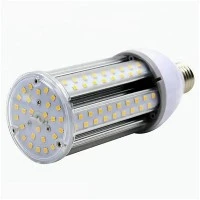
Which energy-saving lamp or LED lamp is better?
Our country has been promoting the use of energy-saving lamps through a large amount of manpower, material and financial resources. With the elimination of incandescent lamps, the vacated market has brought huge room for development of energy-saving lamps. More and more lighting companies have launched energy-saving lamp products to seize the remaining market. The National Development and Reform Commission, the Ministry of Commerce, the General Administration of Customs, the State Administration for Industry and Commerce, and the General Administration of Quality Supervision, Inspection and Quarantine have jointly issued the "Announcement on the Gradual Prohibition of the Import and Sale of General Lighting Incandescent Lamps" for half a year. The date of obsolescence of incandescent lamps is getting closer. So what about energy-saving lamps and LED lamps?
Because incandescent lamps have short life span, high energy consumption, and many reasons for rising energy costs, it is inevitable that incandescent lamps will be launched on the historical stage. So, which energy-saving lamp or LED lamp can replace it, which can do better?
Energy-saving lamps are the most widely used replacement products for incandescent lamps in consumers' daily use. Its efficiency is more than five times that of incandescent bulbs, and its average life span is about 8,000 hours. The technology is mature. Energy saving and environmental protection should complement each other, but in energy-saving lamps, the problem of mercury content doomed the fate of energy-saving lamps that will eventually be replaced: an ordinary energy-saving lamp contains an average of 0.5 mg of mercury, and the mercury immersed in the ground will cause about 180 tons. Water pollution. If the waste energy-saving lamps are improperly disposed, it is likely to become an "ecological killer", and the waste energy-saving lamps have also been improperly processed for "for many years", and even today there is still no appropriate policy and measures introduced.
The "theoretical advantages" of LED light sources, such as longer life, high efficiency, energy saving, and environmental protection, have passed the practical test. The performance parameters of LED light sources are not “improving” as used in the past, but “further improving”. The overall development prospects of the LED industry are generally optimistic.
With the phasing out of incandescent lamps and state subsidies for energy-saving lighting products, the LED lighting market has accelerated. LED lamps are gradually entering the home lighting market. However, the price of LED lighting products is still the main factor hindering the entry of LED lamps into the lighting market. In terms of price, the retail price of a 1.2-meter-long, 21-watt LED tube on the market is normally more than 200 yuan, while the price of a traditional fluorescent tube of the same length and wattage is basically below 10 yuan; in terms of the replacement cost of incandescent lamps, The price difference between LED bulbs and traditional energy-saving lamps is at least 8 times. Such a price gap is naturally the biggest obstacle for LED lighting to enter the home environment. Many LED lighting distributors also said that LED home lighting is still in the promotion stage, and more consumers still tend to buy energy-saving lamps with relatively low prices; in the household market, energy-saving lamps are still the biggest enemy of LED lighting products, and Home lighting has always been an area where energy-saving lamps excel.
LED lamps are undoubtedly the development direction of lighting lamps in the future. How to reduce the cost of LED lamps has become an important link in whether LEDs can be popularized in the market. In fact, in the past few years, the price of LED lighting lamps has been declining at a rate of 35%-50% per year. I believe that in the near future, the price of LED lamps will drop to a range acceptable to every household. The era of LED lighting has arrived.