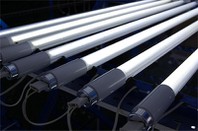
Which industries are LED fluorescent lamps suitable for?
At present, China has an annual electricity saving market of 800 billion yuan, and this market will continue to expand with an average annual growth of 10% in electricity consumption. Professional research institutions pointed out that China has become the world's second largest market after the United States, and it is entirely possible that it will replace the United States in recent years and become the largest buyer in the global power-saving market.
The power supply in Guangdong Province throughout the year is still in a situation of year-round, grid-wide power shortage and both power and electricity shortages. In Guangdong Province, electricity demand in 2015 will reach 274.5 billion kWh, an increase of about 15% year-on-year, an increase of 35.8 billion kWh from 2014. It accounts for 9% of the electricity consumption of the whole society throughout the year.
The Wall Street Journal has conducted extensive and in-depth investigations on various investment forms, and has reached an authoritative conclusion: Power-saving investment is the fastest and most reliable form of investment. He also pointed out that power-saving control is a long-term high-return investment, and enterprises will get a return of at least not less than 50%, while the return on investment in the stock market and real estate industry is about 25%.
LED fluorescent lamp is suitable for
1. Industrial enterprises (such as electronics factories, garment factories, textile factories, etc.)
2. Commercial places (such as shopping malls, supermarkets, hotels, commercial buildings, etc.)
3. Comprehensive places (such as schools, hospitals, administrative office buildings, etc.)
4. Lighting engineering (roads, tunnels, mines, etc.)
5. Civilian market (home lighting, showcase, etc.)
The led lighting power-saving industry will become a sunrise industry with the most development potential in my country. Fortune magazine, a well-known American financial publication, believes that electricity expenses have risen to the second largest expenditure after raw materials, labor costs, and enterprises and small business owners. Therefore, the electricity-saving industry ranks first among the top ten industries. Four