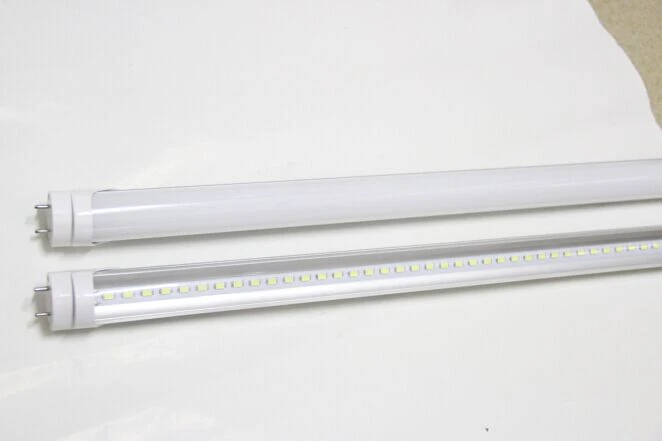
To be honest, many procurement professionals focus solely on wattage and price when selecting LED tubes, often leaving "heat resistance" as an afterthought. The result? Within three to five months of installation, the lights start flickering, turning yellow, or failing completely-and the labor cost to replace them ends up being higher than the price of the lights themselves.
This article focuses on one thing: high-temperature environments-specifically commercial kitchens, casting workshops, and boiler rooms-and how to select the right heat-resistant LED tubes for them. If you are sourcing lighting for such spaces or developing solutions for clients, this guide will be a useful reference.
Why standard LED tubes are prone to "heatstroke"
Many people assume that because LEDs are "cold light sources," they are immune to heat. In reality, both the LED chips themselves and the internal power drivers are highly sensitive to heat.
Excessive junction temperature: When the ambient temperature is high and heat dissipation is inadequate, light degradation accelerates significantly, causing brightness to drop much faster than it would under normal conditions.
Driver aging: Components like electrolytic capacitors are highly sensitive to temperature. High heat shortens their lifespan-a common reason why an LED tube might suddenly stop working.
Housing and diffuser deformation: Certain plastic materials can soften, turn yellow, or become brittle when exposed to heat over long periods.
Therefore, "heat resistance" is not just a marketing buzzword; it refers to an integrated design encompassing heat dissipation structures, component selection, and housing materials.
Commercial kitchens: The dual challenge of heat and grease
Kitchens are the most common-yet frequently underestimated-high-temperature environments, especially in areas directly above stoves, ovens, and deep fryers.
Rising heat: Since light fixtures are typically mounted on the ceiling, they are positioned exactly where hot air accumulates.
Grease accumulation: Oil and grime tend to build up on the surface of the tubes, which hinders heat dissipation, reduces light transmission, and necessitates frequent cleaning.
Frequent cleaning: Because kitchen lighting requires regular scrubbing, a high ingress protection (IP) rating-ensuring resistance to water and dust-is equally critical.
Ideal LED tubes for these settings should feature heat-resistant housings, smooth surfaces that are easy to clean, and an appropriate level of ingress protection.
Foundries: Environments with the Most Intense Thermal Radiation
Foundries and smelting workshops are characterized by concentrated heat sources and strong thermal radiation. Even if light fixtures are not positioned directly above a furnace, they are still subjected to constant exposure to radiant heat.
Radiant heat combined with ambient heat: Fixtures must withstand both, placing the highest demands on thermal management design.
Dust and metal particles: High levels of dust and particulate matter can easily clog heat dissipation channels.
High mounting positions: Fixtures are typically installed at significant heights, making replacement difficult; therefore, long-term reliability is far more important than a lower initial purchase price.
Such environments impose the most stringent requirements on the materials and driver stability of LED tubes-standard, consumer-grade products generally cannot withstand these conditions.
Boiler Rooms: Consistently High Temperatures
While temperatures in a boiler room may not be as extreme as those in a foundry, the challenge lies in sustained, long-term high temperatures, compounded by the humid heat generated by steam pipes.
Continuous, non-stop operation: Fixtures have virtually no opportunity to "cool down," leading to accelerated cumulative aging.
Humid, hot environment: Steam and moisture can easily corrode fixture connectors and internal circuitry.
High safety standards: Boiler rooms have strict requirements for lighting stability and safety; a light failure can hinder essential inspections.
In these settings, priority is placed on moisture and corrosion resistance, as well as operational stability under prolonged high-temperature conditions.
Selecting High-Temperature Resistant LED Tubes: Key Considerations
Operating temperature range: Check the manufacturer's specified maximum operating temperature; ensure it aligns with the actual on-site conditions, while allowing for a safety margin.
Thermal materials and design: Components made from highly thermally conductive materials-such as aluminum or ceramics-are generally better suited for high-temperature environments than those made entirely of plastic.
Driver quality: This is the most frequently overlooked aspect; it is advisable to verify the temperature tolerance specifications of the internal electronic components.
Ingress protection (IP) rating: In areas like kitchens and boiler rooms, moisture and water resistance are critical.
Warranty and lifespan guarantees: In high-temperature applications, the terms of the warranty serve as a direct indicator of the manufacturer's confidence in their product.
Conclusion
Returning to the question posed in the title: kitchens, foundries, and boiler rooms all require high-temperature-resistant LED tubes, though the specific challenges they face differ. Kitchens contend with grease, smoke, and heat; foundries deal with intense thermal radiation; and boiler rooms involve hot, humid conditions combined with continuous operation. Choosing the right LED tube does more than just reduce the frequency of replacements-it lowers maintenance costs and minimizes operational downtime.
Looking for the right high-temperature-resistant LED tube for your facility?
If you are unsure which specifications best suit your environment, or if you require bulk procurement, custom dimensions, or specific color temperatures, please feel free to contact us directly. Simply share details about your application environment, ambient temperatures, and the quantity required, and our team will provide tailored product recommendations and a formal quote. We can also arrange for samples if you would like to conduct testing.