Photochemical reactors do not rely on a single "best" wavelength; instead, the choice is dictated by the absorption characteristics of your target molecule and the specific photochemical pathway you want to trigger. The most common wavelengths fall into distinct categories based on the lamp source used.
1, Common Wavelengths by Lamp Type
The table below summarizes the wavelengths most frequently used in photochemical reactors, their typical sources, and primary applications.
| Wavelength(s) | Typical Source | Primary Photochemical Role & Notes |
|---|---|---|
| 185 nm & 254 nm (Dual) | Low-pressure mercury lamp | A powerful combination. 185 nm generates ozone (O₃) and hydroxyl radicals (•OH) in situ; 254 nm directly decomposes ozone and many organics. Often used together for advanced oxidation. |
| 253.7 nm (≈254 nm) | Low-pressure mercury lamp (UVC) | The workhorse of photochemistry. Highly efficient for direct photolysis and for generating •OH radicals from H₂O₂ (UV-AOPs). It is near-monochromatic and widely used in water treatment and lab-scale synthesis. |
| 222 nm | KrCl* excilamp (Far-UVC) | An emerging source. Its shorter wavelength enhances direct photolysis and radical formation, but it currently suffers from lower efficiency and shorter lamp lifetimes. |
| 265–300 nm | Tunable UV-LEDs or filtered lamps | A selective band for activating specific oxidants. For instance, free chlorine activation is favored in this range. |
| 312 nm | Phosphor-coated low-pressure lamp (UVB) | A common UVB option, useful when a reaction is sensitive to UVB but not UVC. Often used for targeted photobiology or synthesis. |
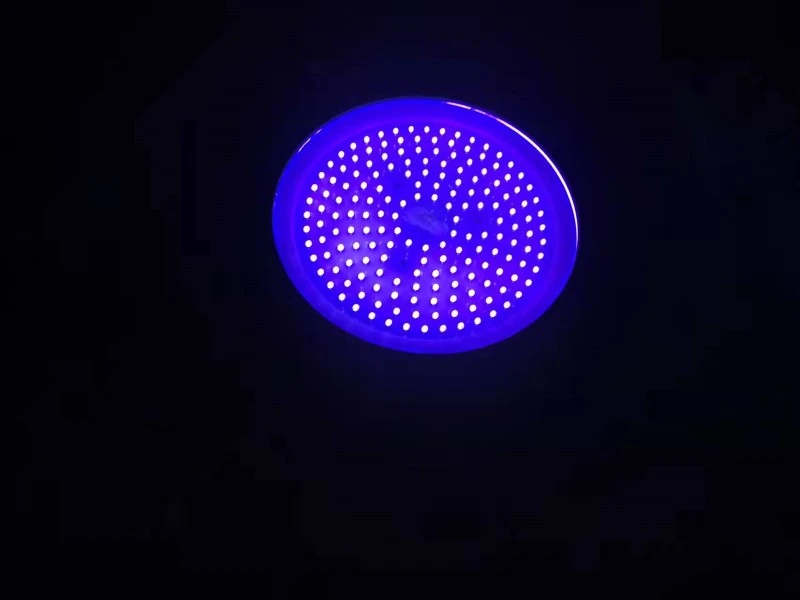
| 365 nm | UVA lamp / UV-LED | The most common UVA wavelength. It has the lowest photon energy among common options, meaning it penetrates deeper into a solution but is less energetic. Ideal for bond cleavages requiring less energy (e.g., C-Cl, N=N) or when using specific photoinitiators/catalysts. |
| Broad Spectrum (220–600+ nm) | Medium-pressure mercury lamp | Provides a full spectrum of discrete lines. This is useful for screening unknown reactions or when a chromophore has a broad absorption, but it can also cause unwanted side reactions because much of the light energy is wasted at non-absorbed wavelengths. |
2, Key Trade-Offs in Wavelength Selection
Choosing a wavelength is a balancing act between several factors:
Photon Energy vs. Penetration Depth: According to the Planck equation, shorter wavelengths have higher energy per photon, which can break stronger chemical bonds. However, shorter wavelengths are also absorbed more strongly by the reaction medium, leading to a shorter effective path length. This means higher energy comes at the cost of treating a smaller volume effectively.
Match the Chromophore: The wavelength must correspond to an absorption band of your starting material or photocatalyst. For example, a C=O bond absorbs around 280 nm, while an N=N bond absorbs near 350 nm. Using a wavelength the molecule does not absorb will result in little to no reaction.
Target Specific Reactive Species: If your goal is to generate hydroxyl radicals from H₂O₂, 254 nm is highly efficient. If you are activating a specific oxidant like chlorine, a band around 265–300 nm may be preferred.
Source Practicality: Low-pressure mercury lamps offer high efficiency at 254 nm, but their output is fixed. UV-LEDs provide flexibility with many precise, selectable wavelengths, though their wall-plug efficiency can be lower than mercury lamps.
3 ,How to choose
Match the absorption spectrum. Check the UV-Vis spectrum of your substrate, catalyst, or photosensitizer, and pick a lamp that overlaps its absorption band.
Consider the solvent and vessel. Standard borosilicate (Pyrex) cuts off below about 300 nm. For 254 nm you need a quartz vessel or immersion well.
Avoid unwanted side reactions. Shorter wavelengths carry more energy and can degrade products. Filters can trim the output.
Consider the type of reaction.
Photolysis of H2O2, ozone, or persulfate: 254 nm
TiO2 photocatalysis: 350-380 nm
Photoredox catalysis: 400-460 nm
Photopolymerization: usually 365-405 nm
In practice, 254 nm from a low-pressure mercury lamp is the most ubiquitous starting point for general photolysis and advanced oxidation. However, for synthetic chemistry, 365 nm UVA is extremely common due to its greater penetration and safer handling. The optimal choice is always the wavelength that your molecule absorbs and that drives the desired transformation with the fewest side reactions, balanced against the practical performance of the available light source , you can see more photochemical reactor UV lamp on http://www.benweilight.com