Why Are High CRI LED Tubes (CRI ≥ 97Ra) Becoming the Standard for High-End Lighting Spaces?
Have you ever tried on an outfit in a clothing store – vibrant, rich in texture – only to see it look dull and lifeless at home? Or picked up fresh-looking fruit in a supermarket, only to find it unappealing under your own lights? This isn't a problem with the product itself, but a difference in the color rendering ability of the light source. As LED lighting technology continues to evolve, high Color Rendering Index (CRI) LEDs are fundamentally changing how we perceive "light quality." They have become the new standard for professional environments such as museums, hospitals, high-end retail, and photo studios.

1. What is CRI, and why isn't traditional CRI enough?
The Color Rendering Index (CRI) measures a light source's ability to reproduce the true colors of objects. Using sunlight as the benchmark (CRI = 100), a higher value means colors appear more natural – closer to how they look under daylight. The general CRI (Ra) is the average of the special color rendering indices R1 through R8 (eight standard pastel colors).
However, relying on Ra alone is far from sufficient for evaluating LED light sources. Traditional CRI uses only moderately saturated color samples and cannot fully reflect the true color rendering performance of LEDs. The key to truly evaluating LED color quality lies in R9 – the special color rendering index for saturated red.
R9 represents the source's ability to reproduce saturated red (around 800 nm). Many standard LEDs use a blue chip + yellow phosphor solution, which lacks sufficient red spectral power – often resulting in a negative R9 value. This directly affects how red objects appear: fresh meat, mahogany furniture, red areas in artworks – all can look grey, dry, and distorted. The U.S. ENERGY STAR standard explicitly requires R9 > 0 for indoor LED lighting to ensure basic red rendering.
Professional Tip: When selecting high-CRI LEDs, don't just look at the Ra average – pay close attention to the R9 value. Only when both Ra and R9 are high can you guarantee true high color rendering performance.
2. How to choose the right CRI grade for your application? (With application scenario comparison table)
Differences in CRI values directly determine the application level and suitable scenarios. The table below summarizes the performance differences of LED tubes at different CRI grades:
| CRI Grade | Ra Range | R9 Reference | Typical Applications | Core Value |
|---|---|---|---|---|
| Economy | Ra 70-80 | Usually <0 | Warehouses, temporary lighting, parking lots, outdoor roads | Basic illumination only; low efficacy, poor color rendering |
| Standard | Ra ≥ 80 | 0-20 | Offices, schools, factory workshops | Meets minimum national standard (GB 50034-2013 requires Ra≥80 for long-term work areas) |
| High-CRI | Ra ≥ 90 | >50 | High-end retail, hotels, residential, premium supermarkets | Natural color reproduction – suitable for spaces demanding better light quality |
| Professional | Ra ≥ 95 | >80 | Art galleries, operating rooms, photo studios, museums, high-end clothing stores | Accurate color reproduction; R9>80 ensures vivid, true reds – professional grade |
| Flagship | Ra ≥ 97 | >90 | Art restoration, color labs, high-end jewelry stores, LED film/TV lighting | Very close to sunlight (CRI=100) – ultimate color fidelity |
Source notes: Ra≥80 for offices/schools is from Chinese national standard GB 50034-2013; R9 reference ranges are based on U.S. ENERGY STAR and industry norms; application categories follow lighting design codes and practices for retail, museum, medical, etc.*
3. Market trends for high-CRI LED lighting: rising standards & demand
As LED lighting technology matures, especially around 2025–2026, high-CRI LEDs (CRI ≥ 90) are moving from niche professional markets into broader lighting applications. Museums, galleries, and printing/packaging typically require CRI ≥ 90, while high-end residential, fine dining, and premium retail increasingly demand CRI ≥ 95. Meanwhile, the mandatory national standard GB 30255-2026 (issued March 2026) on energy efficiency grades for indoor LED lighting includes adjustments for high-CRI, anti-glare, and smart control products – reflecting the national push for both light quality and energy efficiency.
In terms of technology, "health-oriented spectrum" is also gaining traction: high CRI with reduced blue light hazard, making it safer for the eyes. Studies have also shown that white LEDs with high CCT and high CRI can provide higher perceived brightness under mesopic conditions, improving safety in workplaces.

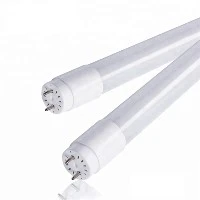
4. How to choose a real high-CRI T8 LED tube?
For buyers, the following points are critical when selecting high-CRI T8 LED tubes:
- Request a full CRI test report: Ask for complete R1–R15 data tested per CIE 13.3-1995, not just the Ra value stated on packaging. For applications where skin tones matter (e.g., clothing stores, cosmetics counters), also check R13 and R15 (skin tone indices).
- Prefer factory-direct manufacturers: Benwei is a factory-direct supplier of T8 LED tubes – from LED chip selection to driver production, quality control is tighter, costs are more stable.
- Pay attention to detailed specs: Heat sink structure (aluminum PCB thickness, aluminum housing thickness), driver brand, tube material, and ingress protection rating all affect real-world performance.
Conclusion
"Light quality" is becoming the core theme of the lighting industry, and high-CRI (≥97Ra) LED tubes represent the best expression of this trend. Whether you want to elevate the light quality of a commercial space or find a truly color-accurate solution for a professional environment, choosing a high-CRI, high-R9, long-life, stable-driven T8 LED tube will bring a professional-grade "shine" to your project.