Why are there nearly no spectral components below 500 nm in LED tubes with colour temperatures below 2000 K?
The spectrum usually contains very little radiation below 500 nm (blue–cyan region) when the colour temperature (CCT) of an LED tube is less than 2000K. This is a result of both the practical design of LED technology and the basic physics of low-color-temperature light sources.
1. Low colour temperature naturally means a lot of red and orange
By definition, a blackbody radiator with a spectral peak that moves toward longer wavelengths (the red end) has a lower colour temperature. The amount of energy below 500nm for a black body at about 2000K is very small. When LEDs make white light that is thought to be very warm (below 2000K), their spectral power distribution must follow a similar pattern: low CCT means very little blue light. If a lot of blue light was added, the actual CCT would go up to a much higher number, like 4000K.
2. How sub‑2000K LEDs are made in practice
To get a very warm colour temperature (like that of candlelight or a sunset simulation, <2000K), there are two popular technical ways to do it. Both of them are meant to block short-wavelength light:
Blue chip plus a lot of red and orange phosphors: A blue LED lights up phosphors, which change most of the blue light into red and orange light. The phosphor layer is made thick enough or the blue chip current is lowered so that only a very small amount of blue light can escape when the goal CCT falls below 2000K. The remaining blue peak is often below the detection limit, which means it is hidden in noise.
Direct use of red and amber LED chips (no blue chip): Some goods don't use any blue chips at all and instead mix red, amber, and maybe even green LEDs to get the warm colour they want. Since there is no blue light source, there is no radiation below 500nm.
team introduction
Lorem ipsum dolor sit amet, consectetur adipiscing slit. Nunc blandit dui eget ipsum pulvinar tempor. In laoreet elit sodales, finibs lorem nec, rutrum ipsum.
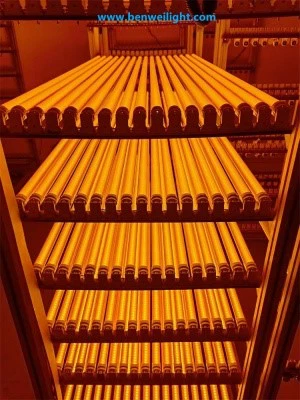
Color Temperature
Anti-UV
Yellow cover
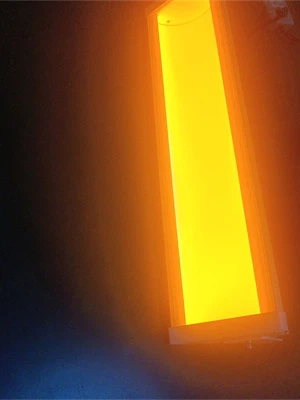
Color temperature 1700-2000K
Integrated type
DC24V
With Built-in Switch
1800K
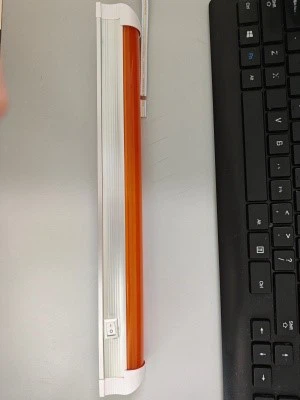
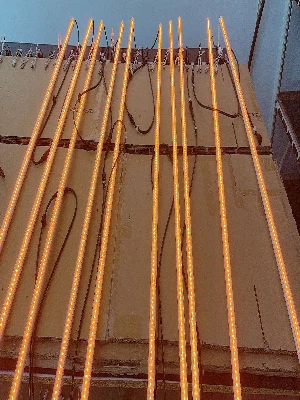
IP65 T8
590nm
With Waterproof connector
Linkable
Tri-proof type
IP65
590nm 99.8%
100-400watt
3. Visual and efficacy considerations
Environments with light below 2000K are used to help people relax or sleep, like sunset simulations and night lights. Blue light makes melatonin less effective, and people's eyes are less alert to it when the light level is low. So, getting rid of blue light is good for sleep quality. Also, there would have to be a lot more red and orange light to lower the CCT below 2000K if blue light was present, which would mean higher Stokes loss and less efficiency. Because of this, makers take out short-wave components on purpose.
Conclusion
It's not technically impossible for there to be some light below 2000K, but if there was a lot of <500nm, the colour temperature would rise well above 2000K. In order for manufacturers to correctly show "below 2000K" as a very warm white colour, they have to drive the short-wavelength radiation to almost zero.
Test report
1800K color temperature
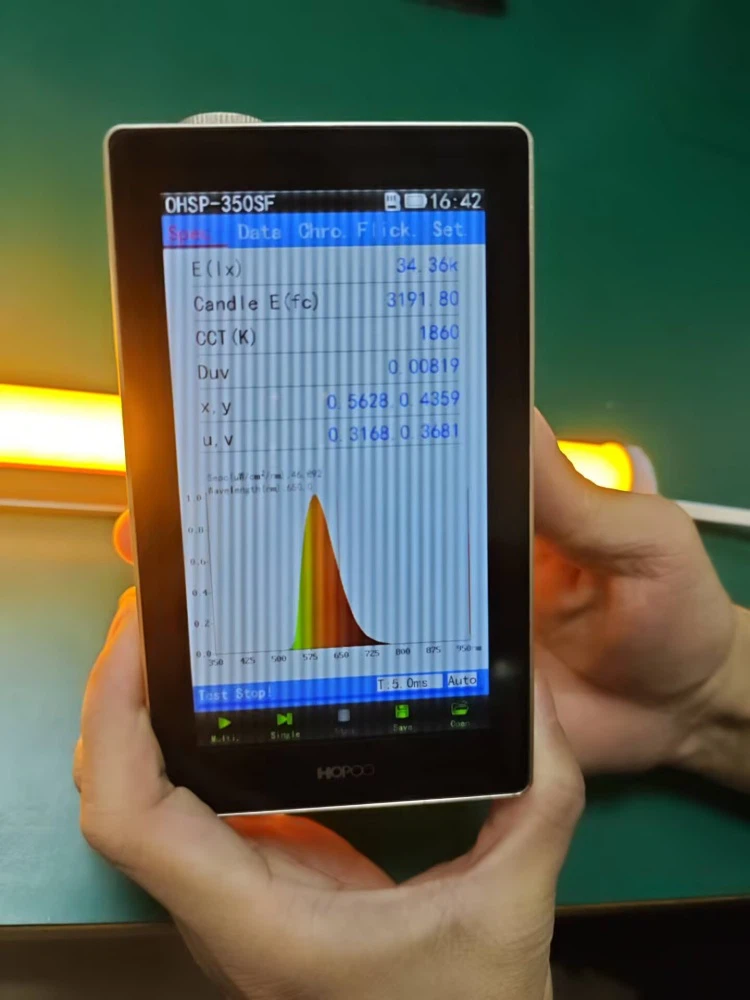
99.9% 590nm 1300K color temperature
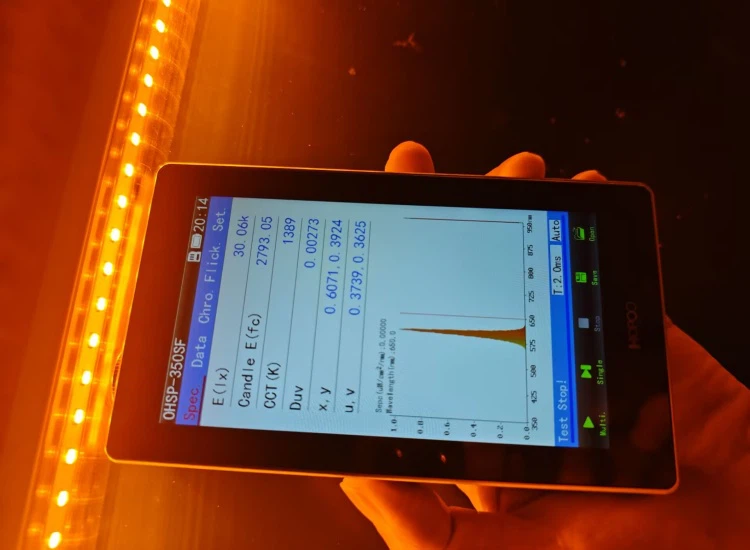
Contact
Kevin Rao
Email:bwzm12@benweilighting.com
Tel/Whatsapp:+8619972563753