Will Your LED Lights Weather the Storm? A Deep Dive into IP Waterproof Ratings and Selection Strategies
In the LED lighting industry, whether it's illuminating a city's skyline or providing high-bay lighting for a stadium, waterproof capability is the lifeline that determines product lifespan and safety. Many buyers focus only on power and brightness, neglecting the enclosure's protection level, which leads to short circuits or complete failures during rainy seasons or in humid environments.
What exactly are LED waterproof ratings? How do requirements differ across various applications? This article takes you through the core technologies of LED waterproofing.
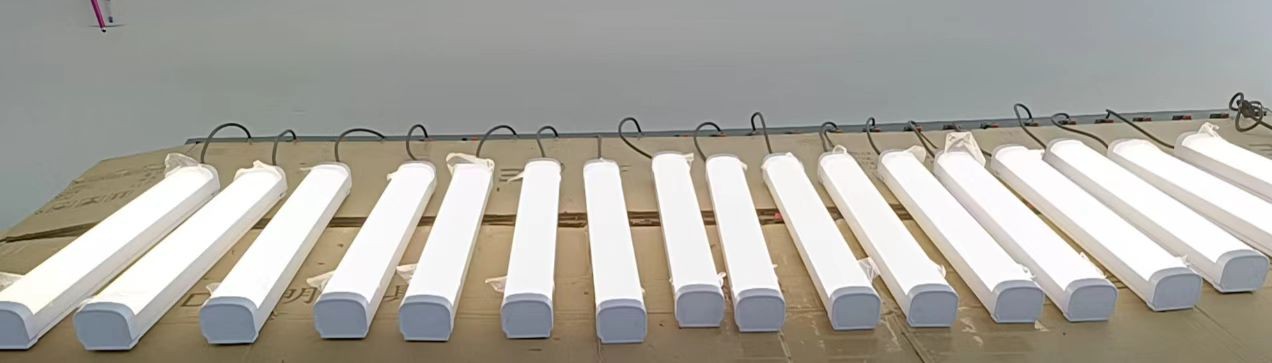
1. The Core Concept: What is an IP Rating?
The most common technical term for waterproofing in the LED industry is the IP Rating (Ingress Protection). Developed by the International Electrotechnical Commission (IEC), it uses two digits to define a fixture's sealing effectiveness against the intrusion of foreign objects and moisture.
- First Digit: Represents protection against solids (0–6), such as dust or fingers.
- Second Digit: Represents water protection (0–9K), measuring the fixture's ability to withstand water at different pressures, angles, and intensities.
2. Industry Data Chart: Waterproof Ratings and Recommendations
To make your purchasing decisions more targeted, the following table summarizes the technical requirements and recommended applications for mainstream waterproof ratings:
| IP Rating | Protection Level Description | Water Test Conditions | Recommended Applications |
| IP20 | No protection against water | Protection against solids >12.5mm only | Dry indoor offices, bedrooms, malls. |
| IP44 | Splash-proof | Protected against splashes from any direction | Bathrooms (dry zones), sheltered corridors. |
| IP65 | Jet-proof | Low-pressure water jets (6.3mm nozzle) | Street lights, floodlights, general outdoor rain. |
| IP66 | Powerful jet-proof | High-pressure water jets or heavy seas | Coastal docks, mines, high-storm regions. |
| IP67 | Temporary immersion | Immersion in 1m of water for 30 mins | In-ground lights, wall washers (flood-prone areas). |
| IP68 | Continuous immersion | Submerged at depths specified by mfr. | Pool lights, fountain lights, deep-water tasks. |
| IP69K | High-pressure/High-temp | 80°C water at 100 bar pressure washdown | Food processing (sanitation), car washes. |
3. Four Technical Details to Check in Waterproof LEDs
Looking at the IP digits alone isn't enough; high-quality waterproof fixtures must meet strict standards in materials and craftsmanship:
3.1 Material of the Sealing Gasket
The core of waterproofing is the "seal." Cheap fixtures often use ordinary rubber gaskets, which become brittle and crack under UV exposure and temperature fluctuations.
Selection Criteria: Prioritize Silicone Gaskets. Silicone offers excellent weather resistance, high-temperature tolerance, and elasticity, maintaining a tight seal even in extreme weather.
3. 2 Waterproof Connectors and Cable Design
Water often enters not through the body itself, but by "creeping" along the cable (capillary action/siphoning).
Technical Indicator: Outdoor fixtures should be equipped with PG Waterproof Glands. For higher requirements, cables should be internally molded or filled to prevent moisture from seeping through the wire strands into the internal circuitry.
3.3 The Role of the Breather Valve
As LED fixtures heat up, internal air expands; as they cool, it contracts, creating a vacuum that can suck in external moisture.
Advanced Requirement: Premium outdoor fixtures feature a Breather Valve (Vent). It balances internal and external pressure, allowing air to escape while blocking water, effectively preventing condensation inside the lens.
3.4 Driver Potting Process
Even if the outer casing is breached, the internal circuitry should have a final line of defense.
Craftsmanship Standard: Industrial-grade waterproof lights usually undergo a Potting Process for the driver. Filling the driver box with thermal conductive silicone ensures the circuit board is fully encased-protecting it from corrosion and water while aiding heat dissipation.
4. Application Pitfalls to Avoid
- Bathrooms/Kitchens: Don't just look at aesthetics. Ensure at least an IP44 rating to prevent steam condensation from causing "blackening" of the LED chips.
- Outdoor Lawns/In-ground: Because rain leads to temporary pooling, in-ground lights must be IP67. Many IP65-rated in-ground lights fail within a year due to water seepage from puddles.
- Car Washes/Farms: These involve high-pressure cleaning. You must choose IP69K fixtures, as standard IP65 lights will be instantly penetrated by high-pressure water jets.
Waterproofing is not just about preventing a light from breaking; it is the baseline for electrical safety. When selecting fixtures, match the IP rating to the environment and pay close attention to sealing materials, pressure-balance design, and potting techniques.
If you require actual spectral measurement data for this product or would like to request a free sample test, please feel free to contact us at any time!
✨Contact✨
🙋♀️Harriet
📫Email: bwzm88@benweilighting.com
📞Whatsapp: +8613007285242