Can LED Flicker Cause Vent Prolapse in Chickens? The Full Chain from Light Stress to Pecking
No, vent prolapse is not directly caused by LED flicker tearing tissue. However, by inducing the pecking behaviour that transforms a treatable illness into a fatal one, it does significantly raise the death risk from prolapse.
Another hen is dead when you enter the layer house in the morning. The vent has been pecked out. The feed formula has been modified by you. You have measured the levels of phosphorus and calcium. Your stocking density has decreased. The issue still exists.
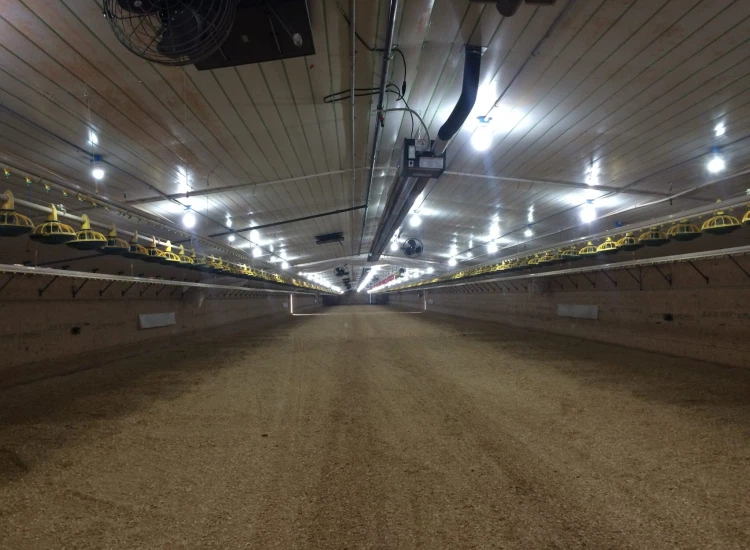
The missing variable might be the overhead illumination. The flicker that your birds see but you cannot-not the brightness or the photoperiod.
This article outlines what to look for when buying flicker-free poultry lighting, describes the mechanism linking LED flicker to vent prolapse mortality, and offers ways to test for flicker without costly equipment.
1. The Secret Link: How Prolapse Is Caused by Flicker
There are four links in the chain from flicker to prolapse. Before diagnosing or resolving the issue, each one must be understood.
1.1 Why Humans Miss the Flicker That Chickens See
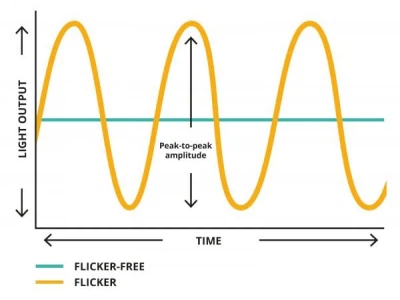
Light is processed by human eyes at a rate of about 60 frames per second. The human brain interprets flickering light above this frequency as constant lighting.
The speed at which chickens process light is between 100 and 140 frames per second. This means that a light that a human perceives as absolutely steady may look to a chicken as a quick sequence of flashes.
The point at which flicker disappears is known as the critical fusion frequency, or CFF. It is about 60 Hz for people. It is about 140 Hz for chickens. Many common LED drivers run in the range between these two frequencies, which is around 60 to 140 Hz. A light ripple at 100 Hz is produced by an alternating current fixture with a mains frequency of 50 Hz. This is constant light to a human. It is a strobe to a chicken.
This is more than just a small visual annoyance. Both behavioural and physiological effects result from it.
1.2 The Reasons Flicker Causes a Stress Reaction
As prey animals, chickens evolved. Rapid shifts in light in their ancient habitat indicated that a predator-a hawk, an eagle, or something obstructing the sun in a manner that indicated danger-was passing overhead.
A similar pattern of abrupt fluctuations in intensity is produced by artificial light that flickers. This is perceived by the bird's brain as a possible aerial threat. This is not an answer that was taught. It is a survival strategy that is hardwired.
The stress reaction is triggered when a light flickers at frequencies that the bird can detect. Levels of cortisol increase. The bird continues to be alert. Because the threat-the flicker-never ends, this state does not turn off. The light is constantly present, pulsating, and warning of impending peril.
Persistent flickering causes chronic stress, which results in quantifiable behavioural changes. Birds becoming increasingly restless. They eat and sleep for shorter periods of time. They grow more sensitive to small disruptions. This deteriorates performance and welfare over time.
1.3 The Whole Process: From Stress to Pecking to Prolapse
There are four steps in the cycle from flicker to prolapse mortality.
First, flicker. Light oscillation is produced by a poorly driven LED at frequencies that the chicken can detect. This is perceived by the bird as a persistent threat to the surroundings.
Step 2: Prolonged tension. The bird can't get away from the flicker. Cortisol levels are still high. The level of agitation rises. Social norms deteriorate.
Step 3: More pecking. Birds that are stressed or disturbed tend to peck more at objects, feeders, and one another. Pecking becomes more intense. Feather pecking and aggressive pecking become more common and intense.
Step 4: Prolapse turns lethal. Large eggs, a calcium deficit, too much light promoting an early commencement of lay, or a reproductive system infection are the main causes of vent prolapse itself. The moist red tissue of the cloaca emerges from the vent when a hen collapses. Prolapse can occasionally go away on its own in regular circumstances with little stress and pecking. However, that projecting tissue becomes an instant target in a flock with enhanced pecking behaviour due to prolonged stress. It is pecked at by other hens. There is injury to the tissue. Infection and bleeding ensue. The bird perishes.
The initial prolapse is not caused by flicker. However, it dictates the result. In a peaceful flock, a prolapsed hen might live. In a pecking flock under stress, a prolapsed hen is unlikely to do so.
2. Is the issue with your lighting? Symptoms and Diagnosis
You can use the following techniques to find out if flicker exists in your poultry house and whether it is causing prolapse mortality.
2.1 Flicker Stress Behavioural Symptoms
Chronic flicker stress is suggested by a number of flock-level behaviours. Birds seem agitated and easily disturbed. Instead of dispersing uniformly across the floor, they collect or cluster in corners. Feather pulling and pecking are more common than one might anticipate given the density and age. Birds' feeding habits become unpredictable, with frequent approaches and withdrawals from feeders. Although these symptoms are not specific to flicker stress, their coexistence with prolapse problems calls for a lighting examination.
2.2 How to Check for Flicker Without Expensive Tools
Flicker that is imperceptible to the human eye can be detected using three inexpensive techniques.
Test the camera on a smartphone. On a phone, use the camera app and aim it at the LED light fixture. The fixture has noticeable flicker if the light seems to pulse in a repetitive pattern or if dark bars slide across the screen. Flicker is most easily seen by this method at frequencies lower than about 200 Hz.
video test in slow motion. Use the phone's slow-motion feature to capture a brief video of the fixture at 120 or 240 frames per second. Replay it. In slow-motion replay, flicker that is not evident in real time frequently manifests as strobing or pulsating.
rotating the observation of objects. Examine a revolving object in the light, such as a ceiling fan. Flicker occurs when the blades appear to move in discrete increments instead of gradually or when they appear to be still when they should be moving.
Importantly, these techniques identify noticeable flicker. They don't measure it exactly. Rather than a troublesome amount of flicker, a faint, hardly noticeable rolling band on a phone screen can be an artefact of the camera's shutter speed. A fixture that needs to be changed is indicated by strong, noticeable, fast-moving bands.
2.3 Excluding Additional Prolapse Causes
Flicker is not the only cause, but it is a significant element. Make sure the following primary factors are taken care of before attributing prolapse mortality to illumination.
First, nutrition needs to be examined. Prolapse is directly caused by imbalances in the calcium-to-phosphorus ratio, a lack of vitamin D3, and an excess of crude protein that results in larger eggs. The following management variables need to be reviewed: high stocking density, poor nest box availability, and an excessively long day that stimulates an early commencement of lay. It is important to confirm the disease status since, regardless of any lighting problems, reproductive tract infections might result in vent inflammation and prolapse.
As part of a thorough prolapse management plan, flicker should be addressed. It is not the initial trigger; rather, it is a force multiplier for death.
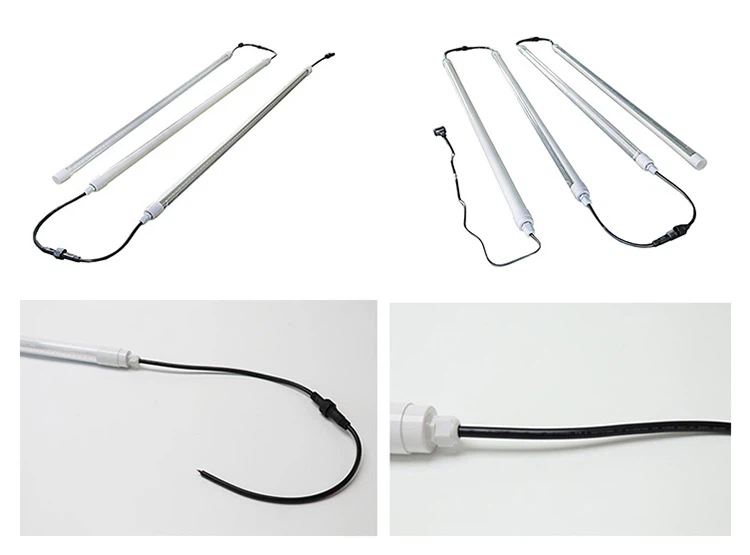
3. The Appearance of a Safe Poultry LED
Replacement fixtures must adhere to strict technical requirements if flicker is verified. Price by itself is not a trustworthy indicator.
3.1 Flicker Metrics: Frequency and Flicker Index
For poultry illumination, flicker safety is defined by two metrics.
The Flicker Index, which ranges from 0.0 to 1.0, measures how much each cycle's light output fluctuates. For poultry facilities, a Flicker Index of less than 0.1 is advised. This threshold makes sure that the amplitude of fluctuation is too tiny to cause a stress reaction, even at the frequencies that chickens sense.
The speed at which the LED driver cycles is known as the drive frequency. Even if the Flicker Index is higher, the flicker is too quick for any animal to notice when the drive frequency surpasses 1000 Hz. Regardless of other criteria, a fixture with a driving frequency higher than 1 kHz is functionally flicker-free.
Find out from the supplier what this fixture's flicker index is at 100 Hz. What is the frequency of the drive? The fixture should not be bought for use in poultry housing if the supplier is unable to respond.
3.2 Driver Quality: Flicker Is Determined by the Power Supply
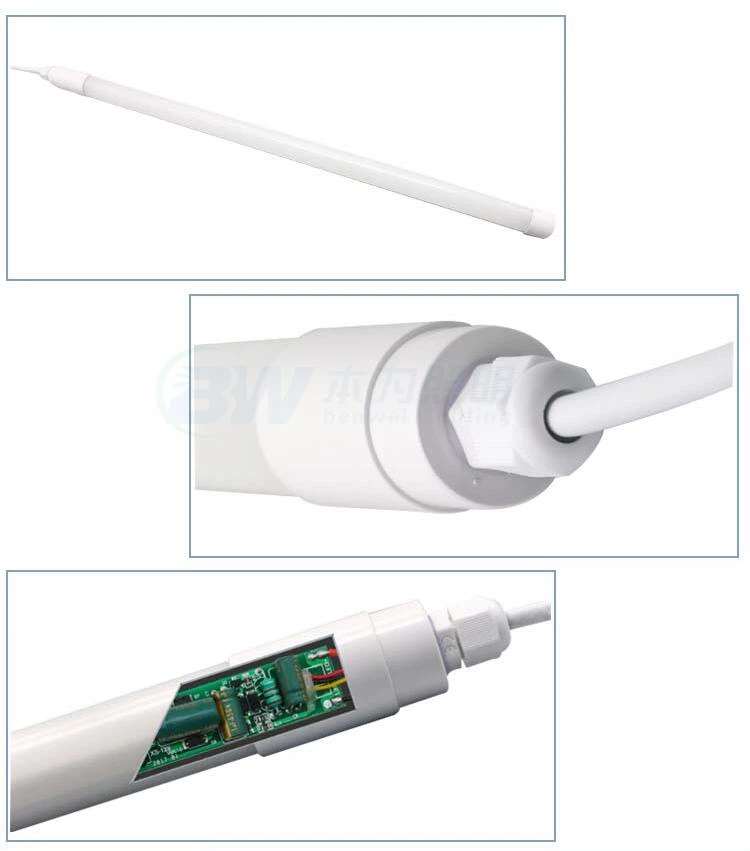
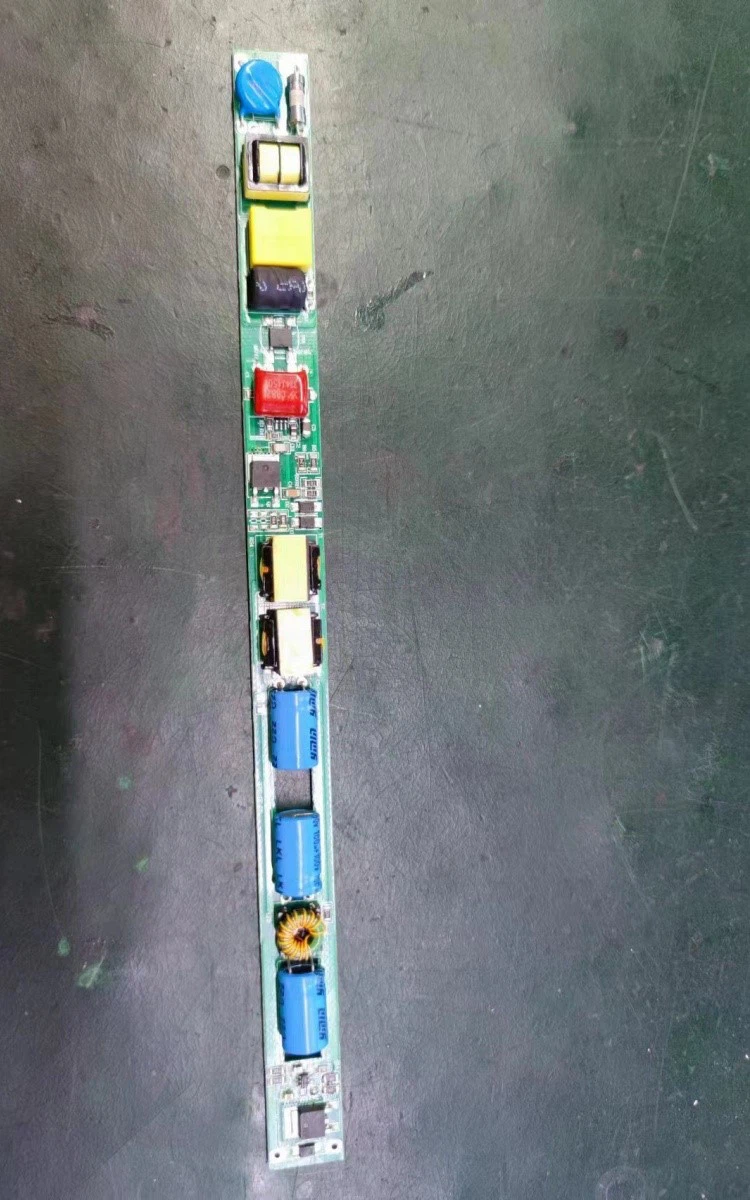
The LED chips themselves don't flicker. When clean DC power is applied, these direct current devices provide consistent light. The driver, which transforms alternating current from the mains into direct current for the LEDs, is the source of flicker.
Simple rectification circuits used by low-quality drivers result in a DC output that pulses. The light flickers due to the ripple in this output. High-quality drivers smooth the output to almost constant DC via constant-current regulation and filtering. A flickering driver and a flicker-free driver can have manufacturing costs that differ by less than $5 per fixture. Whether a lighting system promotes calm, productive flocks or causes chronic stress depends on this tiny cost difference.
Driver parameters should take precedence over LED chip brand while assessing fixtures. When a high-quality LED chip is used with a subpar driver, it will flicker. With a good driver, a mid-range LED chip won't.
3.3 Dimming and Spectrum Technique
In addition to flicker, flock behaviour and prolapse risk are influenced by two other illumination characteristics.
Dimming technique is important since flicker is introduced by many dimming methods. Even when the fixture is flicker-free at full brightness, phase-cut dimmers and low-frequency PWM dimmers can produce significant flicker. It is best to use a 0–10V signal for analogue dimming. To prevent noticeable flickering while using PWM dimming, the PWM frequency must be higher than 1 kHz.
Pecking behaviour has been shown to be impacted by the light spectrum. Aggressive pecking in layers is lessened by red wavelengths. In contrast to white light, red LED illumination was found to reduce aggressive pecking by 30%, according to research from Applied Animal Behaviour Science. A useful compromise between flock management and human visibility for work and inspection is offered by warm white LEDs with a colour temperature of 2700 K to 3000 K.
Practicality and avian wellbeing are not being traded off. Both needs are concurrently met by a flicker-free fixture with warm spectrum and analogue dimming.
4. Checklist for Implementation
One operational action is changing the lights. A gradual strategy lessens the anxiety associated with change.
Phase 1: swap out one section. While leaving the rest of the house unaltered, install new fixtures in one area. For three to five days, keep an eye on the flock in the new area. Keep an eye out for any indications of stress, activity patterns, and the frequency of pecking.
Phase 2: Grow gradually. Over the next few weeks, extend the installation to more portions if the first section's behaviour improves. Throughout the transition, keep the photoperiod and intensity constant.
Phase 3: Keep an eye on and record. Monitor prolapse incidence and mortality for at least one complete production cycle following complete installation. Examine data against past records. If flicker was a contributing cause, the mortality reduction should be quantifiable.
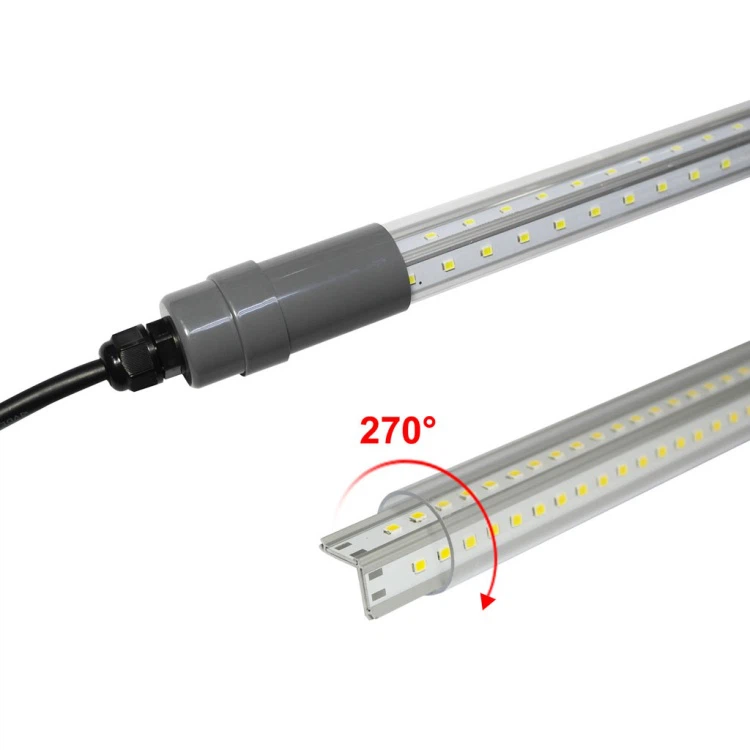
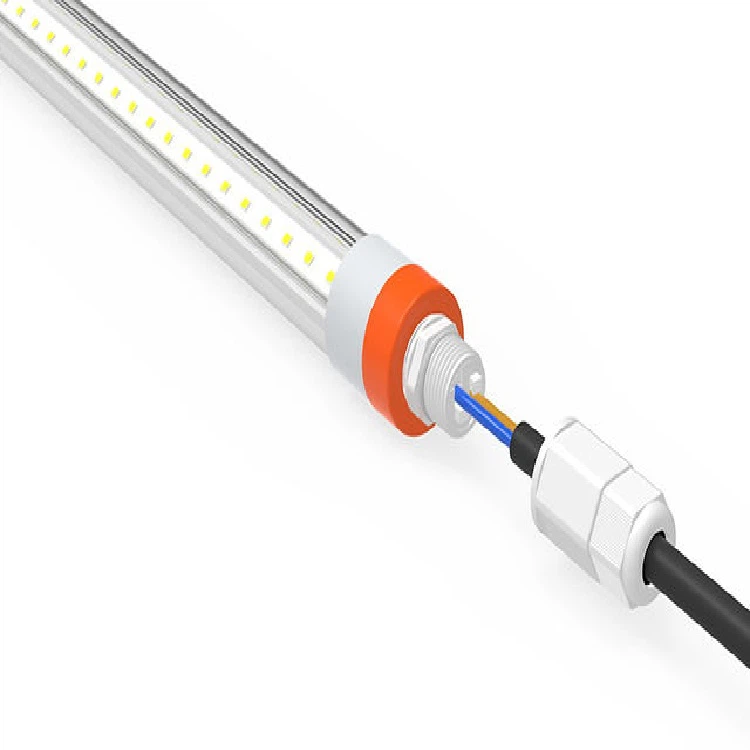
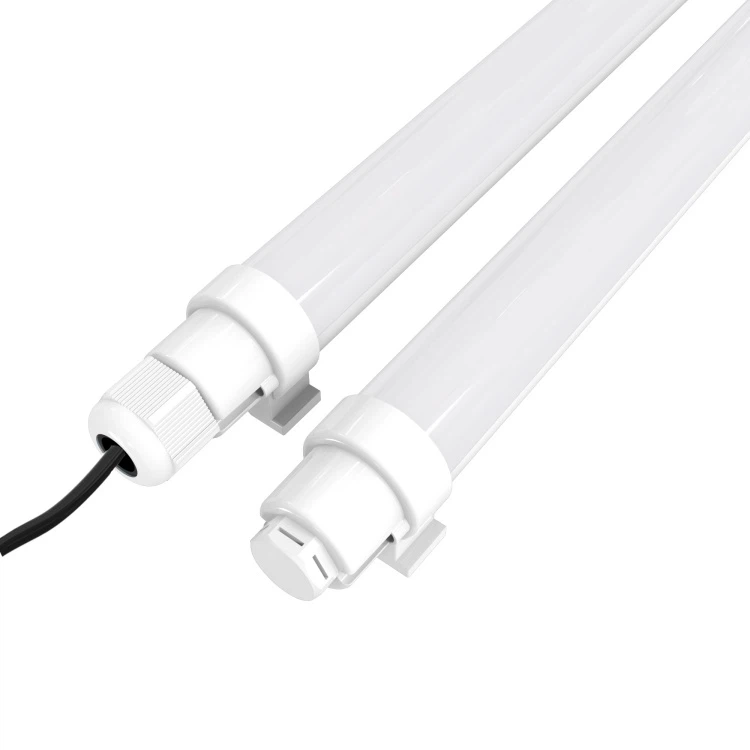
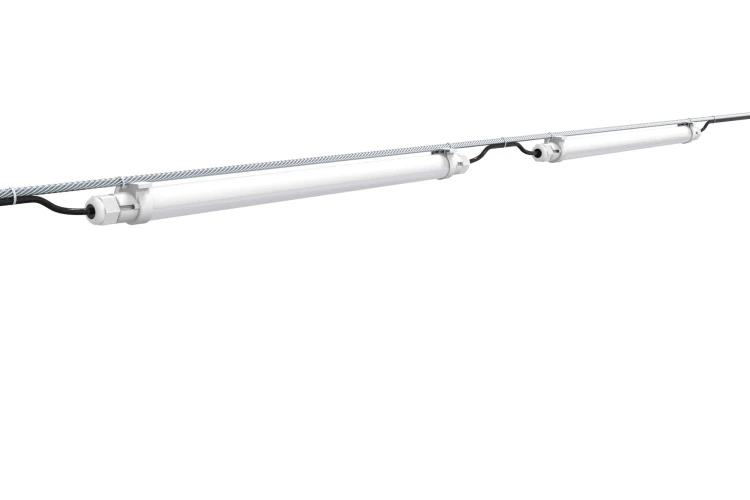
Our poultry Light
conclusion
The question now has a clear answer. Vent prolapse is not directly caused by LED flicker. By inducing the stress that causes pecking, it kills prolapsed hens.
Flicker, stress, pecking, and death are the steps. If you break any link, the result is different. The light fixture itself is the initial and most controllable link.
Use the camera on your phone to test the illumination you currently have. If there is flicker, swap out the fixtures for ones that satisfy the requirements listed in Section 3: warm spectrum, high-quality constant-current drivers, analogue dimming, drive frequency above 1000 Hz, or Flicker Index below 0.1. Install in stages. Keep an eye on the outcome.
The driver inside the overhead LED fixture can make the difference between a flock where prolapse is treatable and one where it is lethal.
FAQ
Q: Can hens develop vent prolapse as a result of LED flicker?
A: No, flicker does not directly cause the initial prolapse or rip tissue. However, by inducing the pecking behaviour that transforms a treatable illness into a catastrophic injury, it does significantly raise the mortality risk from prolapse. For the complete procedure, see Section 1.3.
Q: How can I tell if my LED lights are flickering?
A: Use the camera on a smartphone aimed at the fixture. Check the screen for dark bands that are rolling. Capture and replay slow-motion footage. Examine revolving things in the light. Section 2.2 has comprehensive instructions.
Q: For lighting poultry, what is the acceptable flicker rate?
A: A driving frequency above 1000 Hz or a Flicker Index below 0.1 are the two thresholds that determine safety. Poultry can safely use a fixture that satisfies both requirements. Section 3.1 explains both.
Q: Does pecking in layers decrease when exposed to red light?
A: Indeed. When red LED illumination is used instead of white light, research has shown a 30% decrease in aggressive pecking. A sensible substitute is warm white (2700K–3000K). Refer to Section 3.3.
Q: Other than illumination, what causes vent prolapse in layers?
A: Imbalances in the calcium-to-phosphorus ratio, a lack of vitamin D3, an excess of crude protein that creates enormous eggs, an excessive photoperiod that causes premature lay, high stocking density, a lack of nest boxes, and reproductive tract infections are the main reasons. Section 2.3 discusses these.
Contact
Kevin Rao
Email:bwzm12@benweilighting.com
Tel/Whatsapp:+8619972563753