Why Are Workshops and Hospitals Switching to LED Purification Lights? – A Complete Analysis of PC Material, High Efficacy, and Cleanroom Design
For a long time, places with extremely strict air cleanliness requirements – such as pharmaceutical factories, food processing workshops, sterile laboratories, and hospital operating rooms – have been constrained by traditional fluorescent tubes, which are prone to dust accumulation, have low luminous efficacy, and poor color rendering. Faced with the wide variety of LED purification lights on the market, procurement managers and engineers often ask the key question: What core features should a truly cleanroom‑compliant LED purification light have in terms of material selection, optical performance, installation method, and service life?
This article answers these questions systematically from four dimensions: PC UV‑resistant housing, 120° wide beam angle, energy efficiency & color rendering index, and lighting design selection, helping you choose the right cleanroom lighting solution the first time.
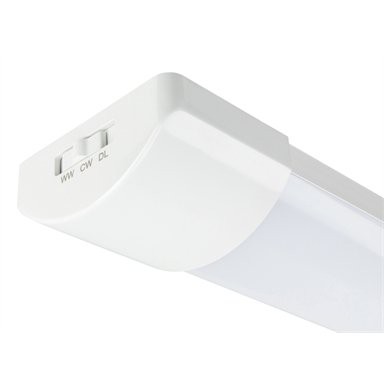
1. PC Material Determines the "Cleanability" – Why Must a Purification Light Use an Integrated PC Housing?
In clean environments, the importance of the luminaire housing far exceeds that in ordinary lighting applications. Traditional luminaires often use sheet steel or ordinary aluminum housings, where seams and gaps easily accumulate fine dust and are difficult to clean, making them potential contamination sources. According to the Code for Design of Cleanroom (GB 50073-2013), the connection gap between luminaires and the ceiling must be reliably sealed, and the surface must be smooth without dust‑trapping dead corners.
(1) Technical Advantages of PC Material
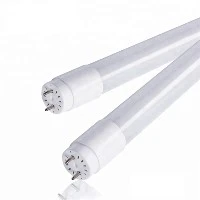
High‑quality LED purification lights (such as the 36W 4FT PC purification light) choose polycarbonate (PC) as the main material for the housing and cover, based on three unique advantages:
1. High Transmittance and Long‑term Anti‑yellowing. The light transmittance of PC sheets can reach up to 89%, comparable to glass. More importantly, PC sheets with an anti‑UV coating are resistant to yellowing and hazing under prolonged light exposure – after ten years, the light transmittance loss is only 6%, compared to 15%‑20% for PVC. This means that the purification light maintains stable and bright light output throughout its 5‑10 year service life, without needing to be replaced early due to aging of the cover.
2. Excellent Flame Retardancy. PC material has good flame retardant properties, reaching UL 94 V‑0 (one of the highest flame retardant ratings in the world) at relatively thin thicknesses, far superior to ordinary ABS or plastic housings. This is an indispensable safety feature for chemical storage areas, dusty environments, or high‑temperature workshops.
3. Integrated Sealing and Dead‑corner‑free Design. PC purification lights are mostly manufactured with an integrated molding process, creating a seamless joint between the housing and the cover. The surface is smooth and flat, with no exposed screws or recessed dust accumulation points. According to the national standard GB/T 24461-2023 Technical Requirements for Luminaires Used in Cleanrooms, the housing surface of cleanroom luminaires must be smooth, easy to clean, and prevent dust retention. The integrated PC housing can be easily wiped and disinfected, meeting the cleaning frequency and disinfection requirements of GMP (Good Manufacturing Practice) for clean areas.
4. High Impact Resistance. PC has excellent impact resistance, withstanding impact forces up to 3 kg/cm², far exceeding glass covers or ordinary plastic covers. It does not break easily during installation or cleaning, significantly reducing safety risks.
Compared to ordinary luminaire housings, PC material has irreplaceable advantages in transmittance, anti‑yellowing, flame retardancy, and cleanability, making it the first choice for modern LED purification lights.
2. 120° Wide Beam Angle – Why Is a Uniformity of Illuminance ≥ 0.7 More Important Than Brightness?
In cleanroom lighting design, the importance of uniformity of illuminance is often overlooked, yet it has a profound impact on work efficiency and product quality. According to GB 50073-2013, the uniformity of illuminance for general lighting in a cleanroom should not be less than 0.7 (i.e., the ratio of minimum illuminance to average illuminance).
(1) Light Distribution Characteristics of the 36W 4FT PC Purification Light
The 36W 4FT PC purification light is equipped with a 120° wide beam angle as standard, providing broad and uniform light distribution, effectively avoiding dark spots and shadows. For long, narrow spaces such as corridors, production lines, and material purification rooms, the 120° beam angle covers a wider lighting area, reduces the number of luminaires required, and meets the uniformity requirement of ≥0.7.
(2) Why Is Uniformity of Illuminance So Important?
When overly bright and overly dark areas coexist, workers' eyes must constantly adjust focus, leading to visual fatigue and reduced productivity and inspection accuracy. The Code for Design of Cleanroom specifies that the general illuminance standard in cleanrooms should be 200‑500 lx. Achieving uniform distribution on the work plane reduces fatigue, helps concentration, and is essential for high‑precision tasks such as precision electronics assembly and pharmaceutical quality inspection.
3. Luminous Efficacy and Color Rendering Index – Why Do LED Purification Lights Outperform Traditional Fluorescent Tubes?
The huge driving force behind cleanroom lighting upgrades comes from the all‑round improvements of LED light sources in three dimensions: luminous efficacy, color rendering, and lifespan. Below is a detailed comparison between a 36W LED purification light and a traditional 36W T8 fluorescent tube.
(1) LED Purification Light vs. Traditional Fluorescent – Core Parameter Comparison Table
| Technical Parameter | 36W LED PC Purification Light | 36W T8 Fluorescent Tube |
|---|---|---|
| Rated Power | 36W | 36W (actual with ballast loss: 42-44W) |
| Luminous Flux | 4,320-5,040 lm (at 120-140 lm/W) | ~2,600 lm (reduced by ballast and reflector) |
| Luminous Efficacy (lm/W) | 120-140 lm/W | ~72 lm/W (bare tube) → actual 33-40 lm/W |
| Equivalent Brightness | - | 36W LED ≈ 2‑2.5× brightness of fluorescent |
| Annual Energy Consumption (12h/day) | ~158 kWh | ~192 kWh (including ballast loss) |
| Color Rendering Index (CRI) | 80-83RA; high‑end up to 95-98RA | ~50-70 (serious color distortion) |
| Rated Lifespan (L70) | 50,000 hours | 8,000 hours (standard fluorescent) → only 3,000 hours for rapid start without preheating |
| Lifespan Multiple | Baseline (1×) | 5‑10× shorter |
| Power Factor (PF) | >0.95 | ~0.5-0.6 |
| Start‑up Mode | Instant on, flicker‑free | Requires preheating, flickers, starter flashing |
(2) Data Interpretation
The table clearly shows:
Higher luminous efficacy: 36W LED purification lights achieve 120‑140 lm/W, which is more than three times that of traditional T8 fluorescent tubes (~72 lm/W tube plus reflector losses, resulting in only 33‑40 lm/W actual). A typical 36W LED purification light outputs 4,320‑5,040 lumens, enough to replace 2‑3 T8 tubes.
Higher CRI: Ordinary LED purification lights have CRI ≥80, and high‑end models reach 95‑98RA, making critical information such as medicine labels, circuit board colors, and product colour differences appear more true; traditional fluorescent lights have CRI around 50, often causing color judgment errors.
Much longer lifespan: The rated 50,000 hours is more than six times that of traditional fluorescent tubes (average 8,000 hours). For high‑bay cleanrooms where luminaire replacement is difficult, the maintenance cost savings from long life are especially significant.
Better power factor: PF >0.95 means high power utilization efficiency, lower grid burden, and indirectly reduced investment in power distribution systems.
It is worth noting that high‑end LED purification lights can also integrate infrared or microwave motion sensors to achieve intelligent "on‑demand" control – lights stay at 100% when someone is present and automatically dim to 50% after 30 seconds of absence, further reducing energy consumption.

4. Cleanroom Illuminance Standards and LED Purification Light Selection Guide
Choosing the right power is a key step to balance lighting quality and energy saving. The following table, compiled according to the Code for Design of Cleanroom (GB 50073-2013), shows standard illuminance values and recommended luminaire powers for reference in engineering selection.
(1) Illuminance Requirements and Luminaire Selection by Cleanroom Area Type
| Clean Area Type | Recommended Illuminance (Lux) | Uniformity Requirement | Recommended LED Purification Light Power | Recommended Installation Spacing |
|---|---|---|---|---|
| Main production workshop (ISO 6‑7 / Class 1k‑10k) | 300‑500 Lux | ≥0.7 | 36W‑48W | 3‑4 m |
| Inspection / precision assembly area | ≥500 Lux | ≥0.7 | 48W‑60W | 2.5‑3.5 m |
| Auxiliary work / personnel purification room | 200‑300 Lux | ≥0.6 | 20W‑30W | 3.5‑4.5 m |
| Material purification / airlock room | 200‑300 Lux | ≥0.6 | 20W‑30W | 3.5‑4.5 m |
| Corridor / buffer zone | 150‑300 Lux | ≥0.5 | 18W‑24W | 4‑5 m |
| Changing room / washroom | 150‑200 Lux | ≥0.5 | 12W‑18W | 4‑6 m |
(2) Three Key Design Points for Cleanroom Lighting
1. Surface‑mounted installation is preferred. GB 50073-2013 clearly states that luminaires in cleanrooms should be surface‑mounted. Integrated PC purification lights can be installed flush against the ceiling, with sealing strips to seal gaps, effectively preventing dust particles from entering and making cleaning and replacement easy.
2. Avoid installing luminaires directly below HEPA filter supply outlets. The placement of luminaires should be coordinated with the HVAC design to ensure that air flow is not disturbed and that the luminaires do not block supply air.
3. Ensure reliable sealing for flush‑mounted installations. If luminaires must be recessed into the ceiling, a reliable seal is necessary to fundamentally prevent dust particles from entering the cleanroom.
Final Thoughts
LED purification lights combine the high transmittance and anti‑yellowing properties of PC material, the uniform illuminance provided by a 120° wide beam angle, and the ultra‑high luminous efficacy of 120‑140 lm/W. They achieve comprehensive technical superiority over traditional fluorescent tubes in energy efficiency, lifespan, cleanliness, and visual comfort. Research data shows that LED lighting systems can reduce cleanroom energy consumption by up to 40% or more. Combined with a maintenance‑free operating period of up to 50,000 hours, they greatly reduce the labor and material costs of frequent tube replacements. The total return on investment is typically achieved within 2‑3 years.
If you are planning a lighting upgrade for a food workshop, pharmaceutical factory, hospital operating room, or electronics cleanroom, and are hesitating about the power, colour temperature (3000K/4000K/6500K optional), and installation method of LED purification lights, feel free to click online inquiry or send an enquiry to our sales team – we will provide you with free illuminance simulation, layout design, on‑site survey advice, and customized integrated purification lighting solutions for your project.