Why Do Pharmaceutical Lamps Require UV?
Pharmaceutical manufacturers use UV lamps primarily because of their efficient, chemical-residue-free disinfection capability, as well as their unique role in photochemical synthesis and pollutant degradation. UV technology helps ensure that drugs are protected from microbial contamination during production and supports precise control of pharmaceutical ingredients.
Core Application 1: Efficient Disinfection and Sterilization to Ensure Aseptic Production
This is the most widespread use of UV lamps in the pharmaceutical field. UV-C band (typically 254 nm) ultraviolet light can penetrate microbial cell walls, damaging their DNA/RNA structure and preventing reproduction, thereby achieving a germicidal effect.
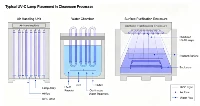
Cleanroom and air disinfection: In pharmaceutical workshops, biological laboratories, and other environments requiring strict microbial control, UV lamps are widely used for air disinfection. For example, in aseptic preparation workshops, UV lamps must be periodically turned on for sterilization to maintain environmental cleanliness.
Water system disinfection: In pharmaceutical water systems (such as purified water and water for injection), UV lamps are a key disinfection step. They are usually installed after activated carbon filters or before reverse osmosis (RO) systems, effectively killing 99.9% of bacteria in water, decomposing ozone and residual chlorine, and protecting downstream equipment.
Surface and packaging material disinfection: UV lamps can be used for "non-contact" disinfection of materials and packaging containers (such as vials and stoppers) entering the cleanroom, reducing the use of chemical disinfectants and the uncertainty caused by manual operations.

fda.gov can help manufacturers understand broader expectations regarding aseptic processing and contamination control. UV equipment should be integrated into the facility's validated quality system and documented within it.
Core Application 2: Photochemical Synthesis and Degradation for Precision Pharmaceuticals
In addition to sterilization, UV light can also act as a "photochemical reagent" participating in chemical reactions, which is of great value in pharmaceutical processes.
Photochemical synthesis: The synthetic routes of many drugs can be simplified through photochemical reactions. For example, researchers have successfully used UV-LED modules (such as 308 nm UV-B LEDs) to efficiently synthesize pharmaceutical intermediates, replacing traditional metal vapor lamps.
Degradation of pollutants: UV irradiation can decompose organic pollutants in water. For example, it can effectively degrade precursors of N-nitrosamines (a potentially carcinogenic impurity), helping pharmaceutical companies meet strict regulatory limit requirements.

Key Wavelengths and Light Source Types
The pharmaceutical industry has clear technical requirements for the selection of UV lamps, mainly relying on the following two light sources:
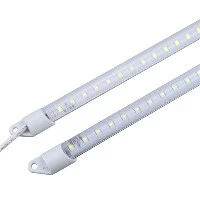
Low-pressure mercury lamps: This is the most traditional and common choice. They emit monochromatic UV-C light at 253.7 nm, with excellent germicidal efficacy, and are the mainstay for water treatment and surface disinfection.
Medium-pressure mercury lamps: They emit a polychromatic spectrum from 200–400 nm with higher intensity, suitable for disinfection of high-flow water bodies or photochemical reactions requiring multiple wavelengths.
UV-LED: As an emerging technology, UV-LEDs (typically in the 255–286 nm range) are gradually being adopted. They are small, long-lived, and mercury-free, showing advantages in automated aseptic dispensing and other scenarios.
Important Safety and Compliance Requirements
The application of UV lamps in the pharmaceutical industry is strictly regulated and must follow standards such as GMP (Good Manufacturing Practice).
Rigorous validation: The effectiveness of UV disinfection systems must be validated. For example, biological indicators such as Geobacillus stearothermophilus must be used in challenge tests to demonstrate that the required log reduction (e.g., 3-log bacterial and 2-log spore reduction) is achieved.
As an auxiliary measure: UV disinfection cannot replace chemical disinfection. It is usually used as an auxiliary, continuous microbial control measure, in combination with ventilation, HEPA filtration, and chemical disinfectants.
Personnel safety protection: UV-C can harm the skin and eyes, causing burns and keratitis. Therefore, UV lamps are usually turned on in unoccupied environments (such as between production runs or at night). If entry is necessary during operation, personnel must wear UV-protective face shields, gloves, and protective clothing.
For broader manufacturing principles, please consult relevant who.int guidelines and applicable local regulatory requirements. If your facility is evaluating a new system, please contact benweilight to discuss tube specifications, operating conditions, and project requirements.
UV lamps in the pharmaceutical industry are not a simple lighting tool, but a key process equipment for ensuring drug sterility and safety and driving innovation in chemical synthesis. Their use must be built on rigorous validation and standardized safe operation.