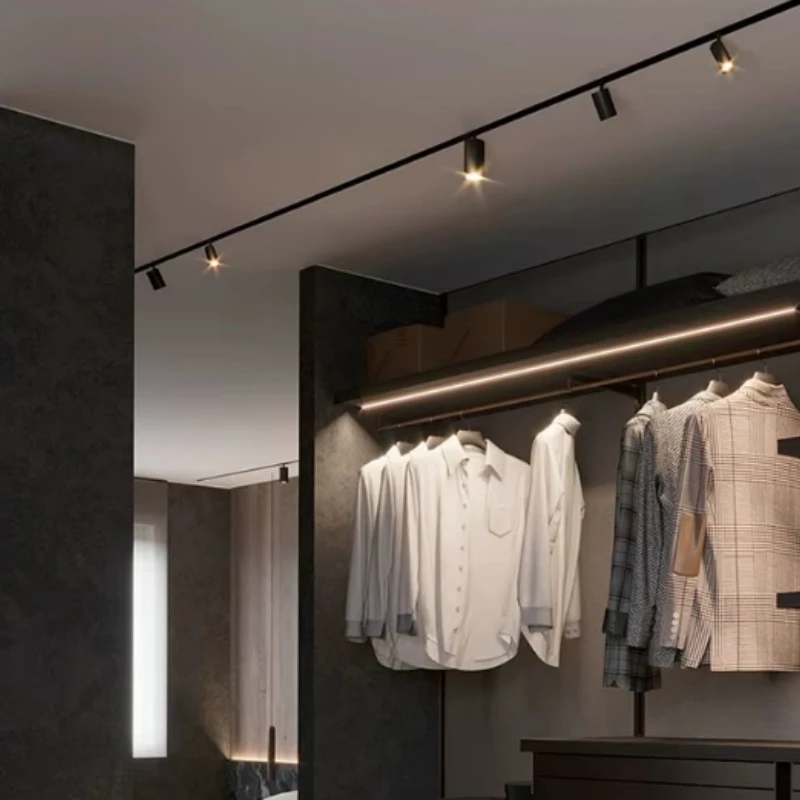
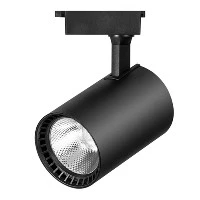
Walk into any well-merchandised boutique and you'll notice something before you notice the products: the light feels different. Shadows are soft, colors look rich, and every rack seems to have its own quiet spotlight. That effect rarely comes from ordinary downlights - it's almost always COB (Chip-on-Board) track lighting doing the work.COB track lights have become the go-to choice for retail spaces because they pack a lot of light into a small, focused source, which is exactly what merchandise displays need. But not every COB fixture on the market is built the same way, and picking the wrong one can leave your display looking flat, overheated, or just slightly "off" in a way customers can't quite name. Below is a practical breakdown of what actually matters when selecting COB track lights for retail use.
What Makes COB Different From Other LED Track Lights
COB technology mounts multiple LED chips directly onto a single substrate, rather than spacing individual diodes across a board. The result is a single, unified light source instead of a cluster of visible points. For retail display, this matters because it produces a smoother beam with fewer hotspots or striping on glossy surfaces - think jewelry cases, glassware, or folded apparel under glass. If your current lighting leaves visible dots or uneven patches on product surfaces, that's usually a sign the fixture isn't true COB, or the chip quality is inconsistent.
Beam Angle: Matching Light Spread to Your Display Type
Beam angle decides how tightly or broadly the light spreads once it leaves the fixture. Narrow beams (around 15°–24°) are suited to accent lighting - a single sculpture, a hero product, a mannequin - where you want a defined pool of light and strong contrast with the surroundings. Wider beams (36°–60°) work better for shelving, clothing racks, or wall displays that need even coverage across a larger surface. A common mistake is installing all narrow-beam fixtures across a store to save on unit count, which ends up creating harsh bright-and-dark zones rather than a cohesive look. It's worth mapping your display zones first, then choosing beam angles per zone rather than buying one angle for the whole store.
CRI: Why Color Accuracy Can Make or Break a Sale
Color Rendering Index (CRI) measures how accurately a light source reveals the true colors of an object compared to natural daylight. For retail, this is not a cosmetic detail - it directly affects how customers perceive fabric color, food freshness, cosmetics shade, or skin tone in a fitting mirror. Standard commercial lighting often sits around 80 CRI, which is passable for general illumination but tends to mute reds and desaturate skin tones. For display purposes, CRI 90+ is generally the baseline worth insisting on, and CRI 95+ is common in fixtures aimed at jewelry, cosmetics, or high-end apparel, where color fidelity is part of the buying decision.
Color Temperature: Setting the Right Mood for Your Store
Color temperature, measured in Kelvin, shapes the emotional tone of a space as much as it shapes visibility. Cooler temperatures (4000K–5000K) read as crisp and modern, often used in electronics, tech, or grocery settings where clarity matters. Warmer temperatures (2700K–3000K) feel inviting and are common in fashion, home goods, and hospitality-adjacent retail. Some COB track lights offer tunable white or dual-CCT settings, letting a single fixture shift between tones for seasonal resets or rebranding without swapping hardware. Matching color temperature to brand identity is often overlooked, but it's one of the fastest ways to make a space feel intentional rather than generic.
Track System Compatibility
Not all track lights are interchangeable across track systems, even when they look similar. There are several common track types - single-circuit, three-circuit (H-type), and various regional standards - and connector shapes vary between manufacturers. Before ordering, it's worth confirming whether the fixture is compatible with your existing track infrastructure or whether it requires a specific adapter. This is especially relevant when retrofitting an older store, since mismatched connectors can mean the fixtures simply won't seat or power on, regardless of how good the light output is on paper.
Dimming and Control Features
Retail lighting often needs to adjust throughout the day - brighter during setup and cleaning, softer during shopping hours, different again for evening events or seasonal displays. Look for COB track lights with stable dimming performance (0–10V, TRIAC, or DALI depending on your system) rather than fixtures that flicker or shift color temperature as they dim, which can be distracting under sustained viewing. For stores planning smart lighting integration, DALI-compatible or app-controlled fixtures allow zone-by-zone adjustment without rewiring, which is useful for stores that rotate displays frequently.
Heat Dissipation and Fixture Longevity
COB chips concentrate a lot of light output into a small area, which also means concentrated heat. Fixtures with undersized or poorly designed heat sinks tend to degrade faster, losing brightness and shifting color over time - a problem that shows up as inconsistent lighting across a store even when every fixture started out identical. Aluminum heat sinks with adequate surface area, along with a driver rated for continuous commercial use, are worth checking before purchase. This is one of those specs that doesn't show up in a showroom demo but becomes obvious after a year of daily 10-12 hour operation.
Certifications and Warranty Support
For commercial installations, certifications aren't just paperwork - they affect insurance, code compliance, and long-term reliability.
Depending on your market, relevant certifications may include CE, RoHS, UL, or ETL, along with IP ratings if fixtures are near display windows or entryways exposed to moisture. A manufacturer's warranty length is also a reasonable proxy for how confident they are in their own components; anything under 2-3 years on a commercial fixture is worth questioning.
Summary
Choosing COB track lighting for retail display comes down to matching a handful of specs to your actual space and product type: beam angle to display layout, CRI to how much color accuracy your merchandise demands, color temperature to your brand's atmosphere, and heat/driver quality to how many hours a day the fixture will run. Track compatibility and certifications are easy to overlook but expensive to get wrong after installation. None of these factors work well in isolation - a high-CRI fixture with the wrong beam angle, or a well-designed beam with poor heat dissipation, will still underperform in daily use.
https://www.benweilight.com/industrial-lighting/adjustable-led-cob-surface-mount-spotlight.html