Why does the PC cover of a UV-LED lamp turn white after a period of use?
1. Introduction: A widely overlooked industry pain point
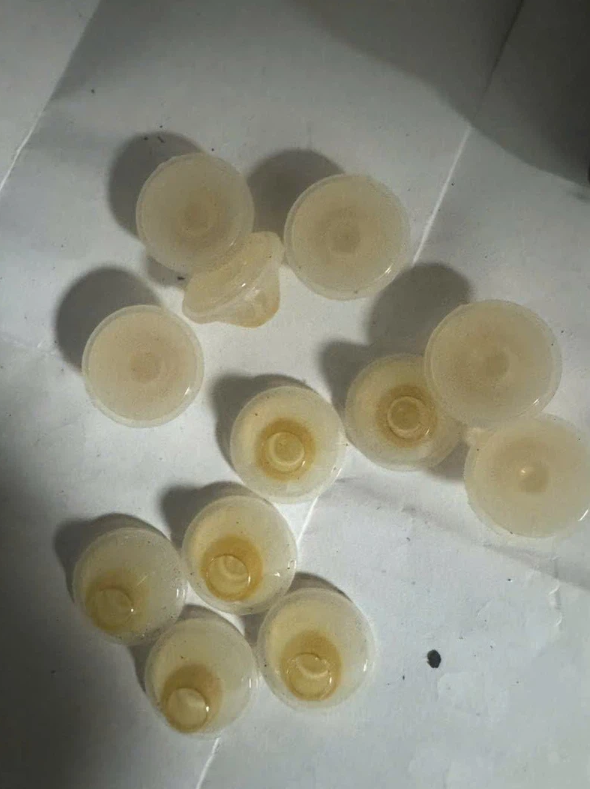
If you use UV-LED curing lamps, germicidal lamps, or UV exposure equipment, you may have encountered this problem: the lamp works perfectly when new, with clear optics and high output. But after a few weeks to months, the originally transparent PC (polycarbonate) cover gradually turns white and hazy, transmittance drops significantly, and curing efficiency declines noticeably.
This is not a quality defect from individual manufacturers, but an inherent chemical behavior of PC material under UV radiation – an irreversible process known as photo-oxidative degradation. Understanding the science behind this phenomenon is critical for equipment selection, material optimization, and cost control. This article systematically examines the molecular mechanism of whitening in UV-LED lamp PC covers, helps customers make more informed purchasing decisions using detailed data comparisons.

2. Core mechanism: How photo-oxidation "eats" your lamp cover
2.1 Molecular-level degradation process
PC (polycarbonate) and most other polymers are not inherently UV stable. The high-energy photons emitted by UV-LED lamps (especially in the 365–405 nm UVA band) have sufficient energy to break C-C, C-H, and C-O chemical bonds in the polymer chain, triggering a chain reaction of degradation.
The process occurs in three steps:
- Step 1 – Bond scission: UV photon energy directly breaks the polymer backbone, generating large numbers of free radicals.
- Step 2 – Free radical formation: Highly reactive radical sites form at the ends of the broken chains.
- Step 3 – Photo-oxidation: These radicals rapidly react with oxygen in the air, generating new chemical groups such as carbonyls, peroxides, and hydroxyl groups, which scatter incident light.
2.2 Why "white" instead of "yellow"?
Traditional PC materials typically turn yellow under prolonged UV exposure, but the whitening phenomenon of UV-LED lamp covers has a different cause. The degradation process produces micro-cracks, a surface embrittlement layer, and nano-scale voids – all of which become light scattering centers. Light scatters at these microscopic defects, giving the cover an opaque milky white or hazy appearance.
Some customers report noticeable whitening after only two weeks of use. This is precisely due to the cover material lacking sufficient UV stabilizers or an anti-UV coating.
3. Key factors affecting degradation rate
| Factor | Mechanism | Industry data / typical value |
|---|---|---|
| UV wavelength | Shorter wavelength = higher energy = faster degradation. UVC/UVB destroy much faster than UVA, but 395–405 nm UV-LED still causes gradual degradation | Peak wavelength 365–410 nm (per JB/T 15202-2025 industry standard) |
| Irradiance intensity | Higher UV energy per unit area accelerates bond scission rate | High-power UV-LED systems can reach several W/cm² |
| Thermal effect | Heat generated during UV-LED operation, thermal cycling accelerates polymer aging – synergy between heat and UV produces a "thermal decay" effect | Every 10°C rise in temperature roughly doubles aging rate |
| Material additives | PC material lacking UV stabilizers, absorbers, or surface coatings degrades very quickly | Initial transmittance of ordinary PC ≈89%, even lower for poor quality PC |
| Humidity & contaminants | Moisture and pollutants accelerate photo-oxidation reactions | Degradation rate in high-humidity environments significantly higher than dry conditions |
4. Data support: Real-world transmittance loss figures
4.1 Transmittance loss of PC under UV aging
According to industry measurements, after 1500 hours of UV aging, PC cover transmittance drops from an initial 92% to 80% – a loss of 12 percentage points, triggering replacement warning. UV aging causes molecular chain scission, thickening of the surface oxidation/haze layer, formation of micro-cracks, and light scattering.
4.2 Performance comparison: UV-stabilized vs. non-UV-treated materials
| Material type | Initial transmittance | Transmittance after aging | Test conditions | Remarks |
|---|---|---|---|---|
| Ordinary PC (no UV stabilizer) | 89% | ~80% after 1500h | UV aging test | 12% loss – replacement needed |
| UV-coated PC sheet | >85% | Yellowing value only 2, transmittance loss 0.6% after 4000h | Artificial weathering test | Only 6% transmittance loss over ten years |
| UV-grade fused silica (quartz) | >90% | Almost no loss | Long-term UV exposure | Best UV resistance, higher cost |
| Ordinary epoxy resin encapsulation | ~85% | 40% loss after 3000h | UV irradiation test | Easily yellows and hazes |
| Ordinary PPA material | ~80% | 365nm transmittance drops 42% after 2000h at 50°C | 50°C environment | Curing efficiency drops 35% in three months |
4.3 UV resistance ranking of encapsulation materials
For UV-LED encapsulation materials: fused silica (quartz) has the highest UV transmittance, followed by silicone resin, with epoxy resin being the worst. Due to its excellent UV radiation resistance and thermal stability, quartz glass is often used as a lens material. Polymer materials like silicone rubber also undergo chain scission under long-term high-intensity UV exposure, manifesting as lens surface haze and color change from transparent to yellow or even charred black.
5. Solutions: Preventing lamp cover whitening at the source
5.1 Material level
- Choose UV-stabilized PC: Add UV absorbers to PC resin to dissipate UV energy as heat without damaging molecular chains.
- Apply anti-UV coating: An organosilicon hard coat or UV-resistant acrylic top layer significantly improves weatherability.
- Upgrade to quartz or borosilicate glass: For high-power UV systems, quartz glass is the best choice – immune to UV yellowing, higher cost but longest service life.
- Use UV co-extruded PC: UV co-extruded PC covers can resist 3–5 years of outdoor aging.
5.2 Design and process level
- Optimize thermal management: Ensure adequate heat dissipation to reduce the accelerating effect of thermal stress on polymer aging.
- Reasonable layout: Maintain proper clearance between cover and LEDs for heat dissipation – avoid direct contact with high-temperature sources.
- Regular inspection and replacement: Once the cover has turned white and hazy, simple polishing only removes surface haze but cannot repair deep damage – complete replacement is the only solution.
5.3 Industry standard reference
China has issued a specific technical specification for UV-LED curing devices – JB/T 15202-2025, applicable to devices with a peak UV wavelength of 365 nm to 410 nm. Customers are advised to check whether the product complies with this standard when purchasing, ensuring material selection and process design meet regulatory requirements.
6. Conclusion
The whitening of a UV-LED lamp's PC cover is not a "quality problem" but an inherent photochemical response of polymeric materials to UV radiation – essentially the plastic's version of a "sunburn." By selecting UV-stabilized materials, applying anti-UV coatings, optimizing thermal design, or upgrading to quartz glass, this industry pain point can be fundamentally solved.
For industrial applications requiring long life and high stability, when purchasing UV-LED equipment, focus on the anti-UV rating of the cover material and thermal design parameters – rather than comparing only initial light intensity. A device that turns white in two weeks will likely have a much higher total life cycle cost than a superior product with higher initial investment.
Should you have any requirements for bulk purchasing or customized UV‑LED lighting solutions, please do not hesitate to contact us for a detailed quotation.