Why do you feel dizzy when the classroom lights are dazzling? Tell you the solution
Have you ever felt this way? It feels a bit dazzling and dazzling in the evening when the sky is getting darker or when the lights in the evening study classroom are turned on.
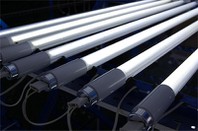
In fact, this is because most traditional classroom lighting fixtures are widely used in direct-exposure T8 fluorescent lamps, that is, the lamp tube is exposed outside the lampshade, there is no barrier in front of the lamp tube, and the eye protection light ray directly shines on the eyes of the students. The light glare and dizziness are all because the T8 fluorescent tube has naked light glare, stroboscopic, blue light and other visual damage to the eyes. Among them, glare is the reason why we feel glare.
Glare is a bad lighting phenomenon. When the brightness of the light source is extremely high or the brightness is too different from the surrounding brightness, it will produce glare.
High brightness is the source of glare. Prolonged exposure to strong light can cause blindness. As strong light stimulates the eyes, especially the lens, the damage to the vitreous body will cause a photoelectric response to a certain extent, making the vitreous body turbid and degrading, and the vision is significantly reduced.
Glare can cause discomfort to the eyes and cause visual fatigue. Long-term exposure to glare can also cause myopia and damage the eyes.
Especially adolescents are in the high-frequency period of eye use, and the eye structure is more fragile than adults. If they are harmed by glare for a long time, their eyesight will be easily damaged, and they may even suffer from eye diseases. Students stay in school for a long time and often stay in the classroom with dazzling classroom lighting, which will not only affect the quality of students' classes, but also seriously affect the health of students' eyesight.
Because of the seriousness of the problem, this is related to the bright future of children, and it has attracted great attention from the state and schools. The Ministry of Health of the People’s Republic of China and other relevant departments promulgated a series of "Sanitary Standards for Daylighting and Lighting in Primary and Secondary Schools (GB 7793-2010)". Standards and policies.
The LED eye protection classroom lamp adopts professional optical design, using cold-rolled plate electrostatic spraying, light source bottom lamp, light diffuser plate with anti-glare grille, the light source is hidden behind the diffuser plate, and the light output angle can be well controlled. LED eye protection classroom lamp emits light The surface adopts a small grille, and the glare value UGR is controlled below 16, so that the light is not visible.
The color of the light using LED classroom lights is more real, not only anti-glare, anti-blue light, but also uniform lighting, high color rendering index, real eye protection, greatly reducing glare, improving eye comfort, and students will not be tired of studying because of eye fatigue psychology.