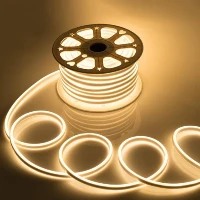
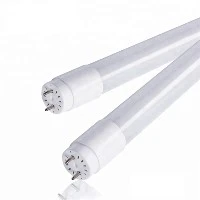
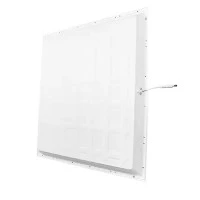
Is Your Laying Flock's Egg Production Stagnating? You Might Have Chosen the Wrong Light
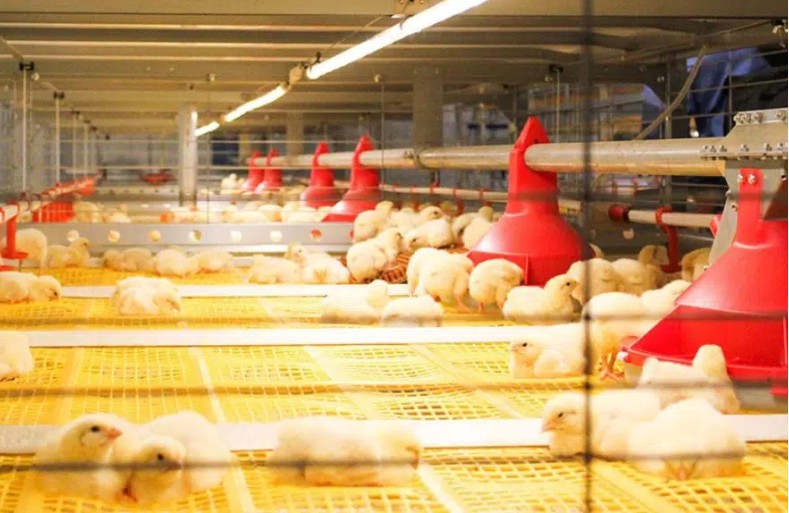
In modern animal husbandry, light is recognized as the third most important production factor, following only feed and water. Poultry possess a visual perception far superior to humans; light does not just affect their vision-it directly regulates their reproductive system, immune system, and behavioral rhythms.
However, many farmers still use standard industrial lamps. Why can't a "normal light" raise "professional chickens"? This article breaks down the underlying logic of poultry lighting.
1. The Harsh Reality of Poultry Environments: A "Nightmare" for Fixtures
Before choosing a fixture, one must understand the three extreme challenges a chicken coop poses to lighting equipment:
- High Ammonia and Hydrogen Sulfide: Ammonia produced by the decomposition of manure is highly alkaline and corrosive. Standard aluminum fixtures will oxidize rapidly, leading to circuit failure.
- High-Pressure Washing and Humidity: To maintain biosecurity, coops undergo thorough high-pressure water washing and chemical fumigation between flocks. Fixtures must have an extremely high sealing rating.
- Dust Pollution: Coops are filled with dust from feathers and feed. If a fixture has a complex design with fins or gaps, dust accumulation will severely impair heat dissipation and lead to rapid light decay.
2. Core Parameters: The Standards for "Good Light" in a Chicken's Eyes
Chickens have tetrachromatic vision, can see ultraviolet light, and perceive subtle flickers that humans cannot detect. Use these industry parameters when selecting fixtures:
| Performance Metric | Recommended Standard | Industry Rationale / Physiological Impact |
| Ingress Protection (IP) | IP67 / IP69K | Withstands high-pressure washing and ammonia penetration. |
| Flicker Index | Flicker-Free | Chickens perceive high-frequency flickering, which causes panic, pecking, and stress. |
| Color Rendering (CRI) | Ra > 80 | Helps farmers observe comb color and droppings for early disease diagnosis. |
| Light Uniformity | > 0.8 | Prevents "dead zones" or overly bright spots that cause crowding and huddling. |
| Dimming Performance | 0.1% - 100% Smooth | Simulates sunrise/sunset to provide psychological buffering and reduce panic. |
3. Four Critical Considerations When Choosing Poultry Lights
-
A. Eliminate "Flicker" to Protect Flock Emotion
Standard LED lights often have flicker that is invisible to humans but detectable by chickens due to simple driver circuits. Long-term exposure to flickering light keeps chickens in a state of high tension, leading to increased feather pecking and cannibalism, and can even induce sudden death syndrome.
Pro-Tip: Always demand a DC Constant Current driver and a certified flicker-free test report from your supplier.
-
B. Precision Spectra: The Power of Red Light
Red Light (~660nm): Can penetrate a chicken's skull to stimulate the hypothalamus, promoting the release of gonadotropins, which significantly increases egg production.
Blue/Green Light: Helps with muscle cell proliferation during the brooding stage, promoting weight gain in broilers.
Pro-Tip: Layer houses should prioritize full-spectrum fixtures with a higher proportion of red light (warm tones).
-
C. Corrosion Resistance is the Lifeline
Avoid aluminum profile fixtures with cooling fins. The grooves in the fins easily collect dust and are quickly corroded by ammonia gas.
Pro-Tip: Choose circular tube-style fixtures made of full plastic (PC/ABS) with integrated encapsulation or those treated with nano-anti-corrosion coatings. Smooth surfaces are easier to clean and immune to ammonia.
-
D. 0.1% "Dim-to-Dark" Technology
Lights should change slowly over 15–30 minutes during morning turn-on and evening turn-off.
Pro-Tip: Test if the fixture flickers at low brightness (below 1%). A high-quality dimming system significantly lowers stress levels in layers and maintains stable eggshell quality.
4. Installation Pitfalls: Details that Matter
- Voltage Drop and Brightness Variance: Coops are often very long (over 100m). If using 12V/24V low-voltage systems, the lights at the far end will be dim. It is recommended to use AC direct-supply systems or 48V DC systems with specialized shielded cables.
- Placement: Avoid placing lights near vents or where feeders cast large shadows. For multi-tier battery cages (H-type), install light strips high in the center of the aisles or use independent recessed lighting for each tier.
Summary
Choosing lights for a chicken coop is not just buying equipment; it is providing "Photographic Nutrition" for your flock.
A qualified poultry LED light must be the ultimate combination of "Extreme Waterproofing, Extreme Anti-corrosion, and Absolute Zero Flicker." While the initial investment may be 20%–30% higher than standard lights, the resulting increase in egg production, decrease in mortality, and long service life will pay for itself several times over within a year.