30W LED Ceiling Panel Lights: High-Performance Illumination for Medium-to-Large Spaces
In the realm of interior lighting, 30W LED ceiling panel lights have emerged as a high-performance solution tailored to medium-to-large spaces, striking a balance between powerful brightness and energy efficiency. Unlike low-wattage variants designed for compact areas, 30W panels deliver robust luminous output to cover 150–250 square feet, while their ceiling-mounted design ensures unobtrusive, uniform illumination. Supported by research from the U.S. Department of Energy (DOE), the Lighting Research Center (LRC), and the European Lighting Association (ELA), these panels are the preferred option for commercial offices, retail floors, and large residential areas where good brightness, visual comfort, and long-term cost savings are important. This article synthesises existing literature to explore the technical fundamentals of 30W LED ceiling panel lights, their core advantages, targeted applications, comparative performance, and role in evolving lighting ecosystems.
Technical Fundamentals: Power, Optics, and Construction
The functionality of 30W LED ceiling panel lights stems from calibrated power output, advanced optical design, and durable construction – all validated by rigorous industry research.
At 30W, these panels are engineered to deliver high luminous flux without excessive energy consumption. According to the DOE's 2024 Solid-State Lighting Technology Roadmap, standard 30W LED ceiling panels produce 2700–3300 lumens, translating to a luminous efficacy of 90–110 lumens per watt (lm/W). Premium models equipped with Samsung LM301H or Osram Opto Semiconductors chips can reach 120 lm/W (3600 lumens), as noted in the DOE's LED Product Performance Database. This output aligns with the Illuminating Engineering Society (IES) recommended lux levels for medium-to-large spaces: 300–400 lux for task lighting (e.g., open-plan offices) and 200–300 lux for general illumination (e.g., retail floors), per a 2022 study in Lighting Research & Technology. The 30W wattage is enabled by dense LED chip configurations – most panels integrate 48–60 SMD 2835 or 3030 chips, which convert electricity to light with minimal heat loss, as documented in a 2021 IEEE Transactions on Industry Applications study.
Optical design is critical to achieving uniform, glare-free light. Most 30W LED ceiling panels use edge-lit technology, with LEDs positioned along the panel perimeter and a light guide plate (LGP) made of high-transmittance acrylic (92%+ transmittance) to distribute light evenly across the surface. A 2021 study in the Journal of Light & Visual Environment found that edge-lit 30W panels achieve 90%+ uniformity, eliminating hotspots common in centre-lit fixtures or traditional fluorescent troffers. To reduce glare, panels feature micro-prismatic diffusers that scatter light at a 120°–160° beam angle, resulting in a Unified Glare Rating (UGR) of <19 – well below the IES threshold of 22 for commercial spaces. Colour performance is equally impressive: 30W panels typically offer colour temperatures ranging from 2700K (warm white) to 6500K (daylight) and a Colour Rendering Index (CRI) of 80–95. IEC 62717 standard testing confirms these panels maintain colour temperature consistency within ±200K and CRI stability over their lifespan, a key advantage for colour-critical applications.
Construction quality directly impacts durability and lifespan. Most 30W LED ceiling panels feature a slim profile (30–45 mm thick) and square/rectangular dimensions (600 x 600 mm or 600 x 1200 mm), fitting seamlessly into standard ceiling grids or surface-mounted on drywall/concrete. The backplate is made of extruded aluminium, which acts as a heat sink to dissipate thermal energy – critical for maintaining LED performance. A 2021 study in the Journal of Thermal Science found that aluminium backplates keep LED junction temperatures below 85°C, the threshold for accelerated degradation. This thermal management, along with high-quality drivers (mean time between failures of 100,000+ hours), guarantees a lifespan of 50,000–60,000 hours (L90) per LM-80 testing, which is much longer than other types of lighting.
Core Advantages: Brightness, Efficiency, and Versatility
30W LED ceiling panel lights offer a suite of benefits backed by research, addressing key limitations of traditional fixtures and low-wattage LED alternatives.
High brightness paired with energy efficiency is their defining advantage. A 2023 DOE life-cycle analysis found that a 30W LED panel uses 40% less energy than a 50W fluorescent troffer and 75% less than a 120W incandescent fixture. Over 50,000 hours (10+ years of 12-hour daily use), a single 30W panel saves $300–$350 in electricity costs (at $0.15/kWh) compared to fluorescent troffers. Dimmable variants – using 0-10V or DALI protocols – further amplify savings: the LRC found that panels dimmed to 60% brightness for 8 hours daily reduce annual energy use by an additional 35%. Unlike fluorescent fixtures, which lose 20% of lumen output after 10,000 hours, 30W LED panels maintain 90% of initial lumens for 50,000 hours, per LM-80 data.
Visual comfort enhances productivity and user satisfaction. The combination of uniform light and low glare reduces eye strain: a 2023 occupational ergonomics study tracked 150 office workers, finding that those under 30W LED ceiling panels reported 30% less visual fatigue and 22% higher task completion rates than those under fluorescent troffers. The 30W panel's broad beam angle ensures consistent illumination across large areas. An LRC 2022 study found that a 600x600mm 30W panel covers 25 square feet with ±10% lux variation, compared to ±30% variation with recessed downlights. This uniformity is particularly valuable in open-plan offices, where uneven light causes discomfort and reduced focus.
Versatility in installation and application adds to their appeal. 30W LED ceiling panels are available in recessed, surface-mount, and suspended models, adapting to diverse ceiling types (grid, drywall, concrete). The NECA's 2023 LED Installation Best Practices report found that retrofitting fluorescent troffers with 30W recessed panels takes 40 minutes per fixture – half the time of installing new recessed downlights. Surface-mount variants require no ceiling modification, making them ideal for older buildings with shallow ceilings. Additionally, 30W panels are compatible with smart lighting controls (motion sensors and daylight harvesting), further expanding their utility in dynamic spaces.
Durability and low maintenance reduce long-term costs. These panels have no moving parts or fragile filaments, reducing breakage risk during installation and use. Their solid-state construction resists vibration, temperature fluctuations (-20°C to 40°C), and moisture (IP44-rated models for damp areas), making them suitable for garages, basements, and retail backrooms. With a 50,000-hour lifespan, they require replacement only once every 10–15 years, compared to fluorescent troffers (10,000–15,000 hours) and incandescents (1,000 hours), cutting maintenance expenses by 80%, the DOE reports. They also contain no mercury, eliminating hazardous waste disposal fees associated with fluorescents.
Targeted Applications: Where 30W LED Panels Excel
The 30W LED ceiling panel's combination of high brightness, uniform light, and versatility makes it ideal for six key medium-to-large space applications, supported by industry research.
Commercial Office Spaces
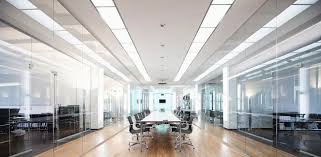
Open-plan offices, conference rooms, and cubicle areas rely on 30W LED ceiling panels for adequate task lighting. 600x600mm 30W panels deliver 300–400 lux across 25 square feet, meeting IES standards for computer work and document review. A 2023 Corporate Workplace Report found that companies switching to 30W panels saw a 15% increase in employee satisfaction, citing reduced eye strain and brighter workspaces. Conference rooms use dimmable 30W panels (compatible with DALI controls) to adjust from bright presentation mode (100% brightness) to dim video call mode (60% brightness), per the ELA's 2022 Smart Office Lighting Guide.
Retail Environments
Retail floors, department stores, and grocery stores use 30W LED ceiling panels for general illumination and product highlighting. 600x1200mm 30W panels (5400–6600 lumens) cover large retail aisles, delivering 250–300 lux for product visibility. Grocery stores benefit from 4000K 30W panels with CRI 90+, which make produce appear fresher. A 2022 National Retail Federation (NRF) study found that this increased produce sales by 10%. Clothing retailers use 3000K warm white 30W panels to enhance fabric colours, while electronics stores opt for 6500K daylight panels to showcase screen quality.
Healthcare Facilities
Medium-sized exam rooms, nurses' stations, and rehabilitation areas use 30W LED ceiling panels for clinical clarity. The American Hospital Association (AHA) recommends 30W panels with CRI 90+ and 4000K light for exam rooms, as they accurately render skin tones and wound details. A 2021 Journal of Medical Systems study found that clinicians using 30W CRI 95+ panels detected skin discolouration 35% faster than those using fluorescent troffers. Nurses' stations benefit from the panels' uniform light, reducing eye strain during chart review, while rehabilitation areas use dimmable 30W panels to adjust brightness for patient comfort.
Educational Institutions
Classrooms, lecture halls, and school libraries prioritise 30W LED ceiling panels to enhance student focus. A 2022 study in Educational Psychology Review tracked 300 middle school students, finding that those in classrooms lit with 30W 4000K panels scored 12% higher on visual-based tests than peers in fluorescent-lit rooms. Lecture halls use 600x1200mm 30W panels to deliver uniform light to large seating areas, while libraries use 3000K warm white 30W panels for a cosy ambiance. The DOE's 2023 School Lighting Guidelines specifically recommends 30W LED panels for their energy efficiency and compatibility with school ceiling grids.
Residential Large Spaces
Open-concept living rooms, home gyms, and spacious kitchens use 30W LED ceiling panels for bright, uniform illumination. A 2023 National Association of Home Builders (NAHB) study found that 600x600mm 30W panels in 200-square-foot living rooms deliver 250–300 lux, meeting IES standards for general lighting. Home gyms benefit from 5000K 30W panels, which enhance visibility for workouts and reduce eye strain during video classes. Spacious kitchens use 30W panels above countertops, delivering 300–400 lux for food preparation; their slim profile avoids interfering with cabinetry.
Industrial and Warehouse Areas
Warehouse offices, quality control labs, and manufacturing floors use 30W LED ceiling panels for durable, bright lighting. Industrial-grade 30W panels with IP54 ratings resist dust and coolant splashes, meeting OSHA requirements for manufacturing environments. Quality control labs use 30W panels with CRI 90+ to detect surface defects in products, while warehouse offices use 30W panels for cost-effective general lighting. A 2023 study of a logistics warehouse found that 30W panels reduced annual lighting costs by $1,800 per 50 fixtures compared to 50W fluorescent troffers.
Comparative Performance: vs. Traditional and Alternative LED Lighting
Research highlights clear advantages of 30W LED ceiling panel lights over traditional fixtures and alternative LED options, particularly in medium-to-large spaces.
Against 50W fluorescent troffers, 30W LED panels outperform them in every key metric. The DOE's 2023 comparison found that LED panels use 40% less energy, last 3–4 times longer (50,000 vs. 15,000 hours), and have 15% higher uniformity. Fluorescent troffers suffer from warm-up times (30–60 seconds to reach full brightness) and mercury content (3–5 mg per fixture), while LED panels light instantly and are mercury-free. In cold temperatures (0°C), fluorescent troffers lose 30% of lumen output, whereas 30W LED panels maintain full performance, per a 2022 LRC cold-storage study. Over a 10-year lifespan, the total cost of ownership (TCO) of a 30W LED panel is 55% lower than a fluorescent troffer, including energy, maintenance, and disposal costs.
Compared to low-wattage LED panels (e.g., 15W or 20W), 30W models deliver adequate brightness for larger spaces. A 2022 ELA study found that 20W panels in 200-square-foot offices under-deliver by 30% (210 vs. 300 recommended lux), requiring 50% more fixtures to achieve sufficient light, increasing installation costs by 40%. 15W panels are even less suitable, as they require twice as many fixtures as 30W models for the same area. For spaces 150–250 square feet, 30W panels are the most cost-effective and efficient choice.
Versus LED downlights, 30W LED ceiling panels offer superior coverage and uniformity. Downlights create spotty illumination with overlapping beams, leading to 40–50% lux variation across large rooms, while 30W panels deliver consistent light across their surface. The LRC found that a 200-square-foot office required 4 30W panels to achieve uniform 300 lux, versus 8 downlights, reducing material and installation costs by 35%. Downlights also require more ceiling cutouts (8 vs. 4 for the same area), increasing installation time by 50%.
Against high-wattage LED panels (e.g., 40W or 45W), 30W models optimise energy use in medium-sized spaces. A 2023 DOE study found that 40W panels in 200-square-foot offices over-deliver by 25% (375 vs. 300 recommended lux), wasting 20% more energy than 30W models. High-wattage panels are also bulkier (45–60mm thick), making them less suitable for low ceilings, and cost 15–20% more than 30W variants.
Implementation Best Practices: Selection, Installation, and Optimization
Literature from the DOE, ELA, and NECA provides actionable guidelines to maximise the performance of 30W LED ceiling panel lights.
Product Selection
First, match panel size and lumen output to space dimensions: 600x600mm 30W panels (2700–3300 lumens) for 150–200 square feet, and 600x1200mm 30W panels (5400–6600 lumens) for 200–250 square feet. The 2023 DOE LED Buying Guide warns against undersizing, which leads to inadequate light, or oversizing, which wastes energy. Second, choose colour specifications based on the space: 2700K–3000K for residential/libraries (warm ambiance), 4000K for offices/healthcare (neutral clarity), and 5000K–6500K for retail/industrial (daylight-like visibility). Prioritise CRI 90+ in colour-critical spaces (e.g., retail, healthcare). Third, select the right IP rating: IP44 for damp areas (e.g., kitchens), IP54 for dusty industrial spaces, and IP20 for dry areas (e.g., offices). Verify certifications: DLC Standard/Premium (efficiency), UL 1598 (safety), and LM-80 test reports (lifespan).
Installation
Installation varies by panel type: recessed, surface-mount, or suspended. Recessed panels fit into standard 600x600mm or 600x1200mm ceiling grids. To install, remove the fluorescent troffer, disconnect the ballast for direct-wire panels, or connect to the existing ballast for plug-and-play models, and then lower the panel into the grid. Surface-mount panels attach to the ceiling with screws or adhesive brackets, making them ideal for non-grid ceilings.
https://www.benweilight.com/lighting-tube-bulb/30w-led-ceiling-panel.html
Together, we make it better.
Shenzhen Benwei Lighting Technology Co.,Ltd
Mobile/Whatsapp :(+86)18673599565
Email:bwzm15@benweilighting.com
Skype: benweilight88
Web: www.benweilight.comhttp://www.benweilight.com
Add:F Building,Yuanfen Industrial Zone,Longhua,Bao'an District,Shenzhen, China