Introduction: The High Stakes of High-Power Procurement
The Illusion of the "Commodity" LED
To the untrained eye, a high-power LED floodlight appears to be a simple assembly of metal, glass, and electronic components. This misconception leads many buyers to treat lighting as a commodity, purchasing based on the lowest bid. In reality, high-power floodlights (typically ranging from 500W to over 1500W) are highly complex thermodynamic and optical systems. The margin for engineering error is razor-thin.
The True Cost of Premature Failure
When a high-power floodlight is installed on a stadium mast, a highway pole, or a port crane, it is placed in a hostile environment. A failure does not merely mean replacing a bulb. It entails the rental of heavy cranes or cherry pickers, the deployment of specialized electrical crews, and the interruption of critical operations. Therefore, procurement must shift its focus from the initial purchase price to the Total Cost of Ownership (TCO). This requires a rigorous evaluation of the five key factors outlined in this paper.
Factor 1: Optical Precision and Glare Control
The Destructive Physics of Glare
Discomfort vs. Disability Glare
High-power LEDs are microscopic point sources of extreme intensity. If this light is emitted without precise secondary optics, it causes severe glare. Discomfort glare causes eye fatigue and annoyance for spectators and workers. More dangerously, disability glare scatters light within the human eye, destroying contrast and temporarily blinding athletes or drivers.
The Broadcast and Safety Threat
For sports venues, uncontrolled glare makes the facility unviable for high-definition television broadcasts, destroying a vital revenue stream. For transportation hubs or ports, glare poses a severe safety hazard to operators and drivers. Therefore, the optical lens is not an accessory; it is a critical safety component.
The Engineering Solution: Low-Glare Optical Lenses
Micro-Lens Array Technology
When evaluating a fixture, buyers must look for advanced low-glare optical lenses. The Nexus series utilizes UV-stabilized polycarbonate lenses featuring a precision-engineered micro-lens array. This array (composed of thousands of microscopic indentations) acts as a massive diffuser, shattering the harsh LED point source into a soft, uniform, and highly controlled beam.
The Necessity of Various Light Distribution Angles
A fixture with a single fixed beam angle is inadequate for most large-scale projects. You must choose a provider that offers various light distribution angles (e.g., 10°, 25°, 45°, 60°, and asymmetrical types). This allows lighting designers to precisely tailor the light overlap to the geometry of the site, ensuring perfect uniformity and eliminating both "hot spots" and dark zones.
Factor 2: Advanced Thermal Management
The Thermodynamic Challenge of High-Power LEDs
The Myth of "Cool" LEDs
While LEDs are more efficient than legacy bulbs, they still convert 40% to 50% of electrical energy into heat. In a 1000W fixture, this heat is concentrated in a microscopic semiconductor junction. If not rapidly dissipated, the junction temperature skyrockets.
The Consequences of Overheating
Excessive heat triggers catastrophic lumen depreciation (the light rapidly dims) and chromaticity shift (the color changes). It also rapidly degrades the LED driver (power supply). A poorly cooled fixture will lose 30% of its brightness within two years and suffer frequent driver failures.
The Engineering Solution: Fin Radiators and Air Convection
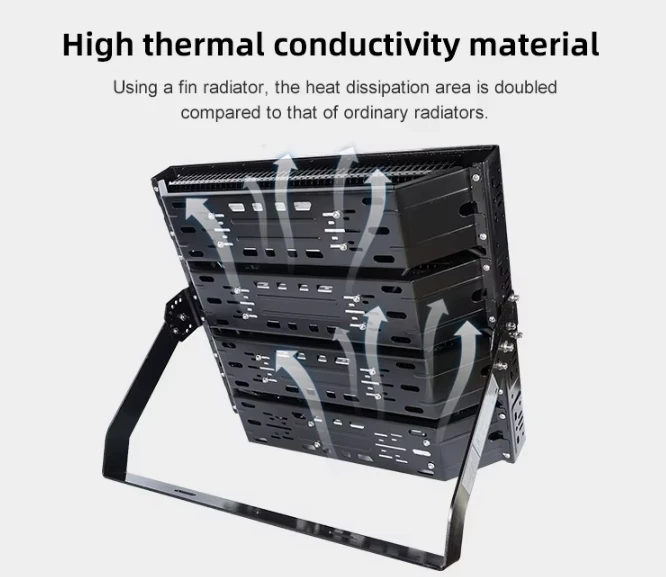
High Thermal Conductivity Materials
The fixture housing must be constructed from high-grade, die-cast aluminum. Aluminum acts as a "thermal sponge," rapidly absorbing heat from the LED junction and spreading it evenly across the chassis to prevent dangerous localized hot spots.
Doubling the Heat Dissipation Area
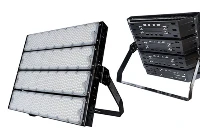
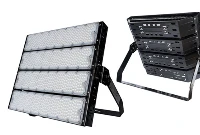
Convection relies on surface area. Ordinary fixtures use flat backplates, which become saturated with heat. The Nexus series utilizes an advanced fin radiator design. By employing dozens of densely packed aluminum fins, we effectively double the heat dissipation area compared to conventional radiators.
Strong Air Convection (The Chimney Effect)
The vertical alignment of these fins is critical. It harnesses the principle of strong air convection. As the LED heats the fins, the surrounding air warms and rises. This creates a continuous, passive updraft-the Chimney Effect. Cool air is constantly drawn in from the bottom, flows over the hot fins, and exits out the top. This fan-less, passive cooling ensures optimal thermal stability and maximizes the fixture's lifespan.
Factor 3: Environmental Resilience (IP Rating and Hardware)
Decoding the IP65 Waterproof Rating
The "6": Total Dust Defense
High-power floodlights operate in dusty, windy environments. The "6" in IP65 means the fixture is completely dust-tight. This prevents airborne particulates from coating the internal electronics, which would otherwise cause short circuits and block light transmission.
The "5": Defeating Water Intrusion
The "5" means the fixture is protected against water jets from any direction. This is critical for surviving torrential rain driven by high winds, as well as high-pressure washdowns during maintenance. The fixture must utilize robust sealing gaskets to maintain this rating.
The Crucial Role of Heavy-Duty Stainless Steel Clasps
The Hidden Failure of Standard Fasteners
Many manufacturers use painted carbon steel screws or plastic clasps to secure the optical lenses. In outdoor environments, steel rusts and plastic becomes brittle under UV exposure. The moment the fastener fails, the waterproof seal is broken, and water destroys the internal components.
The Stainless Steel Advantage
The Nexus series utilizes heavy-duty stainless steel clasps. Stainless steel is highly corrosion-resistant and possesses immense tensile strength. Crucially, these clasps span across the lens, applying perfectly uniform pressure along the entire length of the waterproof gasket. When the fixture undergoes extreme thermal cycling (expanding in the heat and contracting in the cold), the clasps act like microscopic springs, maintaining a watertight seal for decades.
Factor 4: Structural Integrity and Adjustability
The Aerodynamic Challenge of High-Wind Environments
The "Sail Effect"
High-power floodlights are large, broad fixtures. When mounted on high masts, they act as massive sails, catching the wind. In hurricane-prone or coastal regions, a poorly designed mounting bracket will buckle under the immense wind load, causing the fixture to swing, break, or crash to the ground.
The Phenomenon of "Drooping"
Standard fixtures often use thin-gauge steel brackets. Under the constant vibration of wind and the immense weight of the fixture, these brackets slowly yield, causing the fixture to "droop." A light that was once perfectly aimed at the field is now shining into the stands, reducing visibility and creating dark zones.
The Engineering Solution: Thickened 180-Degree Adjustable Brackets
Precision Aiming
To ensure correct light distribution and glare control, the fixture must be aimed with absolute mathematical precision. The Nexus series features a thickened 180-degree adjustment bracket, allowing for exact aiming to accommodate various site geometries.
Unyielding Strength
Constructed from heavy-duty, reinforced steel, this bracket is engineered to withstand severe aerodynamic pressure. The locking mechanism ensures the fixture remains rock-solid in its adjusted position, preventing drooping or swaying.
Factor 5: Total Cost of Ownership (TCO) and Customization
Calculating the True Cost of Maintenance
The "Maintenance Death Spiral"
The most significant cost in floodlighting is not the fixture itself, but the labor required to maintain it. Renting cranes, hiring certified electricians, and closing the facility costs thousands of dollars per day. A cheap fixture that fails in two years due to thermal overload or water ingress will bankrupt your maintenance budget. By investing in a fixture with advanced thermal management, IP65 waterproofing, and stainless steel hardware, operators eliminate this cycle. The lighting system becomes a "fit-and-forget" asset.
The Value of OEM/ODM Customization
Tailoring to Specific Environments
Every project has unique environmental and operational constraints. A floodlight for a coastal port faces vastly different challenges than one for a desert highway. You must choose a provider that offers comprehensive OEM/ODM customization.
Climate-Specific Engineering
For highly corrosive coastal environments, we can upgrade the hardware to marine-grade 316 stainless steel. For extremely hot climates, we can optimize the fin geometry and driver specifications to ensure maximum thermal efficiency at ambient temperatures exceeding 50°C (122°F). For smart city integration, we can incorporate IoT sensors to monitor junction temperatures in real-time.
Conclusion: The Ultimate Procurement Checklist
The Standard of Excellence
Buying high-power LED floodlights is a strategic investment. A decision based solely on the initial price will invariably lead to long-term financial and operational pain. To ensure your project is equipped with top-tier technology, your procurement checklist must include:
Optics: Advanced low-glare lenses and various light distribution angles.
Thermal: High thermal conductivity materials, fin radiators, and strong air convection.
Resilience: An IP65 waterproof rating and heavy-duty stainless steel clasps.
Structure: A thickened 180-degree adjustable bracket for precise aiming and wind resistance.
TCO & Customization: A proven track record of reliability and the capability for OEM/ODM customization.
Partner with the Industry Leader
Do not compromise on the safety, performance, and longevity of your illumination infrastructure. The Nexus LED Stadium Light series perfectly embodies these five critical factors, representing the pinnacle of modern lighting engineering.
Ready to make an informed purchasing decision? Contact our engineering and sales team today to request a comprehensive technical proposal and discover how our OEM/ODM capabilities can tailor a solution for your specific project.
How To Cooperate With Us?
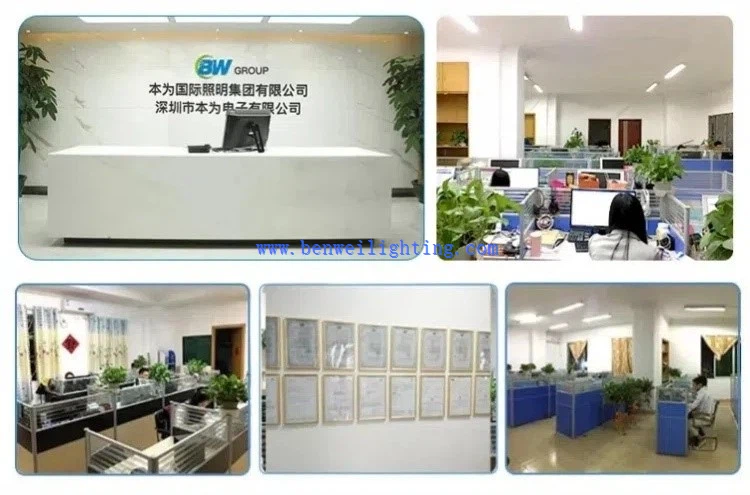
We are happy to have total control over the manufacturing process and the calibre of our products since we have our own facilities. Since we are producers rather than just brokers, we are dedicated to providing our customers with the best pricing. Since we are certain that the price and quality of our products are clear, we invite customers to see our samples first. Our commitment to quality and customer satisfaction drives us to continuously provide top-notch goods.
Our address
3rd Floor, 5th Building, Hebei Industrial Park, Hualian Community, Longhua District, Shenzhen, China