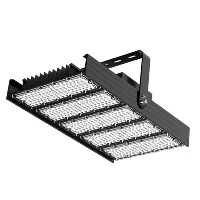
When selecting infrared illuminators or near-infrared (NIR) lamps, many clients often ask: "If an 850nm light is pointed toward someone at night, will it cause any eye issues?" This is a valid concern. 850nm light falls within the near-infrared spectrum-it is nearly invisible to the human eye, meaning one cannot gauge its intensity by how "glaring" or "dazzling" it appears. Below, we clarify this topic based on industry standards and common usage scenarios to help you make informed decisions when selecting and using such equipment.
What exactly is 850nm light?
850nm light resides in the near-infrared band (approximately 780–1400nm), with a wavelength longer than that of the red end of the visible spectrum (approximately 700nm). It is commonly used in security camera illumination, access control and facial recognition systems, and automotive monitoring, as well as in certain light therapy devices.
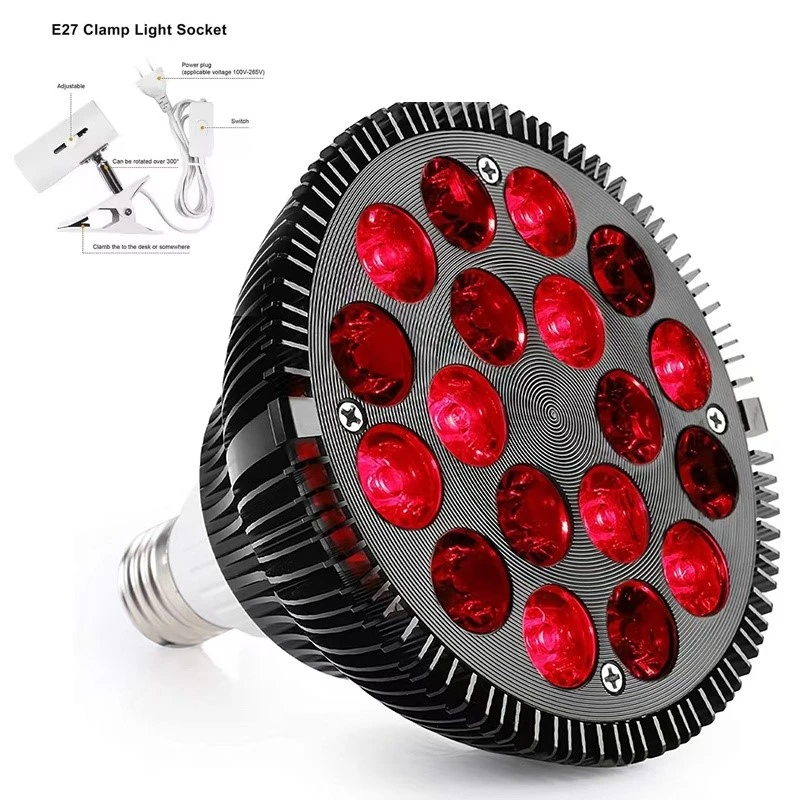
When 850nm light is emitted by an LED, you may notice a faint, dark-red glow on the light source itself. This is merely a small, visible portion of the spectrum "leaking" through; it does not represent the primary energy output, which remains imperceptible to the human eye.
Why "invisibility" warrants extra caution
When exposed to intense visible light, we instinctively squint, turn our heads, or blink-protective reflexes that help prevent injury. Near-infrared light, however, rarely triggers these responses, meaning a person could be exposed to it for an extended period without feeling any discomfort.
This does not necessarily mean that 850nm light is dangerous; rather, it means that the absence of a "dazzling" effect cannot be used as a benchmark for safety. Instead, safety must be evaluated based on factors such as power, distance, and duration of exposure.
Potential impact on the eyes
The cornea and lens of the human eye are partially transparent to near-infrared light, allowing a portion of the energy to reach the retina. The level of risk is primarily determined by the following factors:
Irradiance (Intensity): Higher power density leads to greater heat accumulation within the eye, increasing the potential for thermal damage.
Distance: Since an LED acts as a point source, the closer one is to the light, the more concentrated the energy entering the pupil becomes. Looking directly at the light-emitting chip from a close range is the scenario most to be avoided.
Duration: Prolonged, close-range, and continuous exposure carries a higher risk than occasional, short-term exposure.
The power output and typical operating distance of standard security illuminators are generally far below the levels that could cause harm. However, one should exercise extra caution with high-power LED arrays or if the light is positioned very close to the eyes.
Potential Effects on the Skin
Near-infrared light penetrates deeper into the skin than visible light, primarily producing a thermal (heating) effect.
At low irradiance levels, most people will feel only a mild warmth, or perhaps nothing at all.
At higher irradiance levels or very close range, the skin may become hot; in extreme cases, there is a risk of burns.
Individuals who are taking photosensitizing medications or who have inherently sensitive skin may experience a more pronounced reaction; such individuals should consult a doctor first.
Additionally, note that the heat generated by the light fixture itself cannot be ignored. If a unit has poor heat dissipation, its surface temperature can become quite high; any discomfort felt when it is close to the skin may sometimes be due to the heat of the fixture rather than the light itself.
Practical Advice for Daily Use
These simple, low-cost measures are highly effective:
Do not look directly at the light-emitting surface from a close range, even if it "doesn't look bright."
Ensure a reasonable distance between the light and people during installation; do not place it right next to your face or bedside.
For scenarios requiring prolonged, close-range exposure (such as light therapy), strictly follow the device's instructions regarding duration and, if necessary, wear protective eyewear designed for the specific wavelength.
If there are children or pets in the home, position the light where it cannot be easily viewed from a close range.
If the light fixture becomes noticeably hot, check its heat dissipation and power supply; do not continue using it.
Summary
An 850nm light source is not inherently dangerous, but its "invisible" nature means we cannot rely on our senses to judge safety. The actual factors that determine risk are power, distance, duration, and beam design. For standard illumination purposes, the risk is typically very low; it is only in scenarios involving close proximity, long duration, or high power that specific protective measures are required. When selecting products, reviewing test reports and photobiological safety ratings is more reliable than relying solely on advertised specifications.
Need advice on product selection or a price quote?
We offer 850nm infrared lamps in a variety of power ratings and beam angles, with customization options available to suit your specific use case. If you are selecting products for a project-or if you would like to request photobiological safety reports, samples, or bulk pricing-please get in touch. Simply let us know your application and the intended operating distance, and we will recommend the ideal solution for your needs.
https://www.benweilight.com/red-light-therapy/medical-red-light-therapy-bulb-810-850nm.html