75,000–180,000 Lumens: The Power of Super Bright Arena Lights for Large-Scale Venues

Large-scale venues-stadiums, arenas, convention centers, and industrial warehouses-demand lighting that goes beyond basic illumination: they require fixtures that can flood vast spaces with intense, uniform light, support high-stakes activities (from professional sports to large concerts), and meet strict standards for visibility, safety, and broadcast quality. For decades, these venues relied on inefficient, high-maintenance solutions like metal halide (MH) or high-intensity discharge (HID) lights, which struggled to deliver consistent brightness across large areas and came with steep energy and maintenance costs. Today, super bright arena lights with 75,000–180,000 lumens have emerged as the game-changing alternative. Engineered for extreme performance, these LED-based fixtures combine massive light output with energy efficiency, durability, and precise control-making them ideal for venues where "good enough" lighting simply won't suffice. This article explores the technology behind 75,000–180,000 lumen arena lights, their key features, benefits over traditional systems, ideal applications, installation considerations, and future innovations, highlighting why they have become the standard for modern large-scale venues.
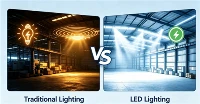
To understand the significance of 75,000–180,000 lumen arena lights, it's first critical to grasp the unique challenges of lighting large spaces. A professional basketball arena, for example, spans 18,000–20,000 square feet and requires an average illuminance of 1000–2000 lux (far higher than the 200 lux needed for a residential living room) to ensure players can track fast-moving balls, spectators can see clearly from upper decks, and TV cameras can capture crisp, high-definition footage. Similarly, a large industrial warehouse (50,000+ square feet) needs 300–500 lux of uniform light to keep workers safe while operating heavy machinery and retrieving inventory. Traditional MH lights, even high-wattage 1500W models, produce just 120,000–150,000 lumens-barely enough to cover a small section of an arena-and suffer from uneven light distribution (creating dark spots and glare). Super bright LED arena lights, by contrast, deliver 75,000–180,000 lumens with precise optical control, ensuring every corner of a large venue receives consistent, high-quality light.
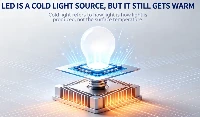
At the core of these super bright fixtures is a bank of high-power LED chips, typically COB (Chip on Board) or high-density SMD (Surface Mount Device) modules, designed to handle extreme power loads while maintaining efficiency. A 75,000-lumen arena light might use 10–12 COB chips (each producing 7,000–8,000 lumens), while a 180,000-lumen model could integrate 20–24 chips-all mounted on a heavy-duty thermal management system. Heat is the biggest enemy of high-lumen LEDs (excess heat reduces lifespan and brightness), so these fixtures use advanced heat sinks made of aluminum or copper, often paired with heat pipes or quiet fans to dissipate heat quickly. Some premium models even use liquid cooling systems for ultra-high-lumen outputs (150,000+ lumens), ensuring the LED chips stay within their optimal temperature range (50–70°C) even during hours of continuous use.
Another defining feature of 75,000–180,000 lumen arena lights is their optical design, which determines how light is distributed across large spaces. Unlike traditional lights that spray light in all directions (wasting 30–40% on walls or ceilings), these fixtures use custom-molded reflectors or precision lenses to direct light exactly where it's needed. For example
Narrow beam angles (15–30 degrees) are used in stadiums to focus light on the playing field from tall poles (30–40 feet high), ensuring the light reaches the ground without fading.
Wide beam angles (60–90 degrees) are ideal for warehouses or convention centers, where light needs to spread evenly across open floors.
Asymmetric beam angles are used in arenas to avoid glare for spectators or TV cameras, directing light downward while minimizing upward spillage (which can interfere with broadcast equipment).
Many models also offer interchangeable lenses, allowing venue managers to adjust the beam angle based on the event-e.g., switching to a narrow beam for a hockey game and a wide beam for a concert.
Color quality is another non-negotiable feature for super bright arena lights, especially for venues hosting televised events. These fixtures typically offer a color temperature of 5000K–6500K (daylight white), which mimics natural sunlight and ensures accurate color reproduction. They also have a high Color Rendering Index (CRI) of 90+, meaning they can display colors exactly as they appear in natural light-critical for sports where team uniforms, court markings, or equipment colors need to be distinguishable (e.g., a red basketball vs. a orange volleyball). For concerts or stage events, some models offer tunable color temperatures (3000K–6500K) or RGBW capabilities, allowing lighting designers to create dynamic color schemes that match the performance.

Flicker control is equally important, especially for broadcast venues. Traditional MH lights often flicker at 50–60Hz, which is invisible to the naked eye but causes a "strobe effect" in slow-motion replays or high-speed camera footage. Super bright LED arena lights operate at 1000Hz+ and meet the IEEE 1789 standard for flicker-free lighting, ensuring smooth, distortion-free footage for TV broadcasts. This is a must for professional sports leagues like the NBA, NFL, or FIFA, where even minor visual artifacts can impact the viewing experience.
The benefits of 75,000–180,000 lumen LED arena lights over traditional systems are transformative, particularly for large venues with high energy and maintenance demands. One of the most impactful advantages is energy efficiency. A 180,000-lumen LED arena light uses approximately 1200–1500W of power, while a comparable MH light producing 150,000 lumens uses 2000–2500W. For a stadium with 50 fixtures, this translates to a 40–50% reduction in energy consumption: the LED system would use 60,000–75,000W per hour, compared to 100,000–125,000W for the MH system. If the stadium operates lights for 8 hours per day (for practices, games, and events), the LED system saves 160,000–200,000 kWh per month-approximately \(24,000–\)30,000 at an average industrial electricity rate of \(0.15/kWh. Over a year, this amounts to \)288,000–$360,000 in savings-enough to offset the initial cost of the LED fixtures within 2–3 years.
Long lifespan is another major benefit. High-quality 75,000–180,000 lumen LED arena lights have a rated lifespan of 50,000–80,000 hours-5–8 times longer than MH lights (which typically last 8,000–10,000 hours). At 8 hours of daily use, an LED fixture can last 17–27 years before needing replacement, compared to just 2–3 years for an MH fixture. This eliminates the costly and time-consuming task of frequent bulb changes, which for large venues often requires cranes or specialized lifting equipment (costing \(500–\)1,000 per fixture per replacement). For a stadium with 50 fixtures, replacing MH bulbs every 2 years would cost \(50,000–\)100,000 in labor and parts-expenses that disappear with LED fixtures.
Durability is another key advantage, especially for outdoor stadiums or industrial warehouses. Super bright LED arena lights are built to withstand harsh conditions: they have no fragile glass bulbs or filaments (unlike MH lights), and their enclosures are made of corrosion-resistant materials like aluminum alloy or stainless steel. Most models have an IP65 or IP67 ingress protection rating, meaning they are fully protected against dust, rain, snow, and even high-pressure water jets. They also operate reliably in extreme temperatures, from -40°C to 60°C (-40°F to 140°F), whereas MH lights can fail to start in cold weather or overheat in hot climates. This durability makes LED arena lights ideal for outdoor venues like football stadiums or open-air concert arenas, where weather can be unpredictable.
Instant-on and dimming capabilities add further value for venues that host multiple types of events. Traditional MH lights take 5–10 minutes to warm up to full brightness and require a cool-down period if turned off accidentally-causing delays for events that need quick lighting adjustments (e.g., switching from practice to game mode). LED arena lights turn on instantly to full brightness and can be dimmed to 10–20% of their maximum output without losing color quality. This flexibility is critical for venues like convention centers, which might use 100% brightness for trade shows, 50% for keynote speeches, and 20% for cocktail receptions. Dimming also saves additional energy: reducing a 180,000-lumen fixture to 50% brightness cuts its power use from 1500W to 750W, further lowering electricity bills.

The applications of 75,000–180,000 lumen arena lights are as diverse as the large venues they serve. Here are some of the most common use cases:
1. Professional Sports Stadiums & Arenas
Stadiums hosting football, basketball, soccer, or hockey games need intense, uniform light to meet league standards and support broadcast. A 150,000–180,000 lumen LED fixture with a narrow beam angle (20–30 degrees) is ideal for mounting on tall poles around the field or arena, delivering 1000–2000 lux of light to the playing surface. For example, an NFL stadium might use 60–80 such fixtures to ensure every corner of the field is illuminated, with no dark spots that could obscure a player's view of the ball. The high CRI (90+) and flicker-free performance also ensure that TV cameras capture crisp, true-to-color footage-critical for prime-time broadcasts.
2. Industrial Warehouses & Manufacturing Facilities
Large warehouses (50,000+ square feet) and manufacturing plants require bright, uniform light to keep workers safe and operations efficient. A 75,000–100,000 lumen LED fixture with a wide beam angle (60–90 degrees) can cover 2,000–3,000 square feet of floor space with 300–500 lux of light-enough for workers to operate forklifts, read inventory labels, or assemble products. Unlike MH lights, which dim over time (losing 30% of brightness after 5,000 hours), LED fixtures maintain consistent brightness throughout their lifespan, ensuring no drop-off in safety or productivity.
3. Convention Centers & Exhibition Halls
Convention centers host trade shows, conferences, and large events that require flexible lighting. A 100,000–120,000 lumen LED fixture with dimming capabilities can be adjusted to match the event: 100% brightness for trade shows (where exhibitors need to showcase products), 50% for conferences (to reduce glare on screens), and 20% for social events. The wide beam angle (70–90 degrees) ensures even coverage across large exhibition halls, while the instant-on feature allows quick transitions between events-critical for venues that host multiple functions in a single day.
4. Outdoor Concert Venues & Festivals
Open-air concert venues and music festivals need powerful, weather-resistant lighting to illuminate stages and audience areas. A 120,000–150,000 lumen LED fixture with an IP67 rating can withstand rain, wind, and dust while delivering bright light to the stage. Some models also offer RGBW capabilities, allowing lighting designers to create dynamic color schemes that sync with the music-enhancing the audience experience. The dimming feature is also useful for adjusting light levels between performances or during intermissions.
5. Airports & Shipping Yards
Airport hangars and shipping yards are massive, high-traffic areas that require 24/7 lighting for safety and operations. A 150,000–180,000 lumen LED fixture with a narrow beam angle (25–35 degrees) can illuminate large sections of a hangar or yard, allowing workers to inspect aircraft, load/unload cargo, or operate heavy equipment safely. The long lifespan (50,000+ hours) and low maintenance needs are particularly valuable for these facilities, which operate around the clock and cannot afford downtime for bulb changes.
Installing 75,000–180,000 lumen arena lights requires careful planning to ensure safety, performance, and compliance with venue standards. Here are the key steps and considerations:
1. Site Assessment & Lighting Design
The first step is to conduct a detailed site survey to map the venue's dimensions, identify obstacles (e.g., columns in a warehouse, seating in an arena), and determine the required illuminance level (based on the venue's use). For example, a professional soccer stadium needs 1500 lux, while a warehouse needs 300 lux. Using specialized lighting design software (like Dialux or AGi32), engineers can create a 3D model of the venue, simulate the light output of different fixture configurations, and determine the number of fixtures needed, their placement, and beam angles. This ensures uniform coverage and avoids over-lighting (which wastes energy) or under-lighting (which creates safety risks).
2. Structural & Electrical Preparation
Super bright arena lights are heavy (15–30 pounds per fixture) and require sturdy mounting structures. For outdoor stadiums, poles must be made of galvanized steel or concrete and anchored in deep foundations (3–4 feet underground) to withstand high winds. For indoor venues like arenas, fixtures may be mounted on ceiling trusses or brackets-requiring a structural assessment to ensure the trusses can support the weight.
Electrical preparation is equally critical. These fixtures require high-voltage power (208V–480V) and dedicated circuits to avoid voltage fluctuations. The electrical system must also be equipped with surge protectors to shield the fixtures from power surges (common in large venues with multiple high-power devices). For venues upgrading from MH to LED, the existing wiring may need to be replaced or modified, as LED fixtures draw less current and require different ballasts (most LED arena lights have built-in drivers, eliminating the need for external ballasts).
3. Installation & Testing
Installation should be performed by licensed electricians with experience in large-scale lighting projects. For tall poles or ceiling-mounted fixtures, cranes or scissor lifts are required-with strict safety protocols to prevent accidents. After installation, each fixture is tested to verify:
Light output: Using a light meter to ensure the fixture delivers the specified lumens (e.g., 180,000 lumens for a high-end model).
Uniformity: Measuring light levels at multiple points across the venue to ensure the uniformity ratio meets standards (e.g., 0.8 for sports venues).
Flicker and color quality: Using specialized equipment to confirm the fixture is flicker-free and has a CRI of 90+.
For broadcast venues, additional testing is done with TV cameras to ensure the lighting does not cause distortion or glare in footage.
When selecting a 75,000–180,000 lumen arena light, venue managers should consider the following factors to ensure they choose a high-quality, reliable product:
Lumen Output & Efficacy: Look for a fixture that delivers the specified lumens (e.g., 150,000 lumens) with a high efficacy (120–150 lumens per watt). Higher efficacy means lower energy consumption-critical for large venues with high electricity costs.
Thermal Management: Check the fixture's heat sink design and cooling system. Premium models use aluminum-copper hybrid heat sinks or liquid cooling for ultra-high-lumen outputs, ensuring long lifespan and consistent performance.
Durability & Weather Resistance: For outdoor venues, choose a fixture with an IP67 rating (fully waterproof and dustproof) and corrosion-resistant materials. For indoor venues, an IP65 rating is sufficient.
Compliance with Standards: Ensure the fixture meets industry standards for flicker (IEEE 1789), color quality (CRI 90+), and safety (UL, CE, or ETL certification). For sports venues, look for fixtures certified by governing bodies like the ITF (for tennis) or FIFA (for soccer).
Warranty: A long warranty (5–10 years) indicates the manufacturer's confidence in the product. Look for warranties that cover both parts and labor, as repairs for large arena lights can be costly.
Control Features: Consider fixtures with dimming capabilities, smart controls (e.g., remote monitoring via a smartphone app), or compatibility with building management systems (BMS). These features allow for easier operation and energy savings.
https://www.benweilight.com/lighting-tube-bulb/75-000-180-000-lumens-super-bright-arena.html
Together, we make it better.
Shenzhen Benwei Lighting Technology Co.,Ltd
Mobile/Whatsapp :(+86)18673599565
Email:bwzm15@benweilighting.com
Skype: benweilight88
Web: www.benweilight.com
Add:F Building,Yuanfen Industrial Zone,Longhua,Bao'an District,Shenzhen, China