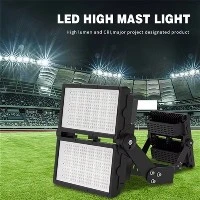
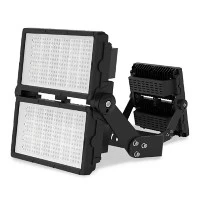
An LED Flood Light: What Is It? A Complete Guide

A broad, consistent beam of light is emitted by an LED flood light, a strong, energy-efficient lighting fixture that "floods" a sizable area with illumination. Flood lights are essential in both residential and commercial situations where vast visibility is needed since they are designed to give wide-angle coverage, in contrast to standard directional lights that concentrate on small areas. What distinguishes LED flood lights from more traditional lighting options like incandescent, halogen, or high-intensity discharge (HID) flood lights is their fundamental technology, the Light-Emitting Diode (abbreviated "LED"), a semiconductor device that directly transforms electrical energy into light through a process known as electroluminescence. Investigating LED flood lights' design, operation, benefits, uses, and changing place in contemporary lighting solutions is crucial to gaining a thorough understanding of them.
In its most basic form, an LED flood light is made up of a number of essential parts that combine to provide effective, superior illumination. The LED chip, which is usually composed of silicon carbide (SiC) or gallium nitride (GaN), is the central component of the fixture. When an electric current flows through it, it emits light. LED chips produce very little heat, which results in a much higher energy efficiency than incandescent bulbs, which use a filament to produce light-a process that wastes the majority of energy as heat. Because these chips are positioned on a printed circuit board (PCB), power is distributed uniformly and the little heat generated is dissipated, reducing overheating and prolonging the fixture's life. The light beam is shaped into a broad, diffused pattern by an optical lens or reflector that surrounds the LED chips. Typically, the beam angle is between 90 and 120 degrees, however some models have customizable angles. Numerous LED flood lights are certified IP65 or higher for water and dust resistance, making them appropriate for outdoor use. The fixture is housed in a sturdy housing, frequently composed of aluminum or polycarbonate, which shields internal components from dust, moisture, and physical damage. In order to ensure steady operation and guard against voltage swings, a driver lastly transforms the alternating current (AC) from the power supply into the direct current (DC) that the LED chips need.

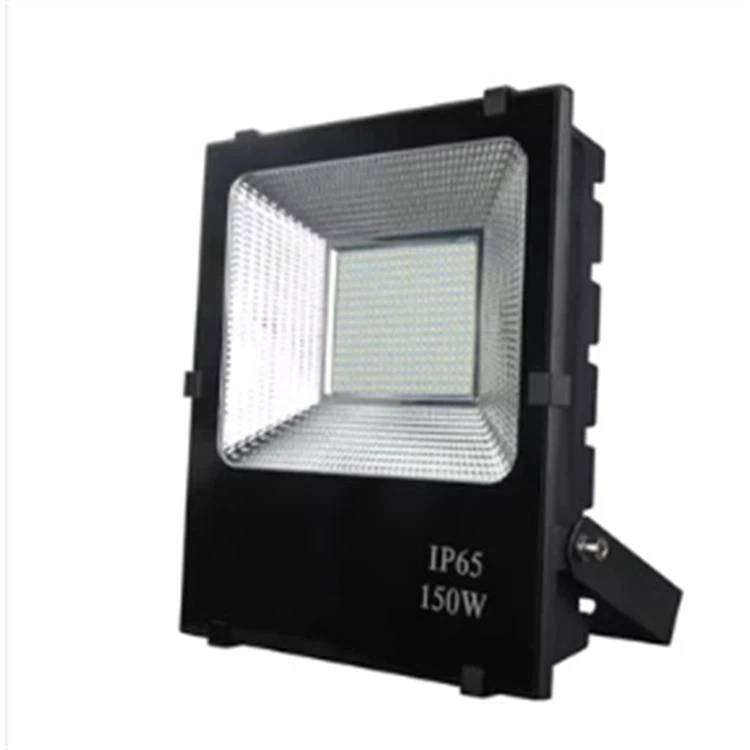
The remarkable energy efficiency of LED flood lights is one of their most alluring features. LED flood lights can save up to 80% on electricity costs while achieving the same or greater lumen output (a measurement of light intensity) than conventional flood lights. For instance, an LED flood light requires only 15 to 20 watts to reach the same brightness as a 100-watt incandescent flood light, which produces about 1,600 lumens. For large-scale applications like stadiums, parking lots, or industrial sites that run lights for extended periods of time, this efficiency translates into huge cost savings on electricity bills. Moreover, LED flood lights have an exceptionally long lifespan-50,000 to 100,000 hours-in contrast to halogen bulbs' 10,000 hours and incandescent bulbs' 1,000 hours. Because of this, LED flood lights rarely need to be replaced, which lowers maintenance expenses and the environmental effect of throwing away outdated fixtures. Their instant-on capability is another significant advantage. Unlike HID flood lights, which take a few minutes to warm up and reach maximum brightness, LED flood lights switch on instantly, offering quick illumination when needed. This is a crucial safety element for emergency circumstances or security lighting.
When compared to more conventional options, LED flood lights also provide better light quality and versatility. From warm white (2700K-3000K) for home settings to cool white (5000K-6500K) for commercial or industrial locations where bright, clear vision is essential, they generate a clean, consistent light that can be adjusted to precise color temperatures. A lot of contemporary LED flood lights can also be dimmed, which lets users change the light's intensity to fit various situations. For instance, you can dim the lights in your rear patio for a laid-back evening or turn them up for a security alert. LEDs are perfect for difficult situations like construction sites, coastal areas, or cold storage facilities because they are also incredibly resilient and resistant to stress, vibration, and extreme temperatures. Since LED chips are solid-state semiconductors, they can tolerate harsh handling and temperature changes without sacrificing performance, in contrast to incandescent or halogen bulbs, which are delicate and prone to breaking.

LED floodlights have a wide range of uses in the public, commercial, industrial, and residential sectors. LED flood lights are used by homeowners to light driveways, gardens, porches, and yards in residential settings. This improves safety, deters burglars, and increases curb appeal. A lot of residential models have motion sensors, which further reduce energy use and improve security by only turning on the light when movement is detected. LED flood lights are crucial for commercial buildings since they illuminate loading docks, building exteriors, parking lots, and signage, promoting the company's presence and guaranteeing the safety of staff and clients after dark. LED flood lights offer strong, consistent illumination for vast areas in industrial environments including factories, warehouses, and construction sites, enhancing worker visibility and lowering the chance of accidents. High-powered LED flood lights are used in stadiums and sports fields to illuminate playing grounds for games and events, and they are essential for both safety and aesthetic illumination in parks, streets, and public monuments. Additionally, because of their portability, instant-on functionality, and energy efficiency, LED flood lights are frequently utilized in emergency and temporary lighting scenarios, such as power outages, building projects, or outdoor events.
LED flood lights are constantly changing as a result of technological advancements, adding new features and enhancements that increase their operation and performance. The incorporation of smart technology, which enables remote management of LED flood lights through smartphones, tablets, or voice assistants like Google Home or Amazon Alexa, is one noteworthy trend. Smart LED flood lights can be set to go on and off at certain periods, have their brightness or color temperature changed, and even be synchronized with other smart devices. For instance, they can be set to activate when a security camera detects movement. Solar-powered LED floodlights, which capture solar energy during the day and store it in rechargeable batteries to power the lights at night, are another new trend. These solar-powered models provide an environmentally friendly, off-grid lighting option and are perfect for distant locations without electricity, like rural homes, hiking trails, or building sites. Furthermore, manufacturers are working to make LED flood lights lighter and more portable without compromising performance by boosting their lumen output while decreasing their size and weight.
Even with all of their benefits, there are a few things to think about when selecting an LED flood light. Lumen output is the first factor that defines the brightness of the light; users should choose a lumen rating according to the size of the area that has to be illuminated (e.g., 10,000+ lumens for a huge parking lot, 1,000-2,000 lumens for a small patio). Another important consideration is beam angle: a wide beam angle (90–120 degrees) works better for flooding big regions, while a low beam angle (30–60 degrees) is appropriate for spotlighting certain items. For outdoor use, users should also search for fixtures with a high IP rating (IP65 or higher) and a reliable brand that provides a warranty; the majority of LED flood lights have a 5–10 year warranty, which reflects their dependability and extended lifespan. The color temperature should also be taken into account. For example, warm white is more aesthetically pleasing for domestic use, whereas cool white works better in commercial or industrial environments where clarity is crucial.
To sum up, an LED flood light is a multipurpose, energy-efficient lighting device that offers even, wide illumination for a variety of uses. These fixtures, which use cutting-edge LED technology, have several benefits over conventional flood lights, such as better light quality, longer lifespan, instant-on capabilities, and lower energy use. LED flood lights are now the go-to lighting option for anyone looking for dependable, affordable, and environmentally friendly illumination, whether they are used in huge industrial sites or backyards in homes. We may anticipate seeing even more cutting-edge features in LED flood lights as technology develops, such better solar integration, increased energy efficiency, and enhanced smart capabilities, which will further consolidate their position as a key component of contemporary lighting systems. LED flood lights demonstrate that performance and efficiency can coexist when it comes to lighting big areas, whether for practical, aesthetic, or safety reasons.
FAQ
Any question or wanna send an inquiry!
Q1. How soon is the lead time?
A: For sample order, 7-17 days if no stock. For bulk order, 15-30 days.
Q2. Can your products' label, packaging, design be customized?
A: Yes, we offer customization service on these.
Q3. How can we guarantee quality?
A: Always a pre-production sample before mass production; Always final Inspection before shipment.
Q4. How do you ship the goods and how long does it take to arrive?
A: We usually ship by DHL, UPS, FedEx or TNT. It usually takes 3-5 days to arrive. Airline and sea shipping also optional.
Q5. What is your payment way?
A: Paypal / Visa / Western Union / online transfer / apply pay / T/T all works for us for payment.
Shenzhen Benwei Lighting Technology Co.,Ltd
Telephone: +86 0755 27186329
Mobile(+86)18673599565
Whatsapp :19113306783
Email:bwzm15@benweilighting.com
Skype: benweilight88
Web: www.benweilight.com